1851 Siler Roll: Eastern Cherokee

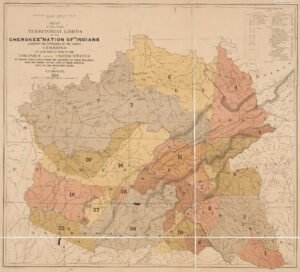
Map of Cherokee Land Cessions

The 1851 Siler Roll is a key genealogy resource for tracing Eastern Cherokee families who remained east of the Mississippi after the Trail of Tears. Compiled to identify those eligible for a federal per-capita payment, it lists households, family groupings, residences, ages, and relationships, but it is incomplete and should be used with the later Chapman Roll.

Biography of James Small, M. D.

Dr. James Small, born on October 28, 1841, in East Tennessee, is a well-respected physician in southern Missouri, residing in Smallett. His medical career began after serving in the Civil War with the 16th Missouri Volunteer Cavalry. He studied medicine under Dr. W. M. Noe and graduated from the American Medical College in St. Louis in 1880. Dr. Small has practiced in various locations, including Yellville and Oakland, and is known for his political involvement and community service. He was married to Mary Noe and had several children.

Biography of Ranson D. Blades

Ranson D. Blades, born on January 29, 1821, in Tennessee, moved to Greene County, Missouri, with his family as a teenager. Despite limited early education, he exhibited strong industry and perseverance, eventually becoming one of the largest landowners in the area. Over his life, he married three times and had eleven children, instilling values of integrity and hard work. A staunch Union supporter during the Civil War, he contributed significantly to local education and religion. Blades’s life exemplifies the rewards of determination and civic responsibility.

Biography of James Harlin Hale

James Harlin Hale, born on October 10, 1832, in Washington County, Tennessee, exemplifies determination and industriousness. A blacksmith by trade and successful farmer in Stone County, Missouri, he navigated multiple relocations throughout his life, including his marriage in 1855 to Nancy Margaret Estes. Hale served in the Civil War, attaining the rank of corporal, and was wounded and captured briefly. He was a devoted Baptist and a respected community member, leaving behind a legacy of eight children and significant contributions to his region.

McMinn County, Tennessee Deed Book O

The McMinn County Deed Book O records a series of property transactions and family arrangements spanning from 1865 to 1868. Notable entries include deeds of trust and homestead declarations, transfers of land for love or natural affection, and decisions from various court decrees affecting heirs. The records reflect social and economic dynamics of the post-Civil War era, highlighting familial ties and the establishment of institutions such as the Methodist Episcopal Church. The transactions reveal a mix of personal and financial motivations in land dealings during this period.

McMinn County, Tennessee Deed Book P

The McMinn County, Tennessee Deed Book P records numerous transactions, providing insights into property transfers between various individuals from 1866 to 1871. Key transactions include land sales, homestead declarations, and the settlement of estates, reflecting the socio-economic landscape post-Civil War. Notable figures include James B. Cooke and Joseph W. Gibson, while several entries reveal transactions involving descendants of deceased individuals. This compilation captures significant moments in local history, emphasizing familial ties and the management of inherited lands during a transformative period.

McMinn County, Tennessee Deed Book Q

Entries from McMinn County’s Deed Book Q detail a range of property transactions from 1866 to 1874, including sales and deeds of trust involving various individuals and entities. Notably, James H. Lowry sold land designated for the M.E. Church South in Riceville in 1871. There are also multiple Chancery Court decrees reflecting disputes over land ownership among heirs, as well as transactions involving various local figures and families, contributing to a richer understanding of land ownership and community development in the region during this era.

McMinn County, Tennessee Deed Book R

The entries from McMinn County’s Deed Book R document various land transactions and legal matters from 1873 to 1876. Notable transactions include property transfers involving prominent local families and organizations such as the Methodist Episcopal Church South and the Sons of Temperance Lodge. Various powers of attorney and estate settlements are also recorded, reflecting the interconnectedness of personal and communal affairs in this period. Additionally, several entries highlight inheritance issues and property rights among heirs of deceased individuals.

McMinn County, Tennessee Deed Book S

Deed Book S from McMinn County, Tennessee, chronicles various real estate transactions from 1875 to 1878, including sales, transfers, and powers of attorney. Notable entries reveal property exchanges among families, indicating local economic activity. Significant transactions involve land near Athens, with many deeds executed “for love” among family members. The records also reflect the impact of court decrees on property ownership, demonstrating the intricate relationships and obligations within the community during this period.

McMinn County, Tennessee Deed Book T

The McMinn County, Tennessee Deed Book T details various land transactions and power of attorney arrangements from September 1878 to February 1880. Notable entries include estate settlements among heirs, such as those pertaining to Charles A. Pickens and Peter Bond, with parties often residing in different states. Transactions reflect the complex familial and economic relationships of the time, with several entries documenting the division of land and interests among family members and the appointment of agents to manage estates.

McMinn County, Tennessee Deed Book M

This segment from McMinn County’s Deed Book M details various land transactions and legal proceedings in the mid-19th century. Among them, Nancy Peck conveys her dower rights to her son, Washington W. Peck, regarding land previously owned by her deceased husband, Elliott Peck. Other transactions involve land sales to individuals and trustees, including interests in estates and provisions for education, churches, and personal property. The entries reflect the complexity of land ownership and inheritance during this period in Tennessee.

McMinn County, Tennessee Deed Book N

The entries from McMinn County’s Deed Book N detail various property transactions and transfers occurring between 1854 and 1866, involving individuals from surrounding counties. Notable transactions include the conveyance of lots in Athens, land inheritance among heirs, and arrangements for support and care among family members. The records illustrate the social and economic relationships of the time, including gifts for love and affection, legal acknowledgments, and the establishment of trusts and powers of attorney. Various church-related properties and agreements further contextualize the community’s values and priorities.

McMinn County, Tennessee Deed Book G

The entries from McMinn County, Tennessee Deed Book G detail numerous land transfers and transactions from the early 1840s. Notable transactions include Jonathan Thomas to Eligha Cate for land previously owned by George Greenway, and a significant sale of 5,000 acres in McMinn County by Charles W. Parks to David S. Vankluck for $5,000. Multiple deeds highlight familial transfers of property, along with various powers of attorney and obligations related to trusts and sales.

McMinn County, Tennessee Deed Book H

The entries from McMinn County, Tennessee, Deed Book H, document various transactions, including obligations, sales, and deeds of trust. Notable transactions involve Abner Lea and Oliver Dodson managing the estate of Lazarus Dodson and distributing land to heirs, alongside numerous bills of sale for slaves and property transactions among families. Court decrees also feature prominently, addressing disagreements among heirs and settling estates. These records illustrate the complexities of land ownership and familial obligations in early 19th-century Tennessee.

McMinn County, Tennessee Deed Book I

The records from McMinn County, Tennessee, reveal a variety of property transactions and agreements from 1845-1848. Notably, heirs and legatees are frequently involved in the division of estates, such as the Matlock family and the Boone heirs. Various deeds of trust and power of attorney documents highlight the complexities of managing land and assets post-mortem. Additionally, the sale of slaves is documented, reflecting the prevailing societal norms of the time. This collection provides insight into familial relationships and economic transactions during the period.

McMinn County, Tennessee Deed Book J

In McMinn County, Tennessee, various property transactions occurred between 1841 and 1850, highlighting community ties and religious affiliations. Notable deeds include Elisha Dodson’s donation of land to the United Baptist Church for worship, alongside transfers of personal property among families, such as William James gifting hogs to his daughter. Many transactions involve trustees overseeing land used for church or educational purposes. These records reflect the social and economic dynamics of early 19th-century rural Tennessee.

McMinn County, Tennessee Deed Book K

The deeds recorded in McMinn County, Tennessee, during the mid-19th century reveal a diverse array of transactions, including land sales, bills of sale for slaves, and powers of attorney. Notable entries include the transfer of property among heirs, such as FANEY DODSON and the acknowledgment of estates like that of JAMES PIKE. Additionally, there are records of trusts and agreements for support during life, reflecting the social and economic dynamics of the time. The documentation underscores the lineage and estate management prevalent in the region.

McMinn County, Tennessee Chancery Court Deeds

Deed Book L has been absent for years, last documented in May 1871, and missing by 1895. Research uncovered several deeds registered in other books, detailing transactions from 1853 to 1857 involving various individuals and properties in McMinn County and surrounding areas. A comprehensive index compiled around 1900 by E.B. Madison lists additional transactions recorded in Book L. These documents reflect the land ownership and familial connections within the county during that period.

McMinn County Tennessee Grant Book A

The McMinn County Grant Book documents various land entries and transactions from the early 19th century. Notable entries include the Act of Relief for Nancy Allison, widow of Uriah Allison, and the will of Samuel Tillery outlining his estate distribution. Several other individuals, such as Abraham Heard and John Richardson, are recorded as assigning or entering land, with multiple transactions involving heirs and administrators. This historical record reflects the complexities of land ownership and inheritance in the region during that period.

McMinn County, Tennessee Grant Book B

The McMinn County Grant Book records various land transactions and legal proceedings from the early 19th century. Notable entries include payments for Cherokee land reservations in Rhea County and multiple land purchases and assignments by individuals such as John Bunch and the Goddard brothers. Additionally, a Chancery Court case involving heirs of Benjamin Hawkins illustrates the community’s legal complexities regarding land ownership. The document highlights the intertwined relationships and transactions within McMinn County during this period.