
Think you have Choctaw in your ancestry?
This page will provide some background history and locations the tribe resided in as well as the rolls and census they were enumerated on.
Choctaw (possibly a corruption of the Spanish chato, ‘flat’ or ‘flattened,’ alluding to the custom of these Indians of flattening the head). Halbert (1901) has suggested that the Choctaw Tribe received their name from Pearl River, “Hachha”. The Choctaw were also called:
- Ani’-Tsa’ta, Cherokee name.
- Flat Heads, from their custom of flattening the heads of infants.
- Henne’sb, Arapaho name.
- Nabuggindebaig, probably the Chippewa name for this tribe, signifying “flat heads.”
- Pans falaya, “Long Hairs,” given by Adair.
- Sanakfwa, Cheyenne name, meaning “feathers sticking up above the ears.”
- Té-qta, Quapaw name.
- Tca-qtr£ an-ya-df, or Tea-qti ham-ya, Biloxi name.
- Tca-t a, Kansa name.
- Tetes Plates, French equivalent of “Flat Heads.”
- Tsah-tfl, Creek name.
An important tribe of the Muskhogean stock, formerly occupying middle and south Mississippi, their territory extending, in their most flourishing days, for some distance east of Tombigbee River, probably as far as Dallas County, Georgia. Ethnically they belong to the Choctaw branch of the Muskhogean family, which included the Choctaw, Chickasaw, Huma and their allies, and some small Indian tribes which formerly lived along Yazoo River. The dialects of the members of this branch are so closely related that they may be considered as practically identical 1. This was the largest tribe belonging to the southern Muskhogean branch. Linguistically, but not physically, it was most closely allied with the Chickasaw and after them with the Alabama.
Choctaw Tribe History and Ethnology
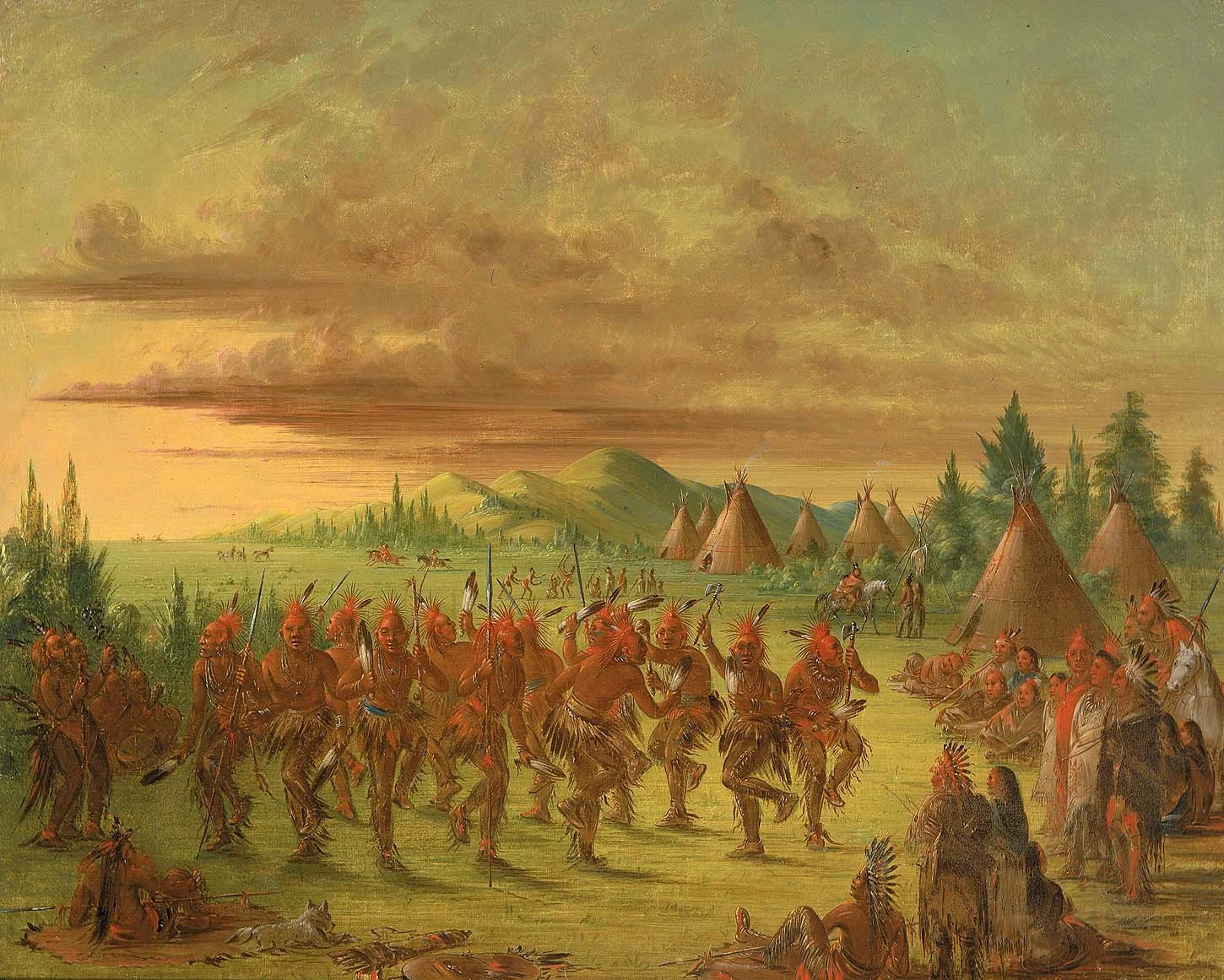
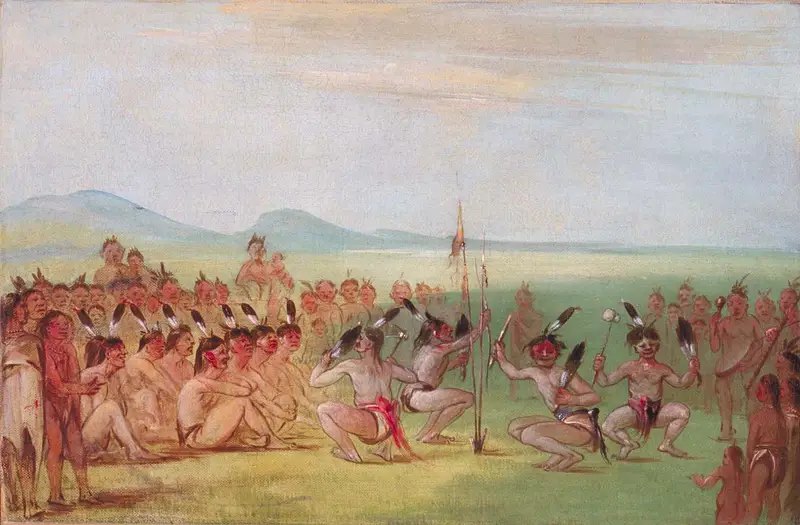
The Choctaw give the Eagle Dance once a year, to the War Eagle, the bird that conquers all other varieties of the Eagle species; and the tail feathers of the Eagles the Choctaw use to decorate the heads of the brave.
The earliest notice of the Choctaw Tribe is found in the De Soto narratives for 1540. The giant Tascalusa, whom he met in his march down Coosa Valley and carried to Mauvila, was a Choctaw chieftain; and the natives who fought the Spaniards so fiercely at this town belonged to a closely related tribe. When the French, about the beginning of the 18th century, began to settle colonies at Mobile, Biloxi, and New Orleans, the Choctaw came early into friendly relations with them and were their allies in their wars against other Indian tribes. In the French War on the Natchez, in 1730, a large body of Choctaw warriors served under a French officer. They continued this friendship until the English traders succeeded in drawing over to the English interest some of the east Choctaw towns. This brought on a war between them and the main body, who still adhered to the French, which continued until 1763. The Choctaw Tribe was constantly at war with the Creeks and Chickasaw. After the French had surrendered their American possessions to Great Britain, in 1763, and to some extent previously thereto, members of the tribe began to move across the Mississippi, where, in 1780, Milfort 2 met some of their bands who were then at war with the Caddo. About 1809 a Choctaw village existed on Wichita River, and another on Bayou Chicot, Opelousas Parish, Louisiana. Morse (1820) says there were 1,200 of them on the Sabine and Neches Rivers, and about 140 on Red River, near Pecan point 3. It is stated by some historians that this tribe, or parties of it, participated in the Creek War; this, however, is emphatically denied by Halbert 4, who was informed in 1877 by some of the oldest members of the tribe that the Choctaw manifested no hostility toward the Americans during this conflict. A small band of perhaps 30 were probably the only Choctaw with the Creeks. The larger part of those in Mississippi began to migrate to Indian Territory in 1832, having ceded most of their lands to the United States in various treaties 5.
- The Choctaw of Bayou Lacomb
This collection depicts the specific culture and history of the Choctaw tribe residing within Bayou Lacomb, Louisiana. Included are the geography, history, society, language, ethnology, and myths, legends and religion of the Choctaws who resided within the area of Bayou Lacomb. By the people of the tribe, or, more correctly, that portion of the tribe now under consideration, they themselves are called the Chata’ogla or the Chata’ people or family. According to them, the first word cannot be translated as it is merely a proper name. - History of the Choctaw, Chickasaw and Natchez Indians
- 1822 Congressional Report on Indian Affairs
Jedediah Morse’s 1822 report to Congress of his travels through Indian Territory on behalf of the office of Secretary of War – Jedediah was tasked by a resolution of Congress to report of his travels amongst the tribes throughout the United States. Acknowledging that he did not visit all of the tribes, and that he relied on known facts and materials for the body of text he provided, Jedediah presented a large collection of tabular data and descriptive content. This data was then used by Congress to shape its policies as it dealt with expansion further west, and specifically tribal relations. - Indian Missions of the Southern States
Missions among Indigenous peoples in the southern US, initially driven by Spain and later France and England, aimed to convert Native Americans and integrate them into European societies. Beginning in 1544, Catholic missionaries established mission towns across the region, facing resistance. These missions aimed to introduce agriculture, education, and religion but were often disrupted by conflict. Despite some successes, many failed due to hostilities and competing European interests.
Choctaw Tribe Phratries
According to Morgan 6 the Choctaw were divided into two phratries, each including 4 gentes, as follows:
A. Kushapokla (Divided people)
- Kushiksa (Reed)
- Lawokla
- Lulakiksa
- Linoklusha
B. Watakihulata (Beloved people)
- Chufaniksa (Beloved people)
- Iskulani (Small people)
- Chito (Large people)
- Shakchukla (Crayfish people)
Besides these, mention is made of a gens named Urihesahe 7, which has not been identified. Morgan’s list is probably far from complete.
Consult further:
Choctaw Tribe Culture and Life
The Choctaw were preeminently the agriculturists of the southern Indians. Though brave, their wars in most instances were defensive. No mention is made of the “great house,” or “the square,” in Choctaw towns, as they existed in the Creek communities, nor of the busk. The game of chunkey, as well as the ball play, was extensively practiced by them. It was their custom to clean the bones of the dead before depositing them in boxes or baskets in the bone-houses, the work being performed by “certain old gentlemen with very long nails,” who allowed their nails to grow long for this purpose. The people of this tribe also followed the custom of setting up poles around the new graves, on which they hung hoops, wreaths, etc., to aid the spirit in its ascent. As their name seems to imply, they practiced artificial head flattening.
- Choctaw Nation Schools in 1904
- The Choctaw Freedmen and Oak Hill Industrial Academy
The aim of the Author in preparing this volume has been to put in a form, convenient for preservation and future reference, a brief historical sketch of the work and workers connected with the founding and development of Oak Hill Industrial Academy, established for the benefit of the Freedmen of the Choctaw Nation, Indian Territory, by the Presbyterian Church, U. S. A., in 1886, when Miss Eliza Hartford became the first white teacher, to the erection of Elliott Hall in 1910, and its dedication in 1912; when the name of the institution was changed to “The Alice Lee Elliott Memorial.” - The MOWA Choctaws
Extinction by Reclassification: The MOWA Choctaws of South Alabama and Their Struggle for Federal Recognition – In the 1930s, Carl Carmer, a professor at the University of Alabama and author of Stars Fell on Alabama, traveled around Alabama collecting unusual stories. He said that he chose “to write of Alabama not as a state which is part of a nation, but as a strange country in which I once lived.” One of his stories describes his efforts to determine the ancestry of the so-called Cajuns who lived around Citronelle in southwest Alabama. Carmer’s story provoked a flurry of interest in the “Cajans,” when in reality they were not Cajun at all. Instead, they were descendants of the indigenous Choctaw Indians of southwest Alabama. Originally appearing in The Alabama Review, Volume 59, July 2006, pages 163-204. - Treaty of Dancing Rabbit Creek
This section of our website is being created for those who have searched in vain for their Mississippi Choctaw Ancestors. Many knowledgeable people have contributed information to help you find these missing ancestors. Because of the controversy of the Article 14 Claimants, it may not be possible to establish tribal affiliation, but with the help of so many it may be possible to prove that your family was indeed Native American. - The Indian Races of North and South America
The Indian Races of North and South America provides ethnographic information (manners, peculiarities and history) on the tribes of North and South America. We’ve added pictures to the mix, to provide some sort of visual reference for the reader. This is an important addition to AccessGenealogy’s collection for its inclusion of tribes in South America and Central America, as well as the Caribbean Islands. - The Five Civilized Tribes in Oklahoma
This manuscript has been extracted from Congressional records relating to relief of specific individuals of the Five Civilized Tribes in Oklahoma. If one of your ancestors was rejected or added to the rolls of any of the five civilized tribes in Oklahoma, you should peruse the information here. It contains a lot of case work involving specific Native Americans and those that attempted to prove themselves as part of the five civilized tribes in Oklahoma. - Life Among the Choctaw Indians
Henry Benson worked as a missionary amongst the Choctaw at the Fort Coffee Academy for Boys in the mid 1800’s. In this manuscript he depicts the formation of the Academy and missionary amongst the Indians, providing valuable insight into the tribal customs of the Choctaw after they had been forcibly moved to the Indian Territory. He also provides glimpses into the lives of westerners before the Civil War in the south-west. - A Bill to Reopen the Rolls of the Choctaw-Chickasaw Tribe
This letter from the Department of the Interior, dated July 2, 1912, to Hon. John H. Stephens, discusses H.R. 19123, a bill proposing to reopen the rolls of the Choctaw-Chickasaw Tribe and address rights from the 1830 treaty of Dancing Rabbit Creek. It outlines the history and challenges of the Mississippi Choctaws’ claims, emphasizing difficulties in proving lineage and compliance with the treaty. - Choctaw Mixed Bloods and the Advent of Removal
Choctaw Mixed Blood and the Advent of Removal: This dissertation by Samuel James Wells lists the names and families of the known mixed bloods and examines their role in tribal history, especially regarding land treaties during the Jeffersonian years preceding Removal. This dissertation includes a database of over three thousand names of known and probable mixed bloods drawn from a wide range of sources and therefore has genealogical as well as historical value. - Col. William Wards Register
Colonel William Ward was appointed United States agent to register Choctaw Indians according to Article 14 of the Treaty of Dancing Rabbit Creek, September 1830. The treaty was ratified February 24, 1831 and the six month time limit for those wishing to remain ended August 24, 1831. The registration procedure resulted in numerous “contingent claims” by members of the Choctaw Nation.
Choctaw Indians Chiefs and Leaders
- Choctaw Indian Chiefs and Leaders
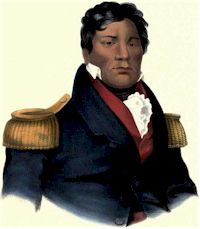
- Pushmatah, Choctaw Indian Chief
- Biographical Sketch of Judge Isaac Jacobs
- The Life of Okah Tubbee
The Life of Okah Tubbee: Alias, William Chubbee, Son of the Head Chief, Mosholch Tubbee of the Choctaw Nation of Indians. A narrative from the lips of Okah Tubbee. Actual veracity to his claim of being the son of Mosholch Tubbee (Mó-sho-la-túb-bee, or Mosholatubbee) will be left to the reader. What Okah Tubbee shares however seems relevant to a Choctaw Native’s and black slaves life at the time and place… pay close attention to the interaction with the various surrounding tribes and races.
Choctaw Genealogy Records
Free US Indian Census Schedules 1885-1940
All of the 1885-1940 Indian census rolls with their images can be accessed for free from AccessGenealogy. For the most part, these rolls dated after 1900 were done in alphabetical order and were typewritten – this should help make finding your ancestor much easier. The earlier ones though were often done in handwriting and the film quality can be very poor at times. Beginning in 1930, the rolls also showed the degree of Indian blood, marital status, ward status, place of residence, and sometimes other information.
Choctaw Indian Agency (Mississippi)
Union Agency
Choctaw Rolls
The following list of rolls were used by the United States Government to identify eligible Choctaw tribe members for enrollment or money payouts.
Armstrong Rolls
Search and understand the Armstrong Rolls as they relate to your Choctaw ancestor. Each Choctaw head of a family being desirous to remain and become a citizen of the States, shall be permitted to do so, by signifying his intention to the Agent within six months from the ratification of this Treaty, and he or she shall thereupon be entitled to a reservation of one section of six hundred and forty acres of land, to be bounded by sectional lines of survey; in like manner shall be entitled to one half that quantity for each unmarried child which is living with him over ten years of age; and a quarter section to such child as may be under 10 years of age, to adjoin the location of the parent. If they reside upon said lands intending to become citizens of the States for five years after the ratification of this Treaty, in that case a grant in fee simple shall issue; said reservation shall include the present improvement of the head of the family, or a portion of it. Persons who claim under this article shall not lose the privilege of a Choctaw citizen, but if they ever remove are not to be entitled to any portion of the Choctaw annuity.
McKennon Roll
The McKennon Rolls were a specific list created by the Dawes Commission; a group responsible for identifying members of the Choctaw tribe in Mississippi. These rolls were supposed to include all the people who were officially recognized as Choctaw by the government in 1913.
Index to Final Roll
This is the index to the names of individuals entitled to enrollment on the rolls of the various tribes comprising the Five Civilized Tribes in Indian Territory (Oklahoma). Each index entry gives an enrollee’s name and final roll number. After a person’s enrollment category and final roll number have been determined, the final rolls can be searched to discover the enrollee’s census card number. Not all roll numbers mentioned in this index, have a corresponding person mentioned in the Dawes Roll.
Search the Final Rolls
The Dawes Roll (Final Rolls) is a list of those members of the Five Civilized Tribes who removed to Indian Territory (Oklahoma) during the 1800’s and were living there during the above dates. If your ancestor was not living in Indian Territory during 1898-1914 they will not be listed on the Dawes Roll! Only those Indians who RECEIVED LAND under the provisions of the Dawes Act are listed. It also lists those Freedmen who received land allotments as provided for in the Dawes Act. These pages can be searched to discover the enrollee’s name, age, sex, blood degree, type, census card number and roll number. Check the headings in each column. Type denotes whether the record is from a Dawes card.
Report Relating to the Enrollment of Citizens and Freedmen of the Five Civilized Tribes
This report, compiled by Joseph W. Howell on March 3, 1909, addresses the complex process of enrolling citizens and freedmen of the Five Civilized Tribes in accordance with various acts of Congress and treaties. Submitted to the Secretary of the Interior, the report meticulously evaluates the claims of individuals asserting rights to land and monetary benefits associated with tribal distributions. Howell discusses the historical and legal challenges that arose during and after the enrollment process, which officially concluded on March 4, 1907. The report sheds light on the intricate legal and administrative issues encountered, revealing the difficulties in accurately identifying rightful beneficiaries amidst widespread legal and political debates. Howell’s detailed account emphasizes the importance of this work, outlining both the procedural undertakings and the broader implications for the tribes and their members, suggesting further actions to address unresolved issues and ensure equitable treatment of all claimants.
Choctaw Military Rolls
Choctaws Who Served in 1794
Choctaws who served a campaign under General Anthony Wayne in 1794
Big Black River Band Muster Roll
Muster roll of a party on immigrant Choctaw Indians, known as the Big Black River Band who arrived at Fort Coffee, in the Choctaw Nation West on the 10th of June 1847.
Ha Cubbees Band Muster Roll
Muster roll of a party of immigrant Choctaw Indians of the Ha Cubbees Band who arrived at Fort Coffee, in the Choctaw Nation West, on the 23 of June 1847
Choctaw Land Claims
- Choctaw Citizenship Litigation
This is a letter from P. J. Hurley, National Attorney for the Choctaw Nation. In this letter he describes in Parts 1-14 the services he performed in Citizenship Cases during the entire term of his employment as attorney for the Choctaw Nation. You will find as you read the different parts of this book there is repetition of some of the work done. For those of you searching for Mississippi Choctaw families denied under Article 14 of the Treaty of Dancing Rabbit Creek, a better insight as how and why this happened. - Native American Land Patents
- A List of Choctaw Claims allowed in Mingo Mushulatubbe’s District
- A List of Choctaw Claims allowed in Nitachacha District
- A List of Choctaw Claims Allowed in Leflore’s District
- Identified Mississippi Choctaw in 1902
- Society of Mississippi Choctaw, 1914
- Report of John T. Reeves, 1916
- Society of Mississippi Choctaw, 1916
- 1933 Mississippi Choctaw Claims
Choctaw Language
There are, or at least were formerly, several dialects spoken in different sections; these, however, differed so little that they have not been considered worthy of special mention.
The Chahta Language
Chahta is a derivative for Choctaw, so the following information is referencing the Choctaw Language. The Chahta Language, the representative of the western group of Maskoki dialects, differs in its phonetics from the eastern dialects chiefly by the more general vocalic nasalization previously alluded to.
Choctaw Tribal Treaties
- Treaty With the Choctaw, January 3, 1786
- Treaty With the Choctaw, October 17, 1801
- Treaty With the Choctaw, October 17, 1802
- Treaty With the Choctaw, August 31, 1803
- Treaty With the Choctaw, November 16, 1805
- Treaty with the Choctaw, October 24, 1816
- Treaty with the Choctaw, October 18, 1820
- Treaty with the Choctaw, January 20, 1825
- Treaty With the Choctaw, September 27, 1830
- Treaty With the Comanche, Etc., August 24, 1835
- Treaty With the Choctaw and Chickasaw, January 17, 1837
- Treaty With the Choctaw and Chickasaw, November 4, 1854
- Treaty With the Choctaw and Chickasaw, June 22, 1855
- Treaty of Dancing Rabbit Creek, September 27, 1870
- Agreement With The Cherokee and other Tribes in The Indian Territory, September 13, 1865
- Treaty With the Comanche and Kiowa, October 18, 1865
- Treaty with the Choctaw and Chickasaw, April 28, 1866
Choctaw Locations
The small Muskhogean tribes known as Mobilian, Tohome or Tomez, Tawasa, Mugulasha, Acolapissa, Huma, and Conshac, on the gulf coast of Mississippi and Alabama, are sometimes called Choctaw, but the Choctaw proper had their villages inland, on the upper courses of the Chickasawhay, Pearl, and Big Black Rivers, and the west affluent of the Tombigbee. At least in later times they were distinguished into three sections, each under its mingo or chief. The western division was called Oklafalaya, ‘the long people,’ and consisted of small, scattered villages; the northeastern, Ahepatokla (Oypatukla), ‘potato-eating people,’ and the southeastern district came to be called Oklahannali, ‘Sixtowns,’ from the name of the dominant subdivision. The people of these two latter districts lived in large towns for mutual defense against their constant enemies the Creeks. Gatschet gives Cobb Indians as the name of those Choctaw settled west of Pearl River.
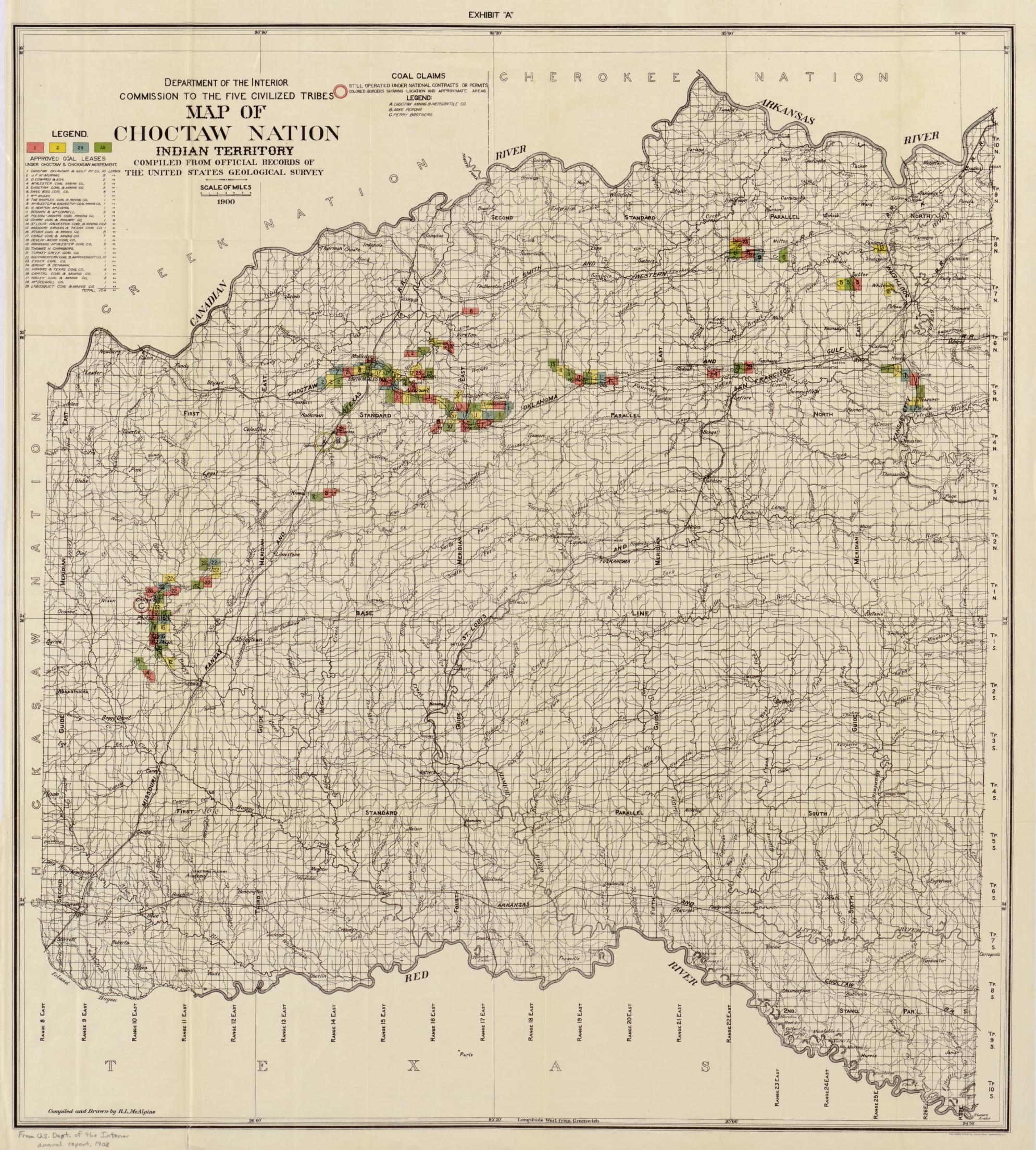
The population of the Choctaw Tribe when it first came into relations with the French, about the year 1700, has been estimated at front 15,000 to 20,000. Their number in 1904 was 17,805, exclusive of 4,722 Choctaw freedmen (Negroes). These are all under the Union Agency, Indian Territory. To these must be added a small number in Mississippi and Louisiana.
Choctaw Indian Villages
Nearly all of the Choctaw towns were in the southeastern part of Mississippi though they controlled the adjoining territory in the present State of Alabama. From the earliest times of which we have any knowledge the Choctaw villages were distributed into three divisions: a southern, a northeastern, and a western, though a central group may also be distinguished.
- Alabama Indian Tribes – Swanton
- Arkansas Indian Tribes – Swanton
- Georgia Indian Tribes – Swanton
- Louisiana Indian Tribes – Swanton
- Mississippi Indian Tribes – Swanton
- Oklahoma Indian Tribes – Swanton
Choctaw Population
Estimates of the number of Choctaw warriors between 1702 and 1814 vary between 700 and 16,000. A North Carolina estimate made in 1761 says they numbered at least 5,000 men. Common estimates are between 4,000 and 5,000, but even these figures may be a trifle low since the first reliable census, that of Armstrong, in 1831, gave 19,554. However, there may have been a slight increase in population after the beginning of the nineteenth century, when an end was put to intertribal wars. Figures returned by the Indian Office since that time show a rather unusual constancy. They go as low as 12,500, and at the other extreme reach 22,707, but the average is from 18,000 to 20,000. The census of 1910 gave 15,917, including 1,162 in Mississippi, 14,551 in Oklahoma, 115 in Louisiana, 57 in Alabama, and 32 in other States, but the United States Indian Office Report for 1923 has 17,488 Choctaw by blood in Oklahoma, 1,600 “Mississippi Choctaw” in Oklahoma, and 1,439 in the State of Mississippi, not counting about 200 in Louisiana, Alabama, and elsewhere. A few small tribes were gathered into this nation, but only a few. The census of 1930 returned 17,757, of whom 16,641 were in Oklahoma, 624 in Mississippi, 190 in Louisiana, and the rest in more than 14 other States. In 1937 the Mississippi Choctaw numbered 1,908, from which it seems that many of the Mississippi Choctaw were missed in 1930 unless the “Mississippi Choctaw” already in Oklahoma are included.
Connection in which they have become noted
The Choctaw were noted:
- As the most numerous tribe in the Southeast next to the Cherokee.
- As depending more than most other tribes in the region on agriculture.
- For certain peculiar customs such as head deformation, extensive use of ossuaries for the dead, and the male custom of wearing the hair long.
- As faithful allies of the French against the English but always at peace with the United States Government.
- As having furnished the names to counties in Alabama, Mississippi, and Oklahoma, and settlements in the same states, and in Van Buren County, Arkansas.
Online Choctaw Tribe Resources
- Online Choctaw Indian Research
- The Choctaw Villages
Historic research with sources for Choctaw Village locations. - Choctaw Nation of Oklahoma
The official website for the Choctaw Nation who settled in Oklahoma - Mississippi Band of Choctaws
The official website for the Choctaw people who stayed in Mississippi
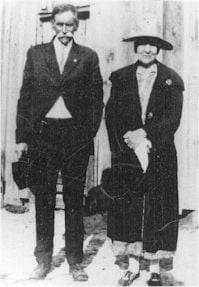
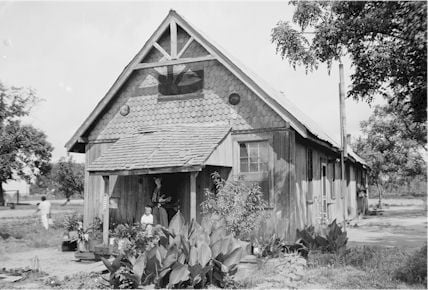
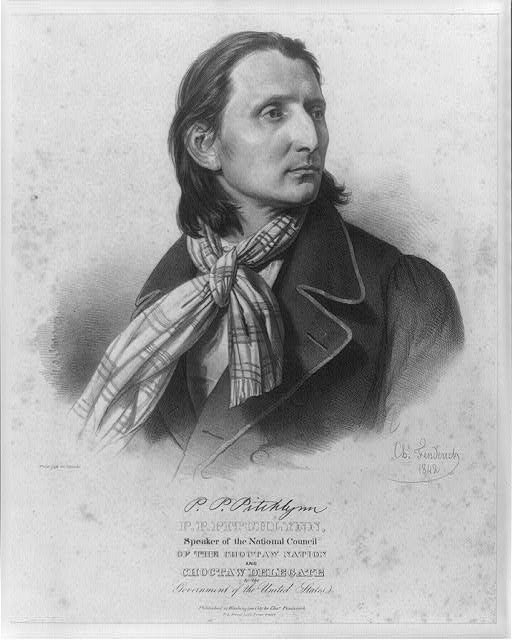
Choctaw Tribe Gallery of Photos

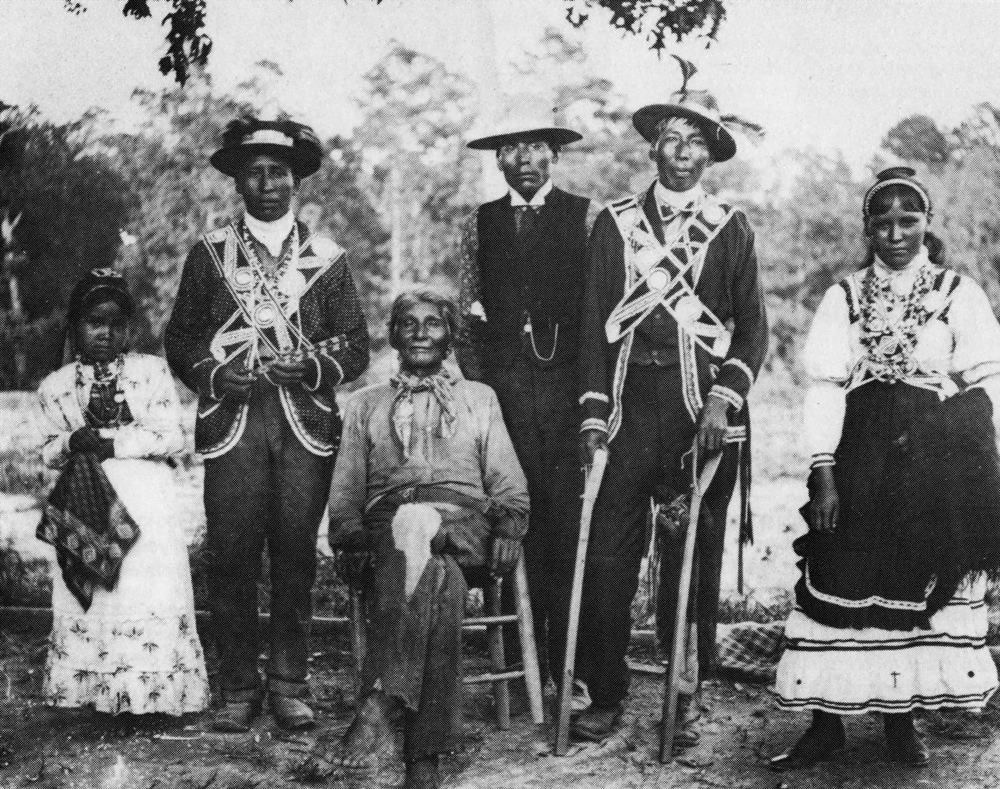
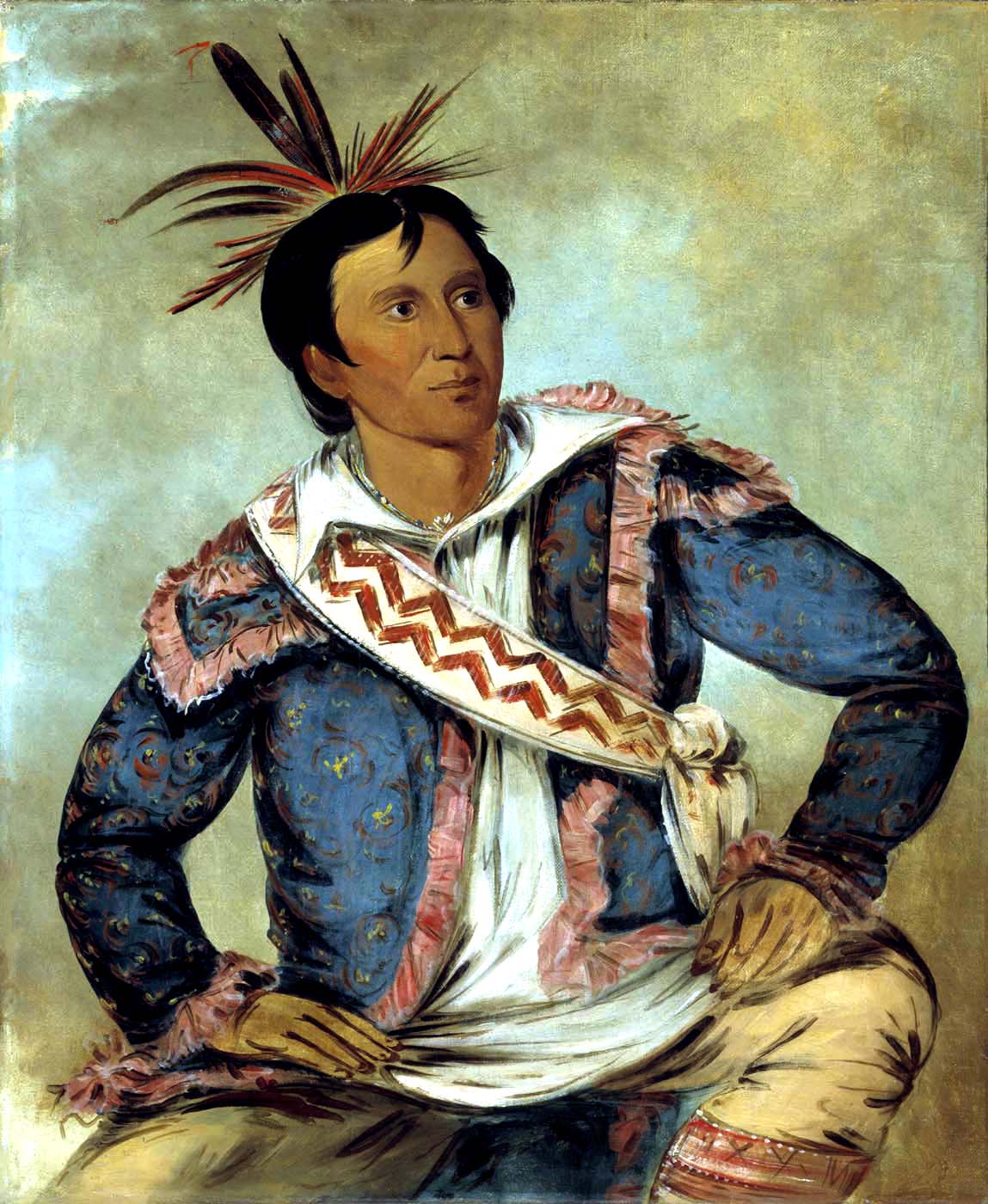
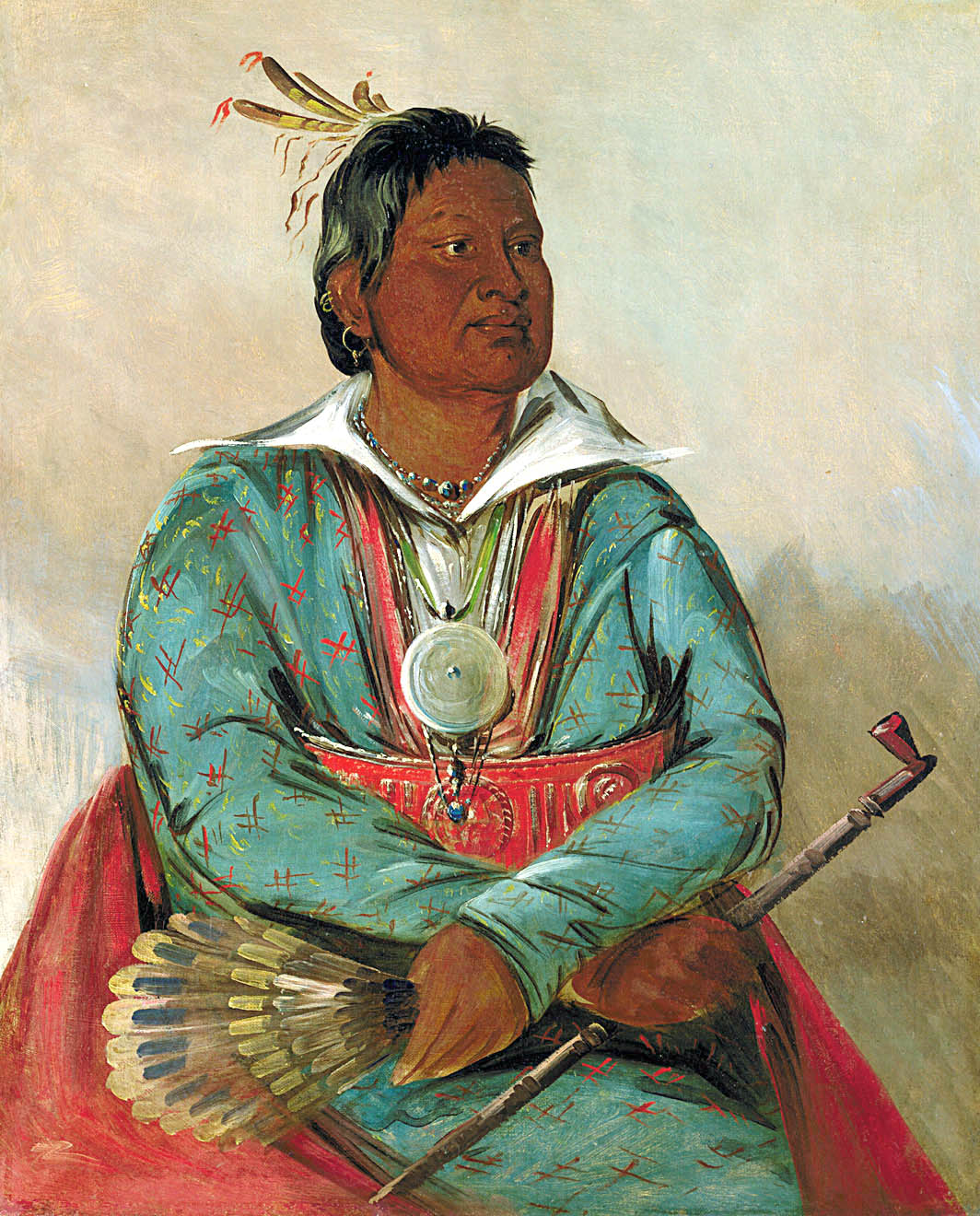
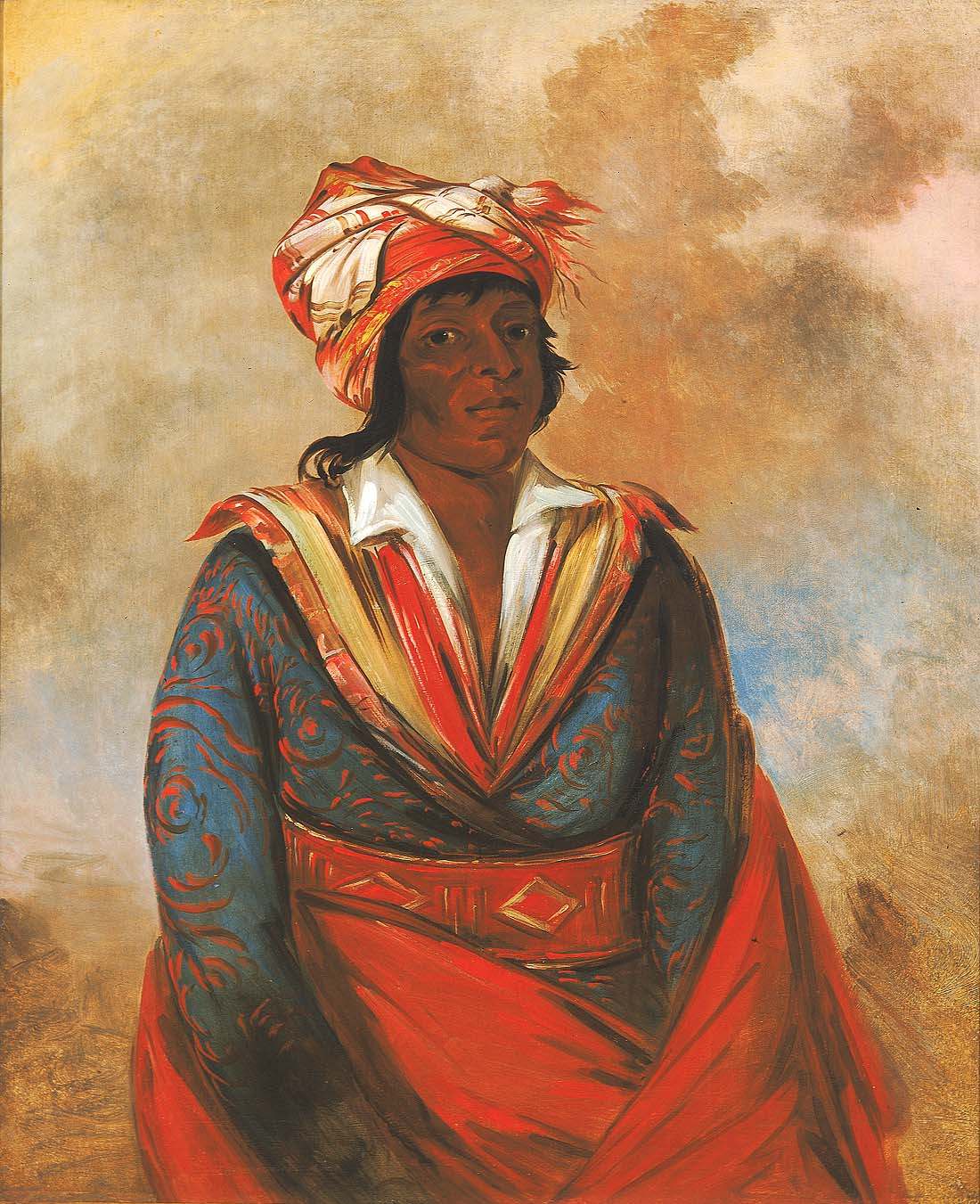
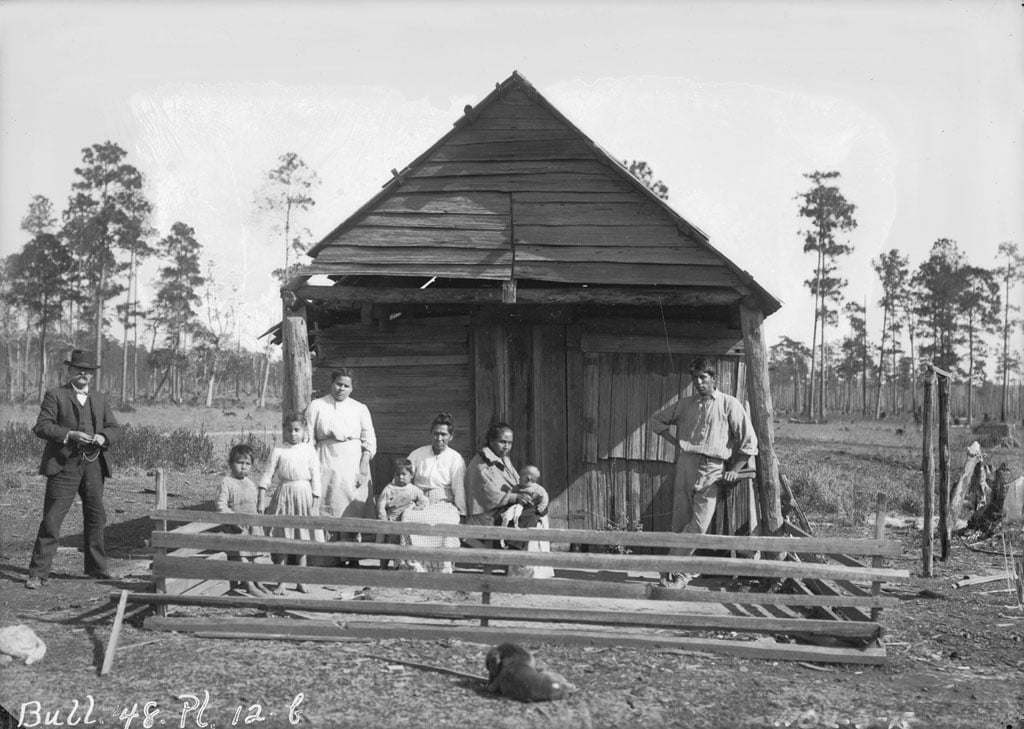
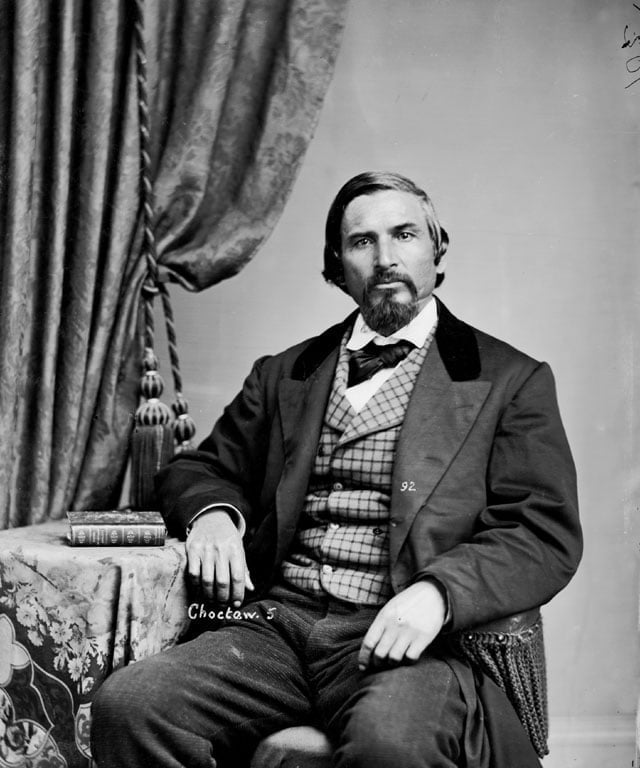
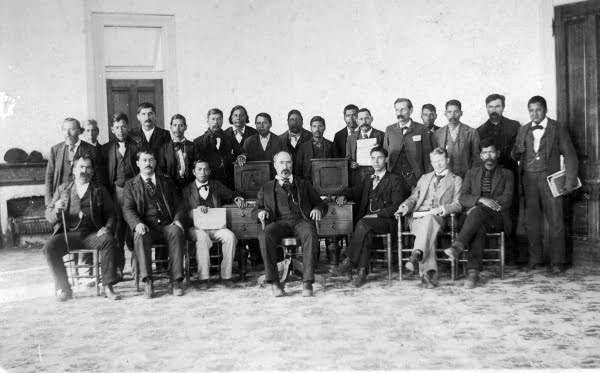
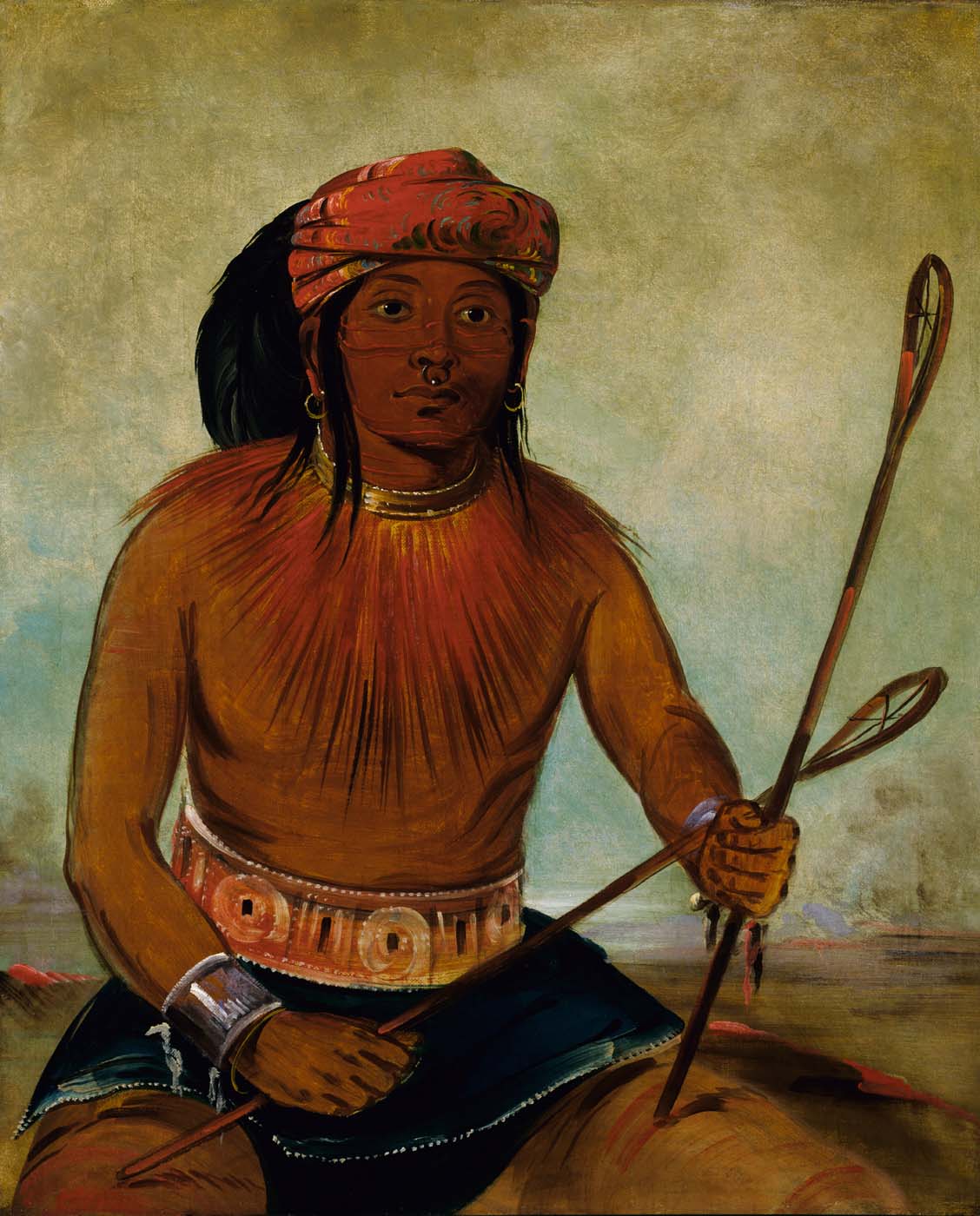
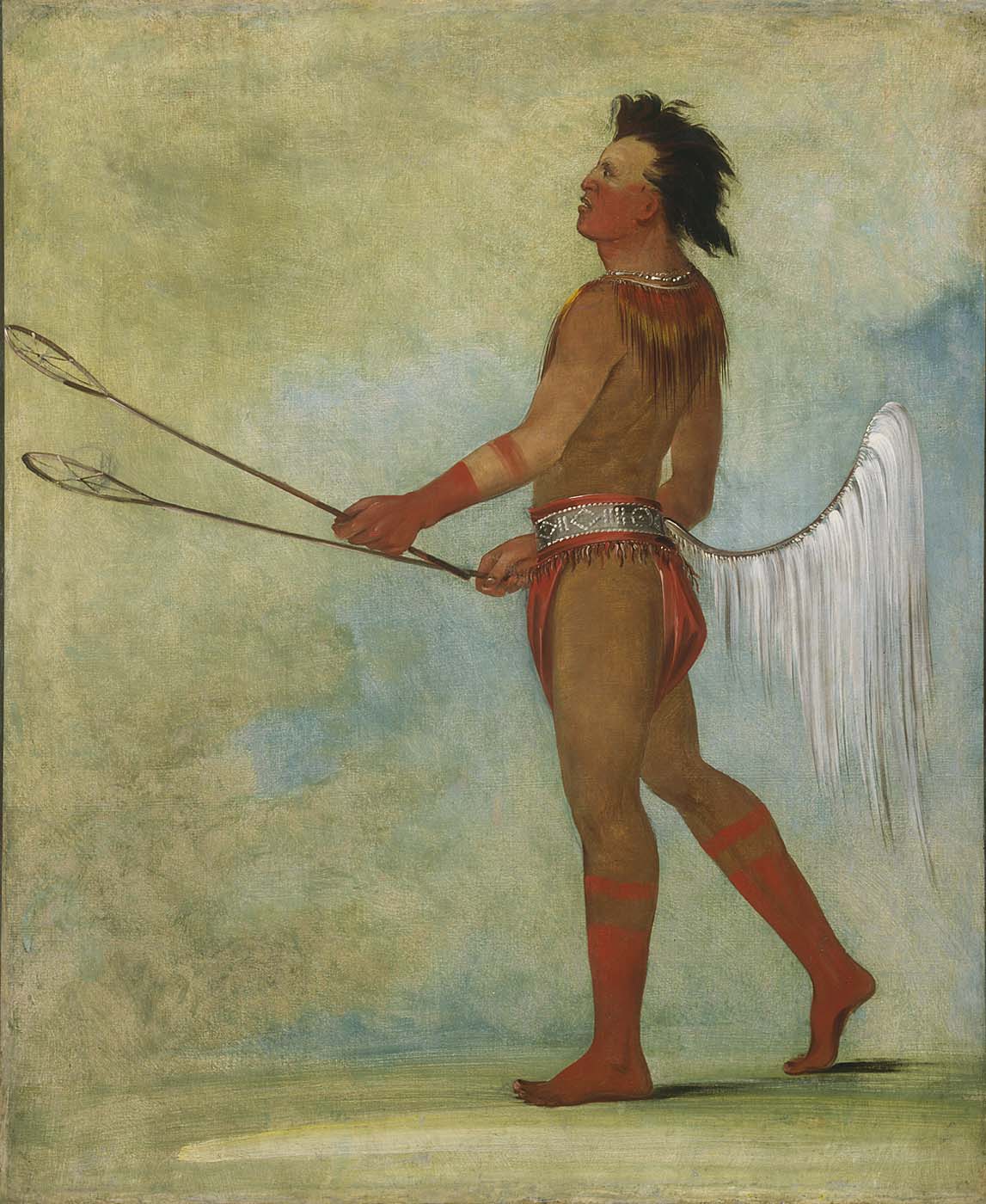
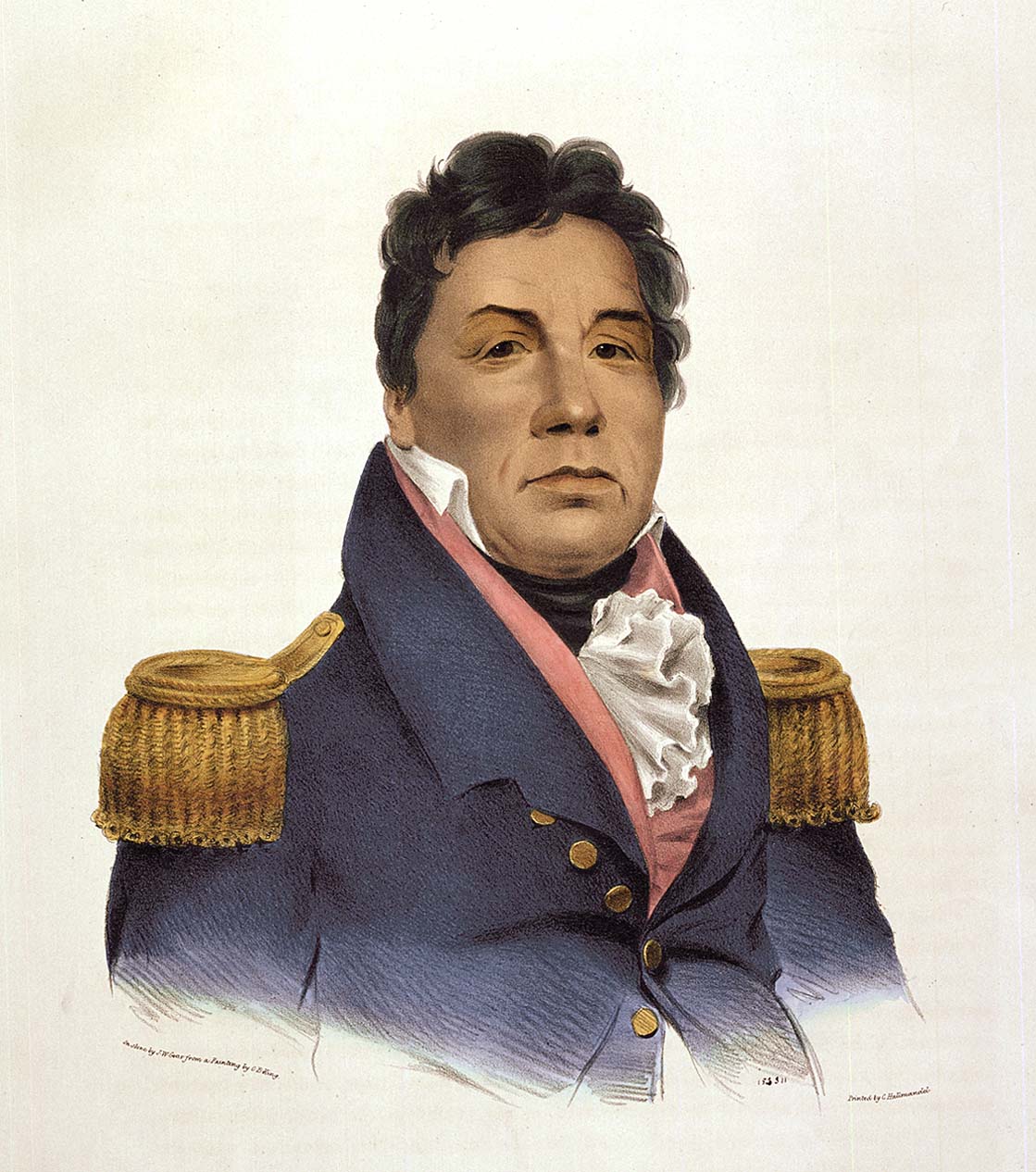
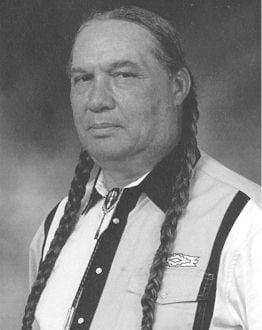
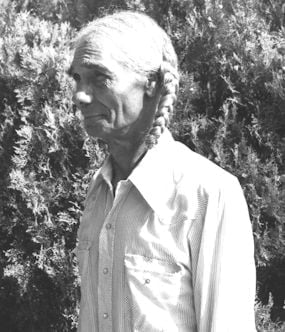
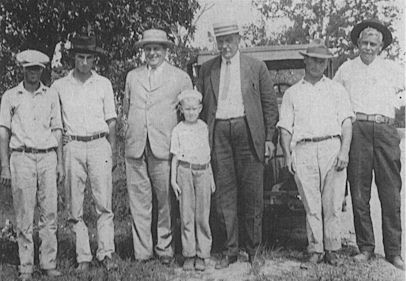

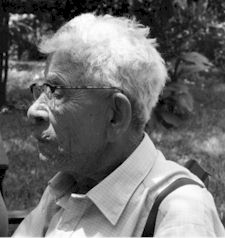
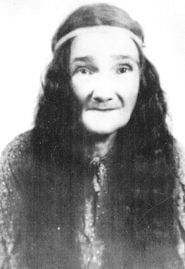

![Bankston Johnson - full blooded Choctaw Indian "Rough Rider" [on horseback aiming rifle]](https://accessgenealogy.com/wp-content/uploads/2013/02/Bankston-Johnson-Choctaw.jpg "Choctaw Genealogy 32")



Citations:
- Gatschet, Creek Migration Legends, I, 53, 1884[
 ]
] - Milfort, Méoire, 95, 1802[]
- Rep. to Sec. War, 373, 1822[]
- Halbert, Creek War of 1813 and 1814, 124, 1895[]
- Royce, Indian Land Cessions, 18th Rep. B. A. E., 1899[]
- Morgan, Ancient Society, 99, 162, 1877[]
- Wright in Ind. Aff. Rep. 1843, 348[]
