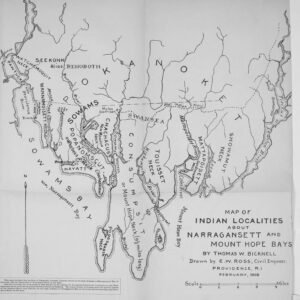
Sowams

1908 Map of Indian Localities about Narragansett and Mount Hope Bays

Sowams,” authored by Thomas Williams Bicknell in 1908, delves into the history of the ancient proprietary known as Sowams, encompassing Native leadership under Massassoit and early colonial settlement dynamics that shaped Barrington, Rhode Island, and surrounding areas. Drawing from over forty years of research, Bicknell includes primary records from the proprietary, showcasing the region’s governance, land ownership, and the founding of the First Baptist Church of Massachusetts. This comprehensive work serves as a vital resource for lawyers, historians, and general readers interested in colonial life and legal frameworks of the time.

Collections of the New Hampshire Historical Society

1892 Map of New Hampshire

The Collections of the New Hampshire Historical Society is a 15 publication series documenting the state’s history through various primary sources, including manuscripts, letters, and public records. It collates valuable narratives that were previously difficult to access, providing insight into events, individuals, and communities in New Hampshire. Each volume offers focused topics and historical analyses, and most volumes contain individual indexes.

Abington Massachusetts Marriage and Death Records

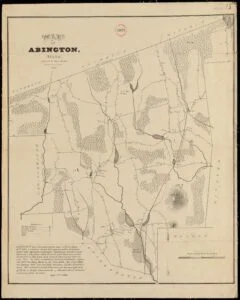
1830 Map of Abington, Massachusetts

Volume 2 of the Abington, Massachusetts vital records compiles marriage and death records up to 1850, complementing Volume 1, which contains birth records. Established in 1712, Abington’s boundaries have shifted, affecting historical jurisdiction. Extensive research from town records, cemeteries, and family Bibles ensured comprehensive documentation, including the identification of Black families recorded by given names. The volume is organized alphabetically by marriages and deaths.

History of Amherst New Hampshire

Residence of Isaac Brooks in Amherst New Hampshire

The history of Amherst, New Hampshire, unfolds from its 1675 land grant to veterans of the Narraganset War, marking the impetus for settlement along the Souhegan River. From its early governance and incorporation in 1760 to territorial adjustments that birthed Mont Vernon and Milford, this narrative encompasses local geography, economy, and Indigenous presence. Key military engagements, civic institutions, and genealogical records are explored up to 1882, offering a comprehensive view of the town’s evolution and its prominent figures.

Essex County Massachusetts Probate Records 1675-1681

Sample Last Will and Testament

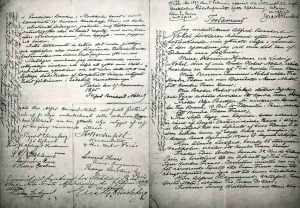
The “Governor and Company of Massachusetts Bay” established a judicial system in 1628, with a General Court in Boston and quarterly courts in major towns like Salem and Ipswich by 1635. These courts managed probate matters, and after Essex County’s formation in 1643, individual probate courts were later established in 1692. These are the probate records from 1675 to 1681, sourced from various original documents, including detailed wills and estate settlements.

Records of Ingham County Michigan Pioneer Families

Entrance to Mt Hope Cemetery, Lansing, Michigan

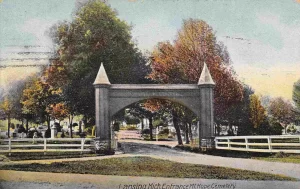
These records were typed from manuscript copies of the original records made by George L. Hammell, which were willed to the Michigan State Library by Mr. Hammell of E. Lansing, Mich. who died Sept. 26, 1952. They consist of a variety of typed sources including Bible records, cemetery records, family records, and probate records for early families of Ingham County, Michigan.

Marriage records of Liberty County Georgia, 1785-1895

Marriage records of Liberty County, Georgia, 1785-1895

These marriage records were abstracted from unbound marriage bonds and licenses in the Liberty County Courthouse, Hinesville, Georgia. The names were copied as they were spelled on the bonds, often barely legible and often spelled differently on the same bond. Sometimes the marriages were performed before the licenses were issued. The first date given in the abstracts is the date of the license or bond; the second is the date of marriage. The following abbreviations are used in these abstracts with the meaning indicated:

Sevier County 1830 Tennessee Census

1830 Sevier County Census transcription

Published in Knoxville, Tennessee in 1956 and distributed by the Genealogical Publishing Company of Baltimore, Maryland, Sevier County, Tennessee: Population Schedule of the United States Census of 1830 (Fifth Census) provides a transcription of the often difficult to read, 1830 Sevier County Tennessee census. Authored by Blanche C. McMahon and Pollyanna Creekmore, this meticulous reproduction of the original census record sheds light on the people of Sevier County in 1830.

Abstractions from Huron County Ohio, Will Book A

Volume A, Huron County Wills to 1852

This volume is “Abstractions from Huron County Ohio, Will Book A.” These will abstractions cover the years from 1828 to 1852. They have been taken out of order as they appeared in the original volume and sorted by name. This abstraction was done by Henry Timman of Norwalk, Ohio, in 1960.

History of Adair County Iowa and its People – vol 2

History of Adair County, Iowa, and its people vol 2 title page

Back in 1915, Lucian Moody Kilburn, was engaged to write a history of Adair County Iowa by the Pioneer Publishing Company of Chicago Illinois, he then being at that time a resident of the county for 50 years. The manuscript was divided into two volumes. This volume, numbered 2, provides biographical sketches of 348 leading men and women of the County of Adair including many of its founding families. You can read or download the free eBook from this website.

Brown Genealogy

Brown Genealogy

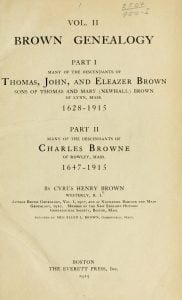
In 1895, Cyrus Henry Brown began collecting family records of the Brown family, initially with the intention of only going back to his great-grandfathers. As others became interested in the project, they decided to trace the family lineage back to Thomas Brown and his wife Mary Newhall, both born in the early 1600s in Lynn, Massachusetts. Thomas, John, and Eleazer, three of their sons, later moved to Stonington, Connecticut around 1688. When North Stonington was established in 1807, the three brothers were living in the southern part of the town. Wheeler’s “History of Stonington” contains 400 records of early descendants of the Brown family, taken from the town records of Stonington. However, many others remain unidentified, as they are not recorded in the Stonington town records. For around a century, the descendants of the three brothers lived in Stonington before eventually migrating to other towns in Connecticut and New York State, which was then mostly undeveloped. He would eventually write this second volume of his Brown Genealogy adding to and correcting the previous edition. This book is free to search, read, and/or download.

Families of Ancient New Haven

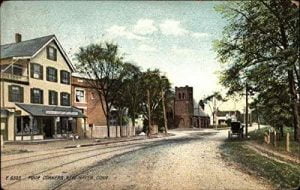
Four Corners New Haven Connecticut

The Families of Ancient New Haven compilation includes the families of the ancient town of New Haven, covering the present towns of New Haven, East Haven, North Haven, Hamden, Bethany, Woodbridge and West Haven. These families are brought down to the heads of families in the First Census (1790), and include the generation born about 1790 to 1800. Descendants in the male line who removed from this region are also given, if obtainable, to about 1800, unless they have been adequately set forth in published genealogies.

The genealogy and history of the Ingalls family in America

The genealogy and history of the Ingalls family in America

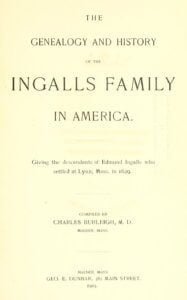
Edmund Ingalls, son of Robert, was born about 1598 in Skirbeck, Lincolnshire, England. He immigrated in 1628 to Salem, Massachusetts and with his brother, Francis, founded Lynn, Massachusetts in 1629. He married Ann, fathered nine children, and died in 1648.

Ancestry of Alfred Pierce of Attleboro Massachusetts

Old Families of Southeastern Massachusetts

Alfred Pierce, born January 1, 1822, in Rehoboth, Massachusetts, is a retired contractor and builder from Attleboro, where he contributed significantly to the construction of public and private buildings over fifty years. A descendant of a notable lineage tracing back to the Norman Conquest, his ancestors participated in many historical events. Alfred and his wife Martha Richardson Williams, a prominent community member, had one daughter, Marion, who pursued a career in art and was active in civic organizations. Alfred remains a respected figure in his community.

Genealogy of Emery Moore Low of Tewksbury and Brockton Massachusetts

Emery Moore Low, born March 29, 1849, in Roxbury, Massachusetts, became a prominent figure in Brockton, where he served as mayor and operated a successful paper box manufacturing business. His lineage traces back to William Low of Chelsea, who served in the Revolutionary War. Emery’s career included roles in local governance and community service, while his contributions to Brockton’s infrastructure during his mayoralty were notable. Married to Ida Jane Colbath, he had several successful children, solidifying his family’s legacy in the region.

Swift Family of New Bedford, MA

The Swift family has been influential in New Bedford for over a century, rooted in a legacy that began with William Swift in 1634. This branch, originating from Cape Cod, excels in various enterprises, particularly in shipbuilding and trade. Humphrey Hathaway Swift, a prominent merchant, dedicated nearly sixty years to Brazilian trade, initiating significant reforms, including the first horse car line and advocating for the emancipation of slaves. His extensive contributions earned him the knighthood from Emperor Dom Pedro II, highlighting the family’s lasting impact on both local and international arenas.

Descendants of Davis Snow Packard of Bridgewater, Massachusetts

Davis Snow Packard, born June 24, 1826, in North Bridgewater, Massachusetts, became a notable manufacturer and public figure in Brockton. He co-founded a successful boot and shoe counter company, which he later expanded. Packard played a significant role in local banking and civic organizations, serving as president of the Brockton National Bank and participating actively in the Brockton Agricultural Society. His public service included roles as selectman and state representative. He passed away on July 31, 1900, leaving a legacy of enterprise and community service.

Richard Dexter Genealogy, 1642-1904

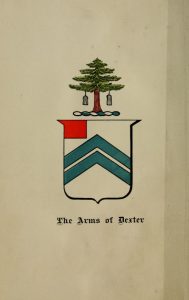
Arms of Dexter

Being a history of the descendants of Richard Dexter of Malden, Massachusetts, from the notes of John Haven Dexter and original researches. Richard Dexter, who was admitted an inhabitant of Boston (New England), Feb. 28, 1642, came from within ten miles of the town of Slane, Co. Meath, Ireland, and belonged to a branch of that family of Dexter who were descendants of Richard de Excester, the Lord Justice of Ireland. He, with his wife Bridget, and three or more children, fled to England from the great Irish Massacre of the Protestants which commenced Oct. 27, 1641. When Richard Dexter and family left England and by what vessel, we are unable to state, but he could not have remained there long, as we know he was living at Boston prior to Feb. 28, 1642.

Muster Roll of Captain James Clark’s Company

Title page to the Aroostook War

Muster Roll of Captain James Clark’s Company of Light Infantry in the Detachment of drafted Militia of Maine, called into actual service “by the State, for the protection of its Northeastern Frontier, from the twentieth day of February, 1839, the time of its rendezvous at Bangor, Maine, to the eleventh day of May, 1839, when discharged or mustered.