New Hampshire Men

New Hampshire Men presents 407 biographical sketches, with portraits, of men who were active in commercial, professional, and political life in New Hampshire in 1893.

New Hampshire Men presents 407 biographical sketches, with portraits, of men who were active in commercial, professional, and political life in New Hampshire in 1893.
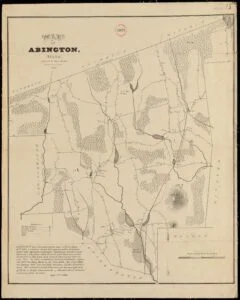
Volume 1 of the Abington, Massachusetts vital records details births recorded in the town up to 1850, featuring comprehensive research from town records, cemeteries, and church documents. Established in 1712, Abington’s jurisdictional changes may affect genealogical searches. The records also include separate listings for Black families, primarily by given names. Additionally, various surnames are cataloged, emphasizing the need to consider alternate spellings. For marriages and deaths, researchers should consult Volume 2.

State Builders, published in 1903, serves as a historical and biographical account of New Hampshire at the turn of the twentieth century. Authored by local writers, it covers the state’s development across various sectors including politics, education, and industry, while documenting the lives of notable residents. The volume reflects both continuity and change in the state’s traditions, making it a valuable reference for understanding New Hampshire’s institutions and influential figures during this pivotal period.
New Hampshire Notables,” published by the Concord Press in 1932, is a biographical compilation that follows a previous work by Henry H. Metcalf. It contains 474 brief sketches of notable individuals, both natives and residents of New Hampshire, recognized for their contributions across various fields such as public life, business, and education. This edition focuses on living subjects as of 1932, with an alphabetical index for easy reference. While not exhaustive, it serves as a valuable resource for researchers and libraries, preserving important biographical data.
Alphabetical indexes to the vital records of Medway, Massachusetts, up to the year 1850, supplemented by information from church registers, cemetery inscriptions and other private sources to include Rev. Dr. Jacob Ide’s account of Marriages and Deaths, 1814-1849.
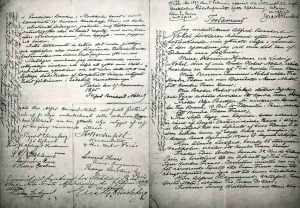
The “Governor and Company of Massachusetts Bay” established a judicial system in 1628, with a General Court in Boston and quarterly courts in major towns like Salem and Ipswich by 1635. These courts managed probate matters, and after Essex County’s formation in 1643, individual probate courts were later established in 1692. These are the probate records from 1675 to 1681, sourced from various original documents, including detailed wills and estate settlements.
The “Governor and Company of Massachusetts Bay” established a judicial system in 1628, with a General Court in Boston and quarterly courts in major towns like Salem and Ipswich by 1635. These courts managed probate matters, and after Essex County’s formation in 1643, individual probate courts were later established in 1692. These are the probate records from 1665 to 1674, sourced from various original documents, including detailed wills and estate settlements.

Volume II of History of the Town of Cornish, New Hampshire, with Genealogical Record, 1763–1910, compiled by William Henry Child and published in 1911, presents a detailed genealogical account of the families who settled in Cornish from its founding through the early 20th century.
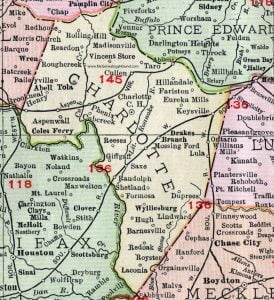
This volume, “Marriages of Charlotte County, Virginia, 1784-1815,” compiles the marriage bonds and minister’s returns from Charlotte County during the specified period. The original work was painstakingly copied by Catherine Lindsay Knorr and published in 1951. The book spans 119 pages and includes a wealth of historical data on marriages that took place in this Virginia county. This publication presents several challenges for readers. Some pages are slightly tattered and torn, and the manuscript features irregular pagination. Additionally, there are tight or nonexistent margins, particularly at the bottom of the pages, and one page is typed on different paper than the rest.

The “Family Record of Dr. Seth Hastings, Senior” by Francis H. Hastings is a genealogical account that documents the ancestry and descendants of Dr. Seth Hastings, Sr., born in Hatfield, Massachusetts, in 1745. This work briefly traces his lineage back to Deacon Thomas Hastings, who emigrated from Ipswich, England, to New England on the ship Elizabeth in 1634. Deacon Thomas Hastings became a freeman in Watertown, Massachusetts, in 1635. The book then advances to a brief overview of the family of Dr. Seth Hastings, Sr., before delving into detailed records of his descendants. The genealogy extends to various families allied to the Hastings through marriage, incorporating a wide array of surnames.

These marriage records were abstracted from unbound marriage bonds and licenses in the Liberty County Courthouse, Hinesville, Georgia. The names were copied as they were spelled on the bonds, often barely legible and often spelled differently on the same bond. Sometimes the marriages were performed before the licenses were issued. The first date given in the abstracts is the date of the license or bond; the second is the date of marriage. The following abbreviations are used in these abstracts with the meaning indicated:

This survey of Wintergreen Cemetery, Port Gibson, Mississippi, was completed in 1956 by Mr. Gordon M. Wells and published by Joyce Bridges the same year. It contains the cemetery readings Mr. Wells was able to obtain at that date. It is highly likely that not all of the gravestones had survived up to that point, and it is even more likely that a large portion of interred individuals never had a gravestone.
The History of Ontario County, New York genealogical section provides an extensive array of surnames, indicating the comprehensive nature of the section in Part 2. These genealogies not only serves as a reference for individuals researching family histories but also reflects the diverse settler and immigrant populations that have contributed to the fabric of Ontario County. Each surname represents a family’s journey, struggles, and contributions to the county’s development over centuries.

The list of vital records of Southborough, Massachusetts, comprised in this volume includes all which were entered in the Town Books during the period from the earliest date there found to the end of the year 1849. Some additions and corrections of names and dates have been made from the records of the First Church, these being indicated in each instance by proper reference. There are a total of 6,267 births, marriages, and deaths recorded. This book is free to read or download.
This small booklet contains all the known men and women who participated in World War 1 and claimed their home of record as Stephenson County, Illinois. By participation, this record does not limit this to soldiers, but also contains the records of those men and women who served the Red Cross, Y.M.C.A., and other non-fighting positions. This book is free to read or download.
This is a transcription of the death records of Lee County, Virginia from 1853-1897. Over 36,000 records are transcribed in this free digital PDF book.

Genealogy of the descendants of John Walker of Wigton, Scotland, with records of a few allied families : also war records and some fragmentary notes pertaining to the history of Virginia, 1600-1902
The Amidon Family genealogy book details the lineage of Roger Amadowne, a French Huguenot who fled to England and later to America after the revocation of the Edict of Nantes. Documented in Salem, Massachusetts in 1637, variations of his surname include Amadon, Amidown, and Ammidon. The work, organized with biographical sketches and two helpful indexes, presents the family’s history and is richly illustrated. Originally published in 1904, it serves as a valuable resource for descendants and historians alike.

Soon after World War 1 localities across the country wished to honor the men and women who had served the Nation from their locality. St. Charles County, Missouri, is one of these counties. This manuscript isn’t limited to just the men who fought overseas, it also includes the women who had participated via Red Cross and the men who had actively served in the various campaigns backing the War here at home.
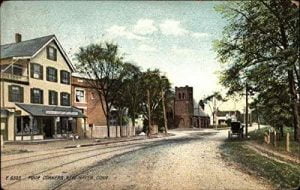
The Families of Ancient New Haven compilation includes the families of the ancient town of New Haven, covering the present towns of New Haven, East Haven, North Haven, Hamden, Bethany, Woodbridge and West Haven. These families are brought down to the heads of families in the First Census (1790), and include the generation born about 1790 to 1800. Descendants in the male line who removed from this region are also given, if obtainable, to about 1800, unless they have been adequately set forth in published genealogies.