Collections of the New Hampshire Historical Society

1892 Map of New Hampshire

The Collections of the New Hampshire Historical Society is a 15 publication series documenting the state’s history through various primary sources, including manuscripts, letters, and public records. It collates valuable narratives that were previously difficult to access, providing insight into events, individuals, and communities in New Hampshire. Each volume offers focused topics and historical analyses, and most volumes contain individual indexes.

Vital Records of Bellingham, Massachusetts

Vital Records of Bellingham Massachusetts to the year 1850

Alphabetical indexes to the vital records of Bellingham, Massachusetts, up to the year 1850, supplemented by information from bible records, church registers, cemetery inscriptions and other private sources to include the diary kept by Samuel Wight and his daughters.

History of Long Beach, California

Long Beach Community Book

The “Long Beach Community Book,” authored by Walter H. Case and published in 1948 by A.H. Cawston, is an extensive exploration of the history and development of Long Beach, California. The book is divided into two main sections: a historical narrative and biographical sketches. The first part of the book offers a detailed account of Long Beach’s evolution from its early beginnings to a thriving city. It covers various aspects of the city’s growth, including its geographical advantages, municipal governance, public facilities, educational institutions, and notable events such as epochal oil discoveries and the impact of wartime activities. The narrative also addresses challenges faced by the city, such as land subsidence and the major issue of tideland rights. The second part of the book comprises biographical sketches of significant Long Beach citizens, both past and present, highlighting their contributions to the community.

Early Settlers of Ralls County, Missouri

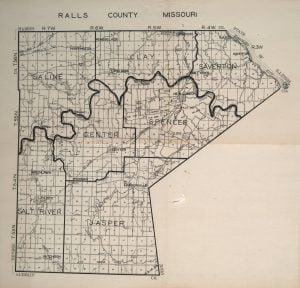
1930 Map of Ralls County, Missouri

The manuscript “Early Settlers of Ralls County, Missouri” compiled by Eunice Moore Anderson in 1951 serves as a valuable resource for those tracing their family genealogy in Ralls County. Divided into three parts, the compilation focuses on documenting early settlers prior to 1878, drawing from sources such as county atlases and historical records spanning Marion, Ralls, Pike Counties, and beyond. While not aiming to provide a comprehensive history, Anderson’s work catalogues pioneer families, offering insights into their origins, migration dates to Ralls County, and family connections. This structured approach, supplemented by an alphabetical index, aids researchers in navigating through ancestral records and locating further detailed information within related historical volumes.

Marriages of Charlotte County Virginia, 1784-1815

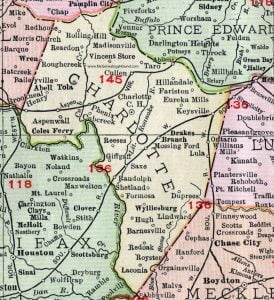
1911 Map of Charlotte County Virginia

This volume, “Marriages of Charlotte County, Virginia, 1784-1815,” compiles the marriage bonds and minister’s returns from Charlotte County during the specified period. The original work was painstakingly copied by Catherine Lindsay Knorr and published in 1951. The book spans 119 pages and includes a wealth of historical data on marriages that took place in this Virginia county. This publication presents several challenges for readers. Some pages are slightly tattered and torn, and the manuscript features irregular pagination. Additionally, there are tight or nonexistent margins, particularly at the bottom of the pages, and one page is typed on different paper than the rest.

Marriage records of Liberty County Georgia, 1785-1895

Marriage records of Liberty County, Georgia, 1785-1895

These marriage records were abstracted from unbound marriage bonds and licenses in the Liberty County Courthouse, Hinesville, Georgia. The names were copied as they were spelled on the bonds, often barely legible and often spelled differently on the same bond. Sometimes the marriages were performed before the licenses were issued. The first date given in the abstracts is the date of the license or bond; the second is the date of marriage. The following abbreviations are used in these abstracts with the meaning indicated:

Marriages of Orange County, Virginia, 1747-1810

Marriages of Orange County, Virginia, 1747-1810

Catherine Lindsay Knorr’s Marriages of Orange County, Virginia, 1747-1810 stands as a pivotal work for genealogists and historians delving into the rich tapestry of Virginia’s past. Published in 1959, this meticulously compiled volume sheds light on the matrimonial alliances formed within Orange County, Virginia, during a period that was crucial to the shaping of both local and national histories. The absence of a contemporary marriage register presented a formidable challenge, yet through exhaustive examination of marriage bonds, ministers’ returns, and ancillary records, Knorr has reconstructed a reliable record of these marriages.

Pioneers of Elk Valley, Del Norte County, California

Pioneers of Elk Valley, Del Norte County, California

In the heart of Northern California lies a hidden gem steeped in history and natural beauty: Elk Valley in Del Norte County. This manuscript, titled “Pioneers of Elk Valley, Del Norte County, California: Fifty Years in the History of Elk Valley from 1850 to the Turn of the Century,” authored by Frances Turner McBeth, embarks on a vivid journey through the transformation of this enchanting valley over half a century. From the early days of exploration and settlement to the bustling activity of the turn of the century, McBeth’s narrative weaves together the lives of the pioneers who braved the unknown to establish a community in one of California’s most picturesque landscapes.

Brown Genealogy

Brown Genealogy

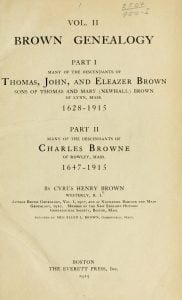
In 1895, Cyrus Henry Brown began collecting family records of the Brown family, initially with the intention of only going back to his great-grandfathers. As others became interested in the project, they decided to trace the family lineage back to Thomas Brown and his wife Mary Newhall, both born in the early 1600s in Lynn, Massachusetts. Thomas, John, and Eleazer, three of their sons, later moved to Stonington, Connecticut around 1688. When North Stonington was established in 1807, the three brothers were living in the southern part of the town. Wheeler’s “History of Stonington” contains 400 records of early descendants of the Brown family, taken from the town records of Stonington. However, many others remain unidentified, as they are not recorded in the Stonington town records. For around a century, the descendants of the three brothers lived in Stonington before eventually migrating to other towns in Connecticut and New York State, which was then mostly undeveloped. He would eventually write this second volume of his Brown Genealogy adding to and correcting the previous edition. This book is free to search, read, and/or download.

Families of Ancient New Haven

Four Corners New Haven Connecticut

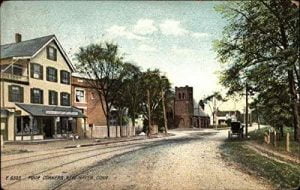
The Families of Ancient New Haven compilation includes the families of the ancient town of New Haven, covering the present towns of New Haven, East Haven, North Haven, Hamden, Bethany, Woodbridge and West Haven. These families are brought down to the heads of families in the First Census (1790), and include the generation born about 1790 to 1800. Descendants in the male line who removed from this region are also given, if obtainable, to about 1800, unless they have been adequately set forth in published genealogies.

Garrisons, Block-Houses, and Forts in the Saco Valley

Saco Fort in 1699

During the Indian wars, settlers along the Saco River constructed various fortifications for protection. Some were built individually, while others were financed by the Provincial Government. Notable structures included Saco Fort, established in 1693, and Fort Mary, built in 1708. These fortifications served as refuges during Indian threats, housing troops and local inhabitants. The construction of blockhouses and stockades ensured safety, although residents faced hardships during sieges. Many forts were later abandoned as peace returned, marking the challenging experiences of early settlers in the Saco Valley.

The genealogy and history of the Ingalls family in America

The genealogy and history of the Ingalls family in America

Edmund Ingalls, son of Robert, was born about 1598 in Skirbeck, Lincolnshire, England. He immigrated in 1628 to Salem, Massachusetts and with his brother, Francis, founded Lynn, Massachusetts in 1629. He married Ann, fathered nine children, and died in 1648.

Genealogical Record of Thomas Wait and his descendants

Genealogical record of Thomas Wait and his descendants

Genealogical Record of Thomas Wait and his descendants looks at the genealogy of Thomas Wait (1601-1677) who was from Wethersfield Parish, Essex, England. On his arrival in America, landing in Rhode Island, he applied for a lot on which to build,and was granted it on 7/1/1639. On 3/l6/l641 he became a Freeman in Newport R. I. He died in Portsmouth R. I., before April 1677 intestate. This Thomas Wait was a cousin to the Richard Waite of Watertown Mass., who was a large land owner. This unpublished manuscript provides the descendants of this family.

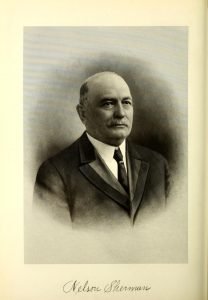
Ancestors of Nelson Sherman of Carver and Brockton, Massachusetts

Nelson Sherman

Nelson Sherman, who was for many years extensively engaged in agricultural pursuits in the town of Carver, Mass., and is now making his home in the city of Brockton, is regarded as one of the substantial men of Plymouth county. He is a descendant of several of this Commonwealth’s earliest settled and most prominent families, and was born March 14, 1841, in North Carver, son of Henry and Christinai (Crocker) Sherman.

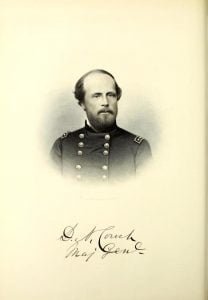
Descendants of Leonard Crocker Couch of Taunton MA

couch

The Couch family of Taunton, represented by Leonard Crocker Couch, traces its lineage back to Simon Couch, a freeman of Connecticut in 1664. Simon’s descendants engaged in various professions and politics, notably producing Maj. Gen. Darius Nash Couch, a distinguished Civil War figure. Leonard Crocker Couch has been a significant presence in Taunton, evolving from a machinist to a businessman. His familial ties extend to prominent families like the Crockers and Leonards, shaping a legacy of community involvement and service across generations.

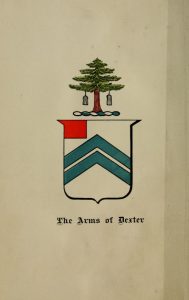
Richard Dexter Genealogy, 1642-1904

Arms of Dexter

Being a history of the descendants of Richard Dexter of Malden, Massachusetts, from the notes of John Haven Dexter and original researches. Richard Dexter, who was admitted an inhabitant of Boston (New England), Feb. 28, 1642, came from within ten miles of the town of Slane, Co. Meath, Ireland, and belonged to a branch of that family of Dexter who were descendants of Richard de Excester, the Lord Justice of Ireland. He, with his wife Bridget, and three or more children, fled to England from the great Irish Massacre of the Protestants which commenced Oct. 27, 1641. When Richard Dexter and family left England and by what vessel, we are unable to state, but he could not have remained there long, as we know he was living at Boston prior to Feb. 28, 1642.

Tupman Cemetery, Columbia, Kentucky

Cemetery transcription of the Tupman Cemetery near Columbia Kentucky. Tupman’s cemetery is located on a side road leading from Pelley Lane on the Ballou Farm, near Columbia, Kentucky

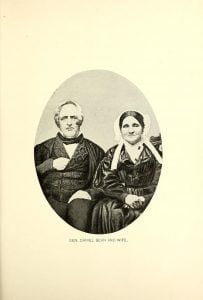
Bean and Bane Family Genealogy of Saco Valley Maine

Gen. Daniel Bean and Wife

The Bean and Bane family genealogy traces origins to a supposed ancestor from the Isle of Jersey, though evidence suggests a Scottish lineage, with the surname derived from Gaelic meaning “fair.” Key figures include Lewis Bane, who settled in Boston around 1670, and his sons, who established roots in York, Maine. Captains Lewis and Joseph Bane played prominent roles in early settlements and conflicts with Native Americans. Generations of Beans and Banes contributed significantly to the region’s history, including military service and local governance.

Atkinson Family Genealogy of Saco Valley

The Atkinson family, originally from Bury, England, emigrated to New England in 1634. Theodore Atkinson, the first of the line, settled in Boston and established a prosperous estate. His descendants include notable figures such as Hon. Theodore Atkinson of Portsmouth and various family members who became prominent in trade, religion, and community affairs across New England. The lineage continued through several generations, resulting in multiple branches in Buxton and Eaton, N.H., with individuals engaged in diverse occupations and contributing to local history.

Gleanings from English Records about New England Families

Gleanings from English Records about New England Families

The classic work often cited by more contemporaneous authors on early New England families and the records of them found within the Principal Probate Registry, Somerset House, Strand, the Public Record Office, Fetter Lane, and the British Museum, Bloomsbury, while on a visit in London during the summer and fall of 1879.