History of Shelburne Massachusetts

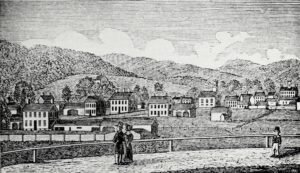
Southeastern View of Shelburne Falls Village Before 1835

The “History and Tradition of Shelburne, Massachusetts” is an account of the town’s development, initiated by a community effort in 1944. The project culminated in 1958 after various committees worked to collect and organize information across multiple aspects, including geology, early settlement, and cultural life. The book, intentionally topical rather than genealogical, features contributions from numerous writers and serves as a reference for understanding Shelburne’s heritage, institutions, and notable figures.
Abington Massachusetts Marriage and Death Records

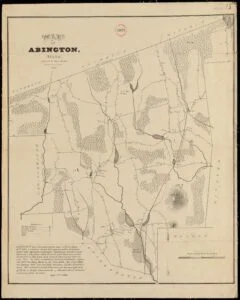
1830 Map of Abington, Massachusetts

Volume 2 of the Abington, Massachusetts vital records compiles marriage and death records up to 1850, complementing Volume 1, which contains birth records. Established in 1712, Abington’s boundaries have shifted, affecting historical jurisdiction. Extensive research from town records, cemeteries, and family Bibles ensured comprehensive documentation, including the identification of Black families recorded by given names. The volume is organized alphabetically by marriages and deaths.

1932 New Hampshire Notables

1892 Map of New Hampshire

New Hampshire Notables,” published by the Concord Press in 1932, is a biographical compilation that follows a previous work by Henry H. Metcalf. It contains 474 brief sketches of notable individuals, both natives and residents of New Hampshire, recognized for their contributions across various fields such as public life, business, and education. This edition focuses on living subjects as of 1932, with an alphabetical index for easy reference. While not exhaustive, it serves as a valuable resource for researchers and libraries, preserving important biographical data.

Vital Records of Bellingham, Massachusetts

Vital Records of Bellingham Massachusetts to the year 1850

Alphabetical indexes to the vital records of Bellingham, Massachusetts, up to the year 1850, supplemented by information from bible records, church registers, cemetery inscriptions and other private sources to include the diary kept by Samuel Wight and his daughters.

Medway Massachusetts vital records

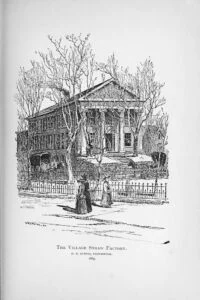
Medway Village Straw Factory

Alphabetical indexes to the vital records of Medway, Massachusetts, up to the year 1850, supplemented by information from church registers, cemetery inscriptions and other private sources to include Rev. Dr. Jacob Ide’s account of Marriages and Deaths, 1814-1849.

Ashfield Massachusetts Vital Records

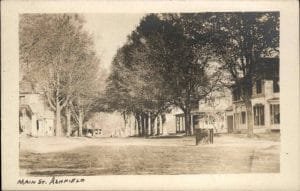
Main Street, Ashfield, Massachusetts

Alphabetical indexes to the vital records of Ashfield, Massachusetts, up to the year 1850, supplemented by information from bible records, church registers, cemetery inscriptions and other sources. PDF file is free to read and download.

Marriage records of Liberty County Georgia, 1785-1895

Marriage records of Liberty County, Georgia, 1785-1895

These marriage records were abstracted from unbound marriage bonds and licenses in the Liberty County Courthouse, Hinesville, Georgia. The names were copied as they were spelled on the bonds, often barely legible and often spelled differently on the same bond. Sometimes the marriages were performed before the licenses were issued. The first date given in the abstracts is the date of the license or bond; the second is the date of marriage. The following abbreviations are used in these abstracts with the meaning indicated:

Brown Genealogy

Brown Genealogy

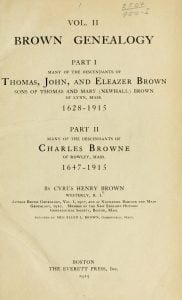
In 1895, Cyrus Henry Brown began collecting family records of the Brown family, initially with the intention of only going back to his great-grandfathers. As others became interested in the project, they decided to trace the family lineage back to Thomas Brown and his wife Mary Newhall, both born in the early 1600s in Lynn, Massachusetts. Thomas, John, and Eleazer, three of their sons, later moved to Stonington, Connecticut around 1688. When North Stonington was established in 1807, the three brothers were living in the southern part of the town. Wheeler’s “History of Stonington” contains 400 records of early descendants of the Brown family, taken from the town records of Stonington. However, many others remain unidentified, as they are not recorded in the Stonington town records. For around a century, the descendants of the three brothers lived in Stonington before eventually migrating to other towns in Connecticut and New York State, which was then mostly undeveloped. He would eventually write this second volume of his Brown Genealogy adding to and correcting the previous edition. This book is free to search, read, and/or download.

The Amidon Family of Rehoboth, MA

The Amidon Family

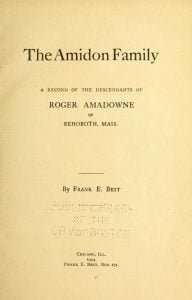
The Amidon Family genealogy book details the lineage of Roger Amadowne, a French Huguenot who fled to England and later to America after the revocation of the Edict of Nantes. Documented in Salem, Massachusetts in 1637, variations of his surname include Amadon, Amidown, and Ammidon. The work, organized with biographical sketches and two helpful indexes, presents the family’s history and is richly illustrated. Originally published in 1904, it serves as a valuable resource for descendants and historians alike.

History of old Chester from 1719 to 1869

History of Old Chester title page

The *History of Old Chester from 1719 to 1869* by Benjamin Chase, published in 1869, offers a detailed account of the early settlement and development of Chester, New Hampshire. Compiled with the assistance of local historian Judge Samuel D. Bell, the book explores the town’s founding, genealogies, and significant events, using primary sources such as deeds, probate records, and personal diaries. Chase aimed to preserve the history and traditions of Chester’s early settlers while providing a comprehensive record for future generations. The work covers a broad range of topics, including religious, military, industrial, and genealogical history.

Families of Ancient New Haven

Four Corners New Haven Connecticut

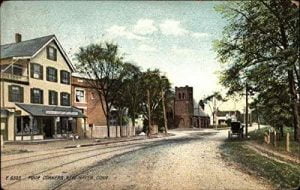
The Families of Ancient New Haven compilation includes the families of the ancient town of New Haven, covering the present towns of New Haven, East Haven, North Haven, Hamden, Bethany, Woodbridge and West Haven. These families are brought down to the heads of families in the First Census (1790), and include the generation born about 1790 to 1800. Descendants in the male line who removed from this region are also given, if obtainable, to about 1800, unless they have been adequately set forth in published genealogies.

Abbe-Abbey Genealogy

A genealogical dictionary of the first settlers of New England vol 1

The “Abbe-Abbey Genealogy” serves as a comprehensive and meticulously compiled homage to the heritage of the Abbe and Abbey families, tracing its roots back to John Abbe and his descendants. Initiated by the life-long passion of Professor Cleveland Abbe, this genealogical exploration began in his youth and expanded throughout his illustrious career, despite numerous challenges. It encapsulates the collaborative efforts of numerous family members and researchers, including significant contributions from individuals such as Charles E. Abbe, Norah D. Abbe, and many others, each bringing invaluable insights and data to enrich the family’s narrative.

The White Mountains

saco valley settlements and families cover

The White Mountains are known as the source of the Saco River and have been explored since the early 17th century. Notably, Darby Field’s ascent in 1632 marked the beginning of European exploration. Over the years, various explorers documented the region’s grandeur, including Timothy Nash’s discovery of the Notch in 1771. Pioneers like Eleazer Rosebrook and Abel Crawford significantly contributed to the settlement and hospitality in the area, with Crawford later paving paths to Mt. Washington, establishing the region as a destination for travelers.

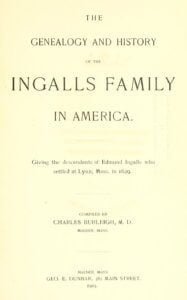
The genealogy and history of the Ingalls family in America

The genealogy and history of the Ingalls family in America

Edmund Ingalls, son of Robert, was born about 1598 in Skirbeck, Lincolnshire, England. He immigrated in 1628 to Salem, Massachusetts and with his brother, Francis, founded Lynn, Massachusetts in 1629. He married Ann, fathered nine children, and died in 1648.

Howard Genealogy of Bridgewater and New Bedford Mass.

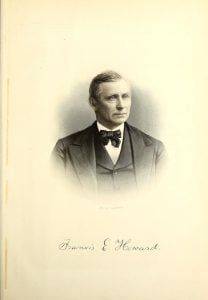
Frances E. Howard

The Howard family, prominent in the history of Bridgewater and New Bedford, Mass., traces its lineage back to John Howard, an early settler. Key figures include Capt. Benjamin Beal Howard, founder of Howard Seminary and known for his philanthropic deeds, and his son, Francis Edward Howard, an influential public servant and community leader. Both men embodied the family’s commitment to education and civic duty, contributing significantly to the community’s development and welfare, leaving a lasting legacy through their charitable efforts and public service.

Descendants of Rev. James Keith in Bridgewater, Massachusetts

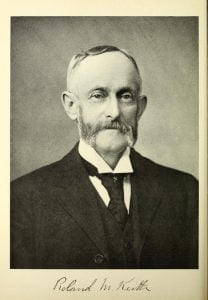
Roland Keith

The Keith family is one of the oldest of southeastern Massachusetts. Its founder in America was Rev. James Keith, born in 1644, who came to America, landing in Boston in 1662. He became minister of the Bridgewater Church, where he administered to the spiritual needs of the people for half a century. He died July 23, 1719. He was twice married. His first wife was Susannah Edson, daughter of Deacon Samuel Edson.

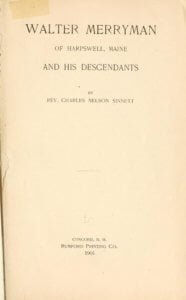
Walter Merryman of Harpswell, Maine, and his descendants

Walter Merryman of Harpswell, Maine, and his descendants - FM

Walter Merryman was kidnapped in an Irish port in 1700 and brought to Boston, Massachusetts, where he was indentured to a shipbuilder in Portland, Maine. He married Elizabeth Potter and settled in Harpswell, Maine. Descendants and relatives lived in Maine, New Hampshire, Connecticut, New York, Pennsylvania, Idaho and elsewhere. Includes Alexander, Curtiss, Hamilton, McManus, Stover, Webber and related families.

Taber family of Dartmouth and New Bedford, Massachusetts

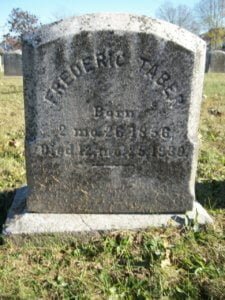
Frederic Taber 1856-1930

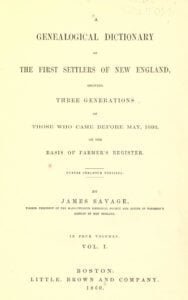
The Taber family of Dartmouth and New Bedford, one of the oldest families in southeastern Massachusetts, is descended from Philip Taber, who according to Savage, was born in 1605, and died in 1672. He was at Watertown in 1634, and he contributed toward building the galley for the security of the harbor. He was made a freeman at Plymouth in 1639. In 1639-40 he was a deputy from Yarmouth, and was afterward at Martha’s Vineyard, and from 1647 to 1655 was at Edgartown, going from there to New London in 1651, but probably returning soon. He was an inhabitant of Portsmouth in February, 1655, and was a representative in Providence in 1661, the commissioners being Roger Williams, William Field, Thomas Olney, Joseph Torrey, Philip Taber and John Anthony. Later he settled in Tiverton, where his death occurred. He married Lydia Masters, of Watertown, Mass., daughter of John and Jane Masters, and his second wife, Jane, born in 1605, died in 1669.