
History of Hartford, Vermont, July 4, 1761–April 4, 1889, published in 1889, is a comprehensive town history compiled by William Howard Tucker and issued by The Free Press Association of Burlington. The work covers the period from the chartering of Hartford in 1761, shortly after the close of the French and Indian War, through the late nineteenth century. It was undertaken to preserve, in permanent form, the documentary and narrative record of the town’s origin, settlement, organization, and development.
The author based his work primarily on public town records, supplemented by information gathered from surviving early inhabitants, family papers, private correspondence, memoirs, and other manuscript sources. Tucker devoted particular attention to clarifying disputed or misunderstood points in Hartford’s early history, including the dates of first settlement and town organization, correcting errors found in earlier published accounts. A significant challenge was the loss of municipal records covering the years 1778 to 1802, a gap Tucker sought to address through extensive research in local and regional sources and through sustained correspondence with individuals and institutions.
The volume is arranged thematically and chronologically, with chapters addressing political, military, religious, educational, economic, and social aspects of the town’s history. It also includes statistical tables, biographical sketches, and extended genealogies of prominent Hartford families, along with an appendix and detailed indexes. Intended as an exhaustive local history, the work reflects several years of sustained research and was prepared without expectation of financial return, with the stated purpose of preserving accurate historical knowledge for future generations.
History of Hartford Vermont
Illustrations
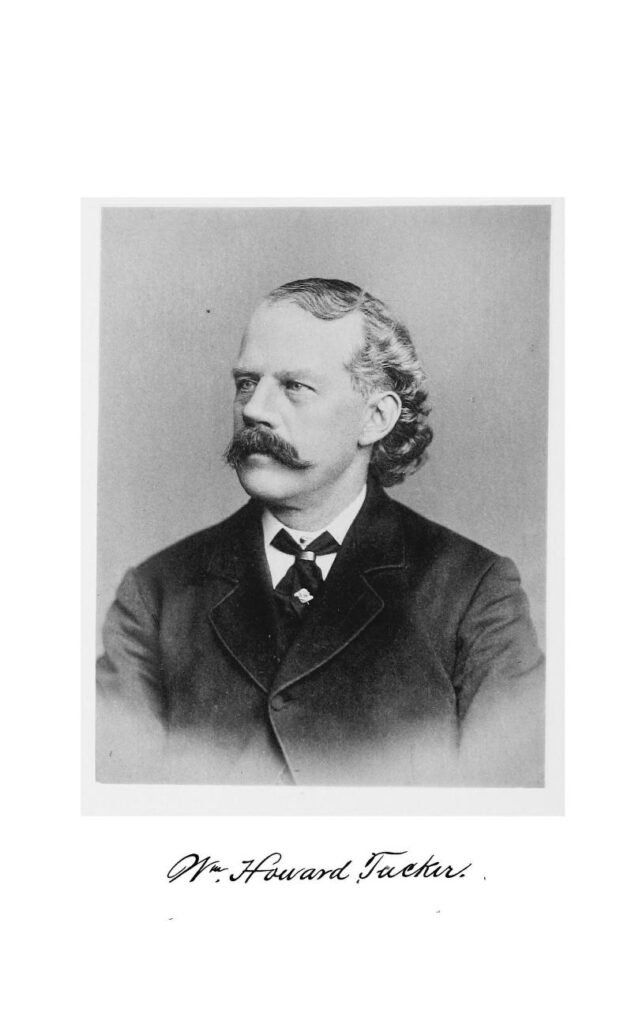
- Portrait of William Howard Tucker, Frontispiece.
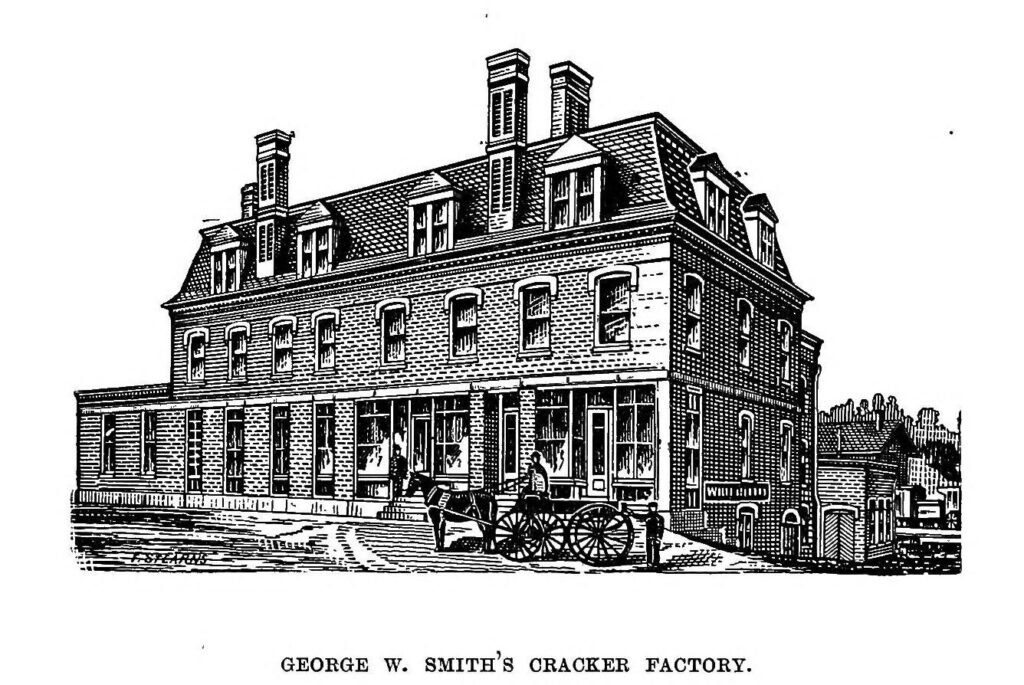
- George W. Smith’s Business Block (White River Junction) 128
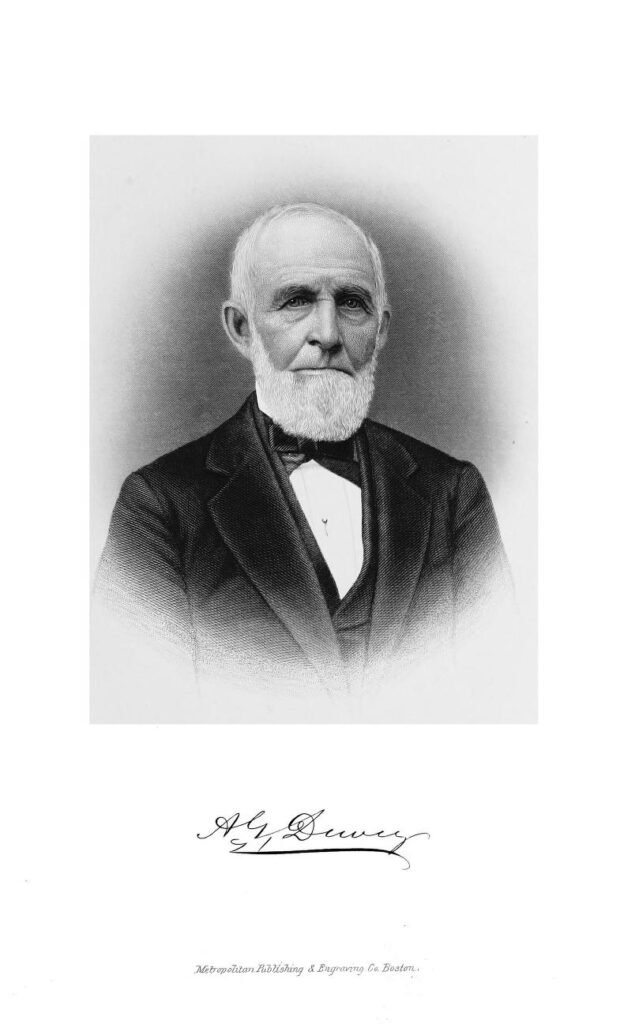
- Portrait of Hon. Albert Gallatin Dewey, facing page 356
- Portrait of Hon. John Porter, facing page 376
Contents
Introduction, xiii
CHAPTER I
ORIGIN OF THE TOWN — FIRST MEETING OF THE GRANTEES
Hartford the first township chartered, after the close of the French War — Date of the charter — How the grantees secured the first choice of territory — Why christened “Hartford” — Form and conditions of the charter — First meeting of the grantees under the charter — Town officers chosen — Committee chosen to visit the town to lay out roads, lots, etc. — Report of the committee — Sequestration of fifteen hundred acres of land — Highway from the “King’s Ferry” up the Connecticut River — Drawing of sixty-two lots by lottery — Location of the lots, and by whom drawn — Survey of the town — Recapitulation of the divisions of territory, page 1
CHAPTER II
PHYSICAL GEOGRAPHY OF THE TOWN
Climate — Rivers — Soil and production — Natural fertilizers — Geological features — Quechee Mineral Spring — Pot-holes — Quechee Gulph — Terraces — Flora and fauna — Description of villages and hamlets — Account of the great flood in 1867, 13
CHAPTER III
FIRST SETTLEMENT OF THE TOWN
Measures adopted to promote an early settlement of the town — “Book of Town Votes,” with records by Prince Tracy — Date of the first settlement — Error made by Thompson corrected — Benjamin Wright’s certificate — Squatters in the town in 1761 — First meeting of the proprietors in the town held in the house of Solomon Strong — Last meeting held in Connecticut — Chronological record of subsequent meetings — First sale of a proprietors’ right — Early settlers and land-owners, 30
CHAPTER IV
ORGANIZATION OF THE TOWN
Date of the organization — Proprietary and town offices vested in the same persons — Transfer of proprietors’ meetings from Connecticut to Hartford — Error as to the date of the organization of the town — Elijah Strong, a good man but an indifferent clerk — First grand-jurymen elected — Establishment of cattle-pounds — First vote for a judge of probate — Town officers chosen at the same meeting — Condition of the settlers in 1778 — Pirating upon public rights — Last record made in the “Book of Town Votes” — Loss of town records — One thousand acres of land voted to Thomas Hazen — Pitches made by Mr. Hazen — Jonathan Birch sent to New York — Loss of the New Hampshire charter — Troubles with the New York government — Passive policy of the people of Hartford — Failure of effort to obtain letters patent, 42
CHAPTER V
FURTHER EFFORTS OF THE PROPRIETORS TO OBTAIN LETTERS PATENT
Certificate sent to the New York government — Petition of the proprietors and inhabitants to the governor of New York — Petition of grantees to Sir Henry Moore — Record of council — Warrant of survey to Surveyor-General of New York — Petition of grantees and others to Sir William Tryon — Record of council, 59
CHAPTER VI
POLITICAL AND MILITARY AFFAIRS, 1775–6
Meetings in the house of Widow Ruth Strong — Committee of safety chosen — Erection of Cumberland County by New York — General conventions of delegates — County convention in Westminster — Meeting held in Chester — Two regiments of militia in Cumberland County — Citizens of Hartford commissioned — Correspondence between the historian and the Adjutant-General of New York — Col. Joseph Marsh severs his allegiance to the New York government, 69
CHAPTER VII
HARTFORD DURING THE REVOLUTION
Alarm on the frontiers — Meeting held in Hanover, N. H. — Ranging department organized — Last meeting of the Cumberland County Committee of Safety — Stirring events of ’77 — Estates confiscated — Delegates to the Windsor Convention — Vote to form a new State — Constitution and form of government adopted at Windsor — Col. Joseph Marsh, chairman of a committee to procure arms for the State — Census taken of Cumberland and Gloucester counties — Population of Hartford — Hartford militia in the battle of Bennington — Men and horses employed in transporting flour to Battenkill — Court of confiscation — Hartford militia doing frontier duty — Militia pay-rolls for service against Indians, 75
CHAPTER VIII
CUSTOMS AND MATTERS IN “YE OLDEN TIME”
Character of the pioneer settlers — First settlements made on the hills — Methods of clearing land, building houses, and making furniture — Articles of food — Work of the farmers, their wives, and sons and daughters — Wearing apparel — Marriage ceremonies — Outfit of a bride — Establishment of schools — Medals for good scholarship — Trials and suffering borne patiently — Unity, harmony and love among all classes — Militia trainings — Stimulants too commonly indulged in — Abundance of game and fish — Husking-bees, squirrel-hunts, apple cuttings, quilting parties, spelling, writing and singing schools — Dealing upon trust — Failure of crops — Scarcity of food — Economy of dress — Methods of travel — Emigration to the Western States, 96
CHAPTER IX
MANUFACTURES AND MILLS
Labor unaided by labor-saving machinery — Rudeness of farming utensils and all tools — Industry of the people — Twenty-five miles to a grist-mill by a bridle-path — First saw-mill and grist-mill in the town — Fulling and cloth-dressing machines — Process of making maple sugar — Manufacture of charcoal, potash and pearlash — Manufactures and mills in Quechee — Distilleries — Cider-making — Mills and factories in various parts of the town — Marble and granite cutting — Cracker-baking and other industries, 112
CHAPTER X
HIGHWAYS, HIGHWAY DISTRICTS, FERRIES, FORDS, BRIDGES, LOCKS, AND STEAMBOATS
Highways from Charlestown, N. H., to White River Junction; from Norwich to Pomfret; from Connecticut River to Pomfret — Town divided into highway districts — Turnpike roads completed to Boston — The first scow ferry-boat — Ferries on White River — Munsill’s Ford — Log bridges — Bridge over Otta Quechee River — Lyman’s Bridge over the Connecticut River, and litigation connected therewith — Lottery scheme to build a bridge in White River Village — White River Bridge Company — Bridges at West Hartford — Locking water, Quechee Falls, White River and White River Falls — Steamboats on Connecticut River, 139
CHAPTER XI
RAILROADS
The first railroad in the United States — First locomotive engine built in the United States — Miles of railroad in Vermont — Enhanced value given to real and personal estate in Hartford — Saving of time and money in transit — Intellectual and moral influence exerted by new methods of transit — Connection of Boston with Lake Erie — The Vermont Central Railroad — Terrible disaster at the Centreville Bridge — Connecticut and Passumpsic Rivers Railroad — First passenger trains — Removal of shops — Lease to the Boston and Lowell, and present lease to the Boston and Maine Railroad — Officers of the road — The Woodstock Railroad — Its charter — Organization — Bonded debt — Probable extension, 151
CHAPTER XII
POST-ROADS, POSTOFFICES AND NEWSPAPERS
First post-route and first postoffices in Vermont — Post-route from Windsor to St. Johnsbury; and from Burlington to Montreal — Postoffices and postmasters in Hartford — Newspapers and editors, 166
CHAPTER XIII
POPULATION, BIRTHS, MARRIAGES, DEATHS
Statistical table — Causes of increase and decrease of population — Rank of eighteen towns in Vermont in valuation — Population of Vermont by counties — Tabulated statement of births — Births for ten years arranged by months — Classifications — Marriages — Form of marriage certificate — Number of marriages, 1802–1857 — Table of marriages registered from 1857 to 1886 — Record of marriages — Divorces — Table of deaths — Fifteen principal causes of mortality — Causes of consumption — Old age and causes promotive of it — Deaths for ten years by months — Sanitary matters — Municipal action concerning smallpox, 173
CHAPTER XIV
NECROLOGY, CEMETERIES, DECEDENTS IN EACH CEMETERY
Desire of mortals for memory — Neglect of burial-places — Lists of decedents in ten cemeteries — List of decedents whose graves have no headstones — Record of deaths by Rev. Austin Hazen — Deaths, accidental, sudden, and by suicide, 185
CHAPTER XV
ECCLESIASTICAL HISTORY
Taxes paid for the support of ministers — Constitution of the Lords — Proprietors of Carolina — Third article of the Constitution of Vermont — Act of the General Assembly — Certificates of religious connection — Vote to build a meeting-house — First Congregational preaching — Hardships of the early ministers — First Congregational Society organized — Congregational church papers — Settlement of Rev. Austin Hazen at the centre of the town — Condition of the church there — Record of church-meetings — Resignation and dismission of Mr. Hazen — Papers relating to support of Mr. Hazen — Warrant to collector of taxes, 201
CHAPTER XVI
CONGREGATIONAL SOCIETIES AND CHURCHES
Steps taken to build a meeting-house, and organize a religious society in White River Village — Society organized — Meeting-house dedicated — Consolidation of two societies, under the title of “The Second Congregational Society,” — Church at the centre of the town continued in White River Village — Clerks of the society — Records of the church to the installation of Rev. S. I. Bryant — Records of baptisms — Membership of the church — List of deacons — West Hartford Congregational Church and Society — Meetings held by Rev. Aaron Hutchinson — List of pastors and acting pastors — Deacons and clerks — Statistics of the church — First Congregational Society in Quechee — Meeting-house societies — First Congregational Church — Ministers, 1830 to 1887 — Church statistics — Congregational Church in Olcott, 216
CHAPTER XVII
PRESBYTERIAN CHURCH IN DOTHAN
Branch of the church at Dartmouth College — Meetings held in the house of Thomas Hazen — Controversies arise — Members of the Hartford branch of the church claim supremacy — Members of the Hanover branch claim independency — Public interest in the quarrel — Question carried into political strife — Rev. Eden Burroughs — Records of the church — Rev. Austin Hazen installed pastor — Trouble with a refractory member, who objects to the polity of the church — The church changes its usages and customs — Rev. Cary Russell, the last pastor of the church — Dissolution of the church — Comments, 242
CHAPTER XVIII
ROMAN CATHOLIC AND OTHER CHURCHES
Formation of a Roman Catholic parish — Old Moseley house converted into a chapel — Church edifice built — Pastorate of Rev. M. Pigeon, Rev. Daniel Sullivan, Rev. Dennis Lynch, and Rev. James Booth Whitaker — Valuation of church property — Families in the parish — The parochial school — Methodist Episcopal Church — First preaching — First meeting-house — Preaching in White River Junction — Meeting-house erected — Ministers — Methodist Church in Quechee and in Olcott — Covenant Baptist Society — Certificates of membership — The Christian denomination — Jasper Hazen set apart to the ministry — Society in Quechee — Rev. Moses Kidder — Dissolution of the society — The Protestant Episcopal Church — History of the glebe and propagating rights — Glebes sequestered for the use of common schools — Occupants of church lands in Hartford — Universalist Society organized — Church edifice erected — Pastors to the present time — The Second Adventists — Their camp-meeting ground — Organization of “White River Junction Camp-meeting Association” — The Puritans, 253
CHAPTER XIX
EDUCATION
Liberal provisions by the early settlers to promote education — Legislative support — System of public instruction — The surplus revenue — Donations to Dartmouth College — Division of the town into school districts — Lease of school lands — First school in West Hartford — Teachers of fifty years ago — Monologue — First school, White River Village — Hartford Academy — Superintendents of schools — Teaching a profession — The town system — Prudential committees, and teachers — Forms in use by the selectmen and treasurer — The Huntington Fund, newspapers, etc., 272
CHAPTER XX
POLITICS AND POLITICAL PARTIES
Local self-government — Prevalence of Congregationalism as a form of church polity — Town votes for governors — Contest over the election of a town representative — Duty of every citizen to exercise the right of franchise — Caucuses — Members of Congress, State, county and town officers — The selectmen’s book, 288
CHAPTER XXI
TAXES — GENERAL LIST — SUPPORT OF THE POOR
Methods of collecting taxes — Minimum and maximum rate of taxation — General list by decades — Comparative auditors’ reports — Rank of the town in its grand list and population — Increase of ratable property — Sales of land for taxes — Lists of taxpayers — Grand list for 1887, 297
CHAPTER XXII
THE POOR AND THEIR SUPPORT
Sale of the care of the poor at auction — Sale of Irena Dunkin — Insane poor kept in cages — Town farm purchased — Annual cost of supporting the poor — Overseers of the poor — Secret societies — Free Masons, Knights of Honor, Odd Fellows, and Good Templars, 305
CHAPTER XXIII
WAR OF 1812, AND WAR OF THE REBELLION
Quota of Vermont militia called for in 1812 — Militia companies — Selectmen’s orders for equipments and supplies — Supplies furnished to the State — War of the Rebellion — Requisition on Gov. Fairbanks for troops — Commissions for raising the 3d and 4th Vt. Regiments — Municipal war legislation — Rosters of volunteers from the town during the Civil War — War expenses of the town — Abraham Lincoln Post, G. A. R. — Memorial Association — Military necrology — A military incident, 315
CHAPTER XXIV
MISCELLANEOUS MATTERS
Letter from Roswell Marsh — The old Centre meeting-house — Two interesting letters — Hotels and landlords, 338
CHAPTER XXV
BIOGRAPHY
Biographical sketches of native and foreign-born citizens, 353
CHAPTER XXVI
SKETCHES OF ALUMNI OF DARTMOUTH AND OTHER COLLEGES
Honorary degrees conferred, 386
CHAPTER XXVII
GENEALOGIES
The Bartholomew Family, 408
The Bugbee Family, 411
The Delano Family, 413
The Dutton Family, 414
The Gillett Family, 431
The Hazen Family, 435
The Leavitt Family, 447
The Lyman Family, 447
The Marsh Family, 448
The Newton Family, 453
The Pinneo Family, 455
The Richards Family, 456
The Savage Family, 458
The Sprague Family, 460
The Strong Family, 463
The Tilden Family, 465
The Tracy Family, 467
The Trumbull Family, 470
The Tucker Family, 471
The Whitney Family, 475
APPENDIX
Business Directory, 1889, 477
INDEX, 479

Source
Tucker, William Howard, History of Hartford, Vermont, July 4, 1761-April 4, 1889. The first town on the New Hampshire grants chartered after the close of the French war, Burlington, Vt. : The Free press association, 1889.