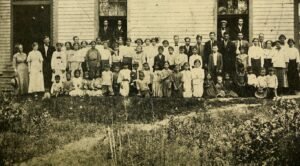
Genealogy of Alexander Brown of Polk County, Missouri

The Eaves Family of Polk County, Missouri

Numerous applications to the Eastern Cherokee Tribe claimed descent from Alexander Brown, who was born circa 1770 in Bedford County, Virginia, and died on September 17, 1837, in Brighton, Missouri. His marriage to Violet Barton produced several children, many of whom lived in Missouri. Despite over 150 claims linked to him, none were verified as he was distinct from the Alexander Brown listed in the 1835 Henderson Roll. This post will document the genealogy of his descendants as further applications are processed.
History and Genealogy of Baltimore Vermont

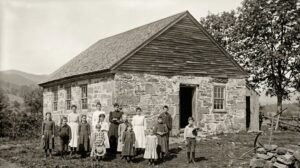
Old Stone Schoolhouse, Baltimore, Vermont

Annie M. Pollard’s 1954 work provides a detailed examination of Baltimore, Vermont’s history, tracing its origins as a part of Cavendish until its independence in 1793 due to geographic challenges. The book explores the town’s early years, highlighting the development of industry, education, infrastructure, and social welfare through town records and personal narratives. Pollard’s dedication as a public servant and her interest in local genealogy enrich the account, painting a picture of a resilient rural community with a unique identity shaped by its small size and self-reliance.

Genealogies of Pembroke New Hampshire

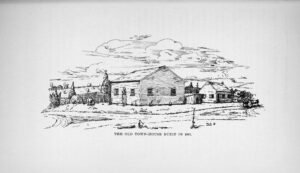
Old Pembroke NH Town House, built 1811

The “Genealogies of Pembroke, New Hampshire” is derived from the town’s second historical volume, and documents the connections of early settler families through the nineteenth century. It emphasizes families of the first settlers and families who resided in Pembroke over a long period of time. Organized alphabetically by surname, the genealogies use a consistent numbering system for easy reference. Carter draws from diverse sources, including town records and personal accounts of Pembroke’s citizens, while acknowledging possible inaccuracies in both their memory and the collection of information. However, by preserving these family lineages, Carter enhances the town’s historical narrative, complementing the first volume’s historical content. Supplementing this volume of genealogies is a compilation of marriage records which occurred in Pembroke, New Hampshire, from 1739 through 1895.

History of Rindge New Hampshire

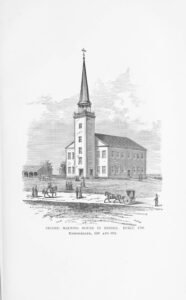
Second Meeting House in Rindge New Hampshire

The History of the Town of Rindge, New Hampshire by Ezra S. Stearns, was published in 1875, and covers the period from the original Rowley Canada grant or Massachusetts charter through the year 1874. Stearns traces the legal, territorial, and institutional development of Rindge, beginning with colonial land grants and boundary disputes and proceeding through settlement, incorporation into a town and development into a small manufacturing hub. More than half the volume is devoted to genealogical material. The genealogical register of Rindge families includes thousands of names compiled from a wide range of sources and assisted by contributions from residents and researchers beyond the town.

History of Newport New Hampshire

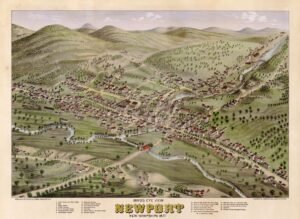
Bird's Eye View of Newport New Hampshire 1877

The History of Newport, New Hampshire, from 1766 to 1878 is a record of Newport’s growth from its early settlement through the close of the nineteenth century. It opens with the original charter and proprietary arrangements and follows the development of Newport’s physical setting, transportation routes, and economy. Particular attention is given to mills, banks, hotels, manufacturing, and the coming of the railroad, all of which shaped the town’s commercial life. The concluding genealogical section identifies families connected with Newport and other chapters provide biographical details that might otherwise be lost.

Descendants of Robert Fletcher of Concord, Massachusetts

The Jesse Fletcher Homestead, Ludlow VT, built 1784

Edward H. Fletcher presents a structured history of the Fletcher family, tracing the surname from its French occupational origin meaning “arrow-maker” to its establishment and growth in England and North America. It identifies Robert Fletcher as the principal progenitor in New England, settling at Concord in 1630, from whom three major family lines developed. Rather than limiting itself to names and dates, the work situates the family within its social and historical context, noting associations with the English gentry and participation in early American military events. Through biographical sketches and compiled vital records, it follows the family’s progression from early Puritan settlers to prominent figures in law, medicine, the military, and other professions.

History of Robert Chaffin and his descendants

Chaffin Coat of Arms

William L. Chaffin’s 1913 genealogical study, *History of Robert Chaffin and his descendants*, chronicles the Chaffin family lineage from colonial origins to the early 20th century. It explores Robert Chaffin, the immigrant ancestor, and his marriage to Abigail Davis in 1719, including their life in Massachusetts and the challenges faced by their family. The book emphasizes the connection between family history and broader historical events, such as the Revolutionary War, while acknowledging the limitations of historical records and oral traditions.

Commemorative of Calvin and Luther Blanchard

The Start of the Acton Minute Company

This commemorative work by Alfred Sereno Hudson is a historical tribute to Calvin and Luther Blanchard, two brothers who served as Acton Minute-Men during the onset of the American Revolution. Hudson explores the dramatic events of April 19, 1775, specifically highlighting Luther Blanchard’s role as the fifer who led Captain Isaac Davis’s company toward the Old North Bridge to the defiant tune of “The White Cockade.” Beyond documenting the military maneuvers and the “shot heard round the world,” the author integrates local genealogy and oral tradition to establish that Luther eventually died from wounds sustained during the conflict.

History of the Townley-Lawrence-Chase estates in England

Towneley Hall in Lancashire, England

This book compiles historical documents, legal abstracts, and personal accounts related to the Townley-Lawrence-Chase estates, purportedly a significant unclaimed fortune at the Bank of England. It examines the American claimants tracing their ancestry to figures like Sir Robert Lawrence and Mary Townley. While personal narratives suggest valid connections, the text also critically investigates these claims, providing evidence from researchers that many assertions are unfounded or fraudulent. It highlights the genuine lineage of the Townley family and disputes the existence of the alleged unclaimed wealth.

History of the Carpenter Family and Estate

Slate Roof House, Samuel Carpenter

The genealogical book analyzes the myth of a vast unclaimed fortune associated with William Carpenter’s American descendants, revealing it as a fabrication. James Usher details various branches of the Carpenter family, including Samuel Carpenter of Pennsylvania, William Carpenter of Massachusetts, Ephraim, Timothy and Josias Carpenter, of New York, and William Carpenter of Rhode Island.

Material for a History of the Sessions Family

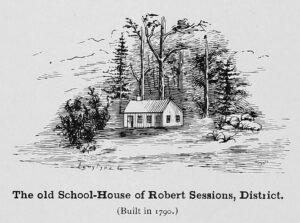
The Old School House of Robert Sessions, District

Materials for a History of the Sessions Family in America was compiled by Francis C. Sessions and published in 1890 as a documentary record of the descendants of Alexander Sessions of Andover, Massachusetts, who is recorded there in 1669. The volume consists largely of transcribed correspondence, genealogical notes, lineage charts, biographical sketches, and reminiscences.

History of Stratford New Hampshire

1861 Map of Stratford, New Hampshire

The “History of the Town of Stratford, New Hampshire, 1773–1925,” edited by Jeannette Richardson Thompson, compiles decades of historical research prompted by Rev. Lucius W. Prescott. Initially prepared for publication in the late 19th century, the work was serialized before being comprehensively revised and published in 1925 for Stratford’s 150th anniversary. It documents the town’s settlement, demographics, and significant events, drawing from original records and community contributions while ensuring preservation of historical narratives and genealogical information for future generations.

History and Genealogy of Hartford Vermont

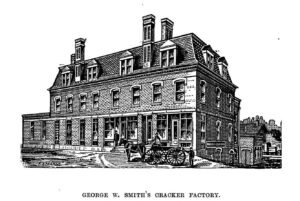
George W Smith's Cracker Factory, White River Junction, Vermont

History of Hartford, Vermont, July 4, 1761–April 4, 1889, published in 1889, is a comprehensive town history compiled by William Howard Tucker and issued by The Free Press Association of Burlington. The work covers the period from the chartering of Hartford in 1761, shortly after the close of the French and Indian War, through the late nineteenth century. It was undertaken to preserve, in permanent form, the documentary and narrative record of the town’s origin, settlement, organization, and development. It also includes biographical sketches and extended genealogies of prominent Hartford families, along with an 1889 business directory and detailed indexes.

Genealogy of Robert Winchell of Egremont Massachusetts

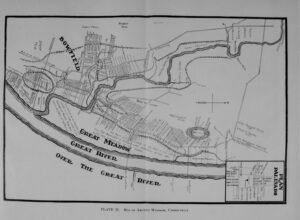
Map of Ancient Windsor, Connecticut

The Winchell family of Egremont, Mass. stems originally from that of Robert Winchell of Windsor, Conn. The “Genealogy of the Winchell Family” by Alexander Winchell (early edition of 1869 and a new and revised edition of 1917), seems to give the earlier generations of this family correctly, but it fails to make the proper connection for David and Azariah and Joseph Winchell of Egremont. This book corrects that.

The Winchell Genealogy

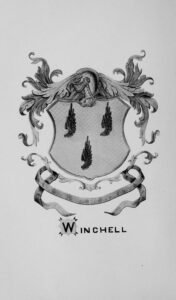
Winchell Coat of Arms

The Winchell Genealogy was first published in 1869 by Professor Alexander Winchell and expanded until his death in 1891. His brother N. H. Winchell continued the genealogical work, distributing inquiries for more data until 1909. Despite delays from travel and illness, N. H. Winchell prepared to publish the material before his unexpected death in 1914. The manuscript was completed and expanded by another writer, incorporating insights on the Winchell name’s origin and its connections to the Wincoll family.

Lyman, Dickinson, Partridge Genealogy

Pedigree of William Lyman

This 1865 pamphlet is a genealogical record focused on the Lyman, Dickinson, and Partridge families of New England and Canada. Compiled by James T. Dickinson, the text reconstructs lineage through historical deeds, probate records, and tombstone inscriptions to correct previous errors (pre 1865) in published family histories. The document centers on the Lyman branch in Middlefield, the Dickinsons of Montreal, and the Partridges of Hatfield, documenting their arrival and subsequent settlement in New England. Detailed pedigree charts and narrative biographies illustrate connections to significant colonial figures, including several governors and prominent ministers.

History of Windham New Hampshire

Residence of William H Anderson of Windham, New Hampshire

Leonard A. Morrison’s *The History of Windham, New Hampshire*, published in 1883, chronicles the town’s evolution from early settlements in the 18th century to the late 19th century. It highlights Windham’s roots in the Scotch-Irish Londonderry community and examines various aspects of local life, including land grants, education, and political developments. The work also documents significant historical events and includes extensive genealogies of the area’s early settlers and their descendants, drawing from comprehensive local records and archives.

Genealogies of the Town of Goffstown New Hampshire

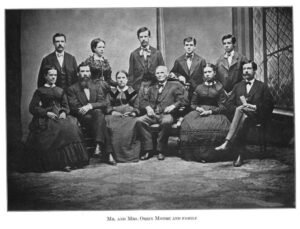
Orrin Moore and family of Goffstown, New Hampshire

The genealogical record of Goffstown, New Hampshire, was a substantial undertaking, hampered by the extinction of early families and the widespread scattering of descendants. Efforts to gather vital statistics necessitated considerable travel and correspondence, often revealing discrepancies in recorded dates across various sources. Despite challenges, contributions from former works and assistance from individuals proved invaluable in compiling this record. The comprehensive index reflects the depth of research involved in documenting the town’s heritage.

A genealogy of the descendants of Alexander Alvord

Whitestaunton Parish, Somerset, England

This volume presents an extensive genealogy of the descendants of Alexander Alvord, an early settler of Windsor, Connecticut, and Northampton, Massachusetts. Its preparation rests upon more than forty years of intermittent research, revision, and expansion, drawing together the efforts of several generations of family historians.

The Croatan Indians of Sampson County, North Carolina

Croatan Normal School at Pembroke, North Carolina

In 1916, “The Croatan Indians of Sampson County, North Carolina” was published to assert the Croatan Indians’ identity as a distinct Indigenous community deserving of educational rights. The document included a petition for separate public schools for Croatan children, countering their classification as “free persons of color.” Tracing their roots to the early colonies and emphasizing their stable, long-standing presence, the Croatans sought recognition of their unique identity and history in the face of historical reclassification and exclusion from educational opportunities.