
Quebec Canada
The Heights of Quebec
Quebec was founded in 1608 by Samuel de Champlain, who established the first fortifications and residence known as L’Habitation. The settlement faced challenges, including treachery among its colonists and attacks from Indigenous groups. By 1629, Quebec fell to an English siege but was restored to French control in 1632. Over the years, the city’s fortifications expanded, especially under Governor Frontenac, culminating in the citadel’s construction. Quebec experienced notable sieges, especially during the 1759 conflict and the Revolutionary War, shaping its military history and legacy.
Biography of Herbert F. Ward
Herbert F. Ward, born on April 12, 186, in Quebec, Canada, became a prominent farmer and influential figure in Oregon, notably as a key promoter of the Owyhee ditch. After leaving home at twenty-two, he initially worked as a locomotive fireman before transitioning to sheep farming upon arriving in Oregon in 1880. In 1894, he homesteaded a quarter section near Nyssa, cultivating a successful farm. He married Sylvinia McConnell in 1896, and they had one son, George P. Ward, in 1898.
Biographical Sketch of George E. Ward
George E. Ward, born on September 14, 1852, in Quebec, Canada, played a pivotal role in the development of Malheur County. After moving to Silver City, Idaho, in 1879 and engaging in the sheep business, he later focused on the Owyhee River area, where he became a leader in the industry. Ward was instrumental in creating the Owyhee ditch, collaborating with family and others to ensure its success. A Republican, he is known for his commitment to local affairs and the protection of American industries.
Biography of Richard S. Rutherford
Richard S. Rutherford, born in 1840 in Ireland, epitomized integrity, bravery, and enterprise throughout his life. Emigrating to Canada as an infant, his family later settled in New York, then Michigan. He joined the Civil War in 1861, serving valiantly in key battles before returning home post-war. He ventured into various business endeavors, including mining in Colorado and operating hotels in Idaho and Ontario. A prominent community member with deep family roots, he was involved in multiple fraternal organizations and held strong political beliefs as a Republican.
Wyandot Indians
The Wyandot, originally known as Huron, are a Native American tribe belonging to the Iroquoian linguistic family, primarily located in the St. Lawrence Valley and the Ontario region. Historically significant, they interacted with French explorers and missionaries in the early 17th century. Their population diminished following devastating conflicts with the Iroquois in 1648-49, leading to migrations across various regions. They aligned with the British during the War of 1812, ultimately relocating to Kansas and later Oklahoma. The tribe’s legacy includes numerous geographical names and historical accounts of their enduring resilience.
Biography of Moses Lore
Moses Lore, born in October 1804 near Montreal, Canada, is a notable pioneer and one of the oldest residents of Union County. His adventurous life included trapping, mining, and homesteading across various frontier regions. After initial experiences with the American Fur Company, he engaged in several expeditions and eventually settled in the Willamette Valley before moving to Union County in 1862. Married to Mary Ann Sanders, they had six children. At over ninety-seven, Lore remains active and well-respected in his community, reflecting a lifetime of resilience and contribution.
Blair, Louis – Obituary
Louis Blair, a 63-year-old resident of Kittitas Valley for 49 years, passed away at his home in Ellensburg on November 5, 1949. Originally from Quebec, Canada, he had worked for Kittitas County and later at Schaake Packing Company. He is survived by his wife, Winifred; a daughter, Berniece Dossey, a professional rodeo trick rider; four sisters; and a grandson. Funeral arrangements are pending.
Arps, Lena E. – Obituary
Lena E. Arps, 77, passed away at her Ellensburg home on March 16, 1970. Born on October 26, 1892, in Quebec, Canada, she moved to Ellensburg in 1900. She was married twice, first to Ira Stillwell in 1915 until his death in 1929, and later to Herman O. Arps in 1946. A member of the Moose Lodge, she is survived by her husband, a son, a daughter, six grandchildren, three great grandchildren, and several stepchildren. Funeral services are scheduled for Wednesday at Evenson Chapel.
Temiscaming Tribe
The Temiscaming Tribe, an Algonkin band, is historically linked to the Abittibi and resided near Temiscaming Lake, Quebec. The name derives from Nipissing Timikaming, meaning ‘in the deep water.’ They were allied with the French during conflicts in the late 17th century and played a strategic role against English forces in 1691. By the early 20th century, their population was approximately 205 in 1903 and 245 in 1910, with a significant portion being of mixed heritage, residing on a reservation in Quebec.
Micmac Tribe
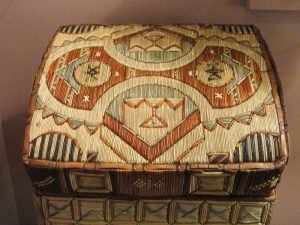
The Micmac, or Mikmaq First Nation, is an Algonquian tribe primarily located in Nova Scotia, Cape Breton, Prince Edward Island, and parts of New Brunswick and Newfoundland. Historically noted for their early contact with Europeans, the Micmac formed strong ties with the French and resisted English encroachment post-1713. They practiced limited agriculture, relied on fishing, and lived in wigwams. Their society was divided into seven districts, with a rich cultural heritage that included games, a unique language, and a complex system of communication in the woods.
Iroquois Tribe
The Iroquois, also known as the Five Nations, comprised the Cayuga, Mohawk, Oneida, Onondaga, and Seneca tribes, united in a political body called Oñgwanonsioñni around 1570. Their society emphasized matrilineal descent, with chiefs appointed through female nomination. The confederation allowed the Iroquois to extend their influence across a vast territory, engaging in conflicts primarily against the French and Algonquians. Despite declines from wars and disease, the population has since rebounded, with Iroquois communities now primarily located in New York and Ontario.
Huron Tribe
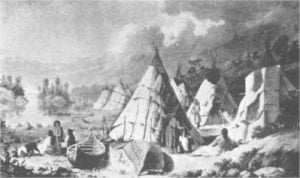
The Huron Tribe, also known as the Wendat or Wyandot, is a confederation of four Iroquoian tribes originally inhabiting the Huronia region near Lake Simcoe and Georgian Bay, Ontario. Their social structure was organized through councils, and they engaged in agricultural practices, including the cultivation of corn and tobacco. The Huron faced continuous warfare with the Iroquois, culminating in their near destruction between 1648 and 1650. Many survivors migrated westward, eventually forming new communities, notably as the Wyandots in Michigan and Ohio.