North America Indian Names of Places in Mississippi, Alabama, Georgia, Florida, and Louisiana

The post examines the significance and origins of North American Indian place names in Mississippi, Alabama, Georgia, Florida, and Louisiana, particularly those derived from the Choctaw and Chickasaw languages. It highlights how these names reflect the rich cultural and linguistic heritage of the Native American tribes, while noting that many translations have become corrupted over time. The text provides numerous examples of place names alongside their original meanings, illustrating the deep historical connections embedded in the geography of the region.
Medicine Man – North American Indians

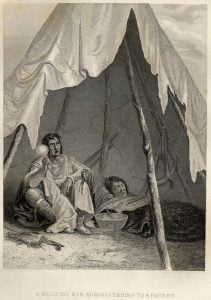
A Medicine Man Administering to a Patient - Plate 46

The Medicine Man holds significant cultural importance among North American Indians, originating from early French colonists’ misinterpretation of a tribal term. These figures conducted religious ceremonies aimed at appeasing spirits, with distinct tribal and individual medicines. The contents of sacred medicine bags, believed to embody protective powers, were closely guarded secrets. The process of creating individual medicine required isolation and spiritual reflection. Indigenous beliefs emphasized the constant struggle between good and bad spirits, influencing their actions and perceptions of fortune.

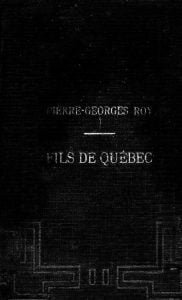
Sons of Quebec 1778-1843

Fils de Quebec cover

The Sons of Quebec (Fils de Québec) were written by Pierre-Georges Roy and published in 1933 in a four volume set. They provide a series of short biographies of one to three pages of Quebec men from 1778-1843. Warning… this manuscript is in French!

Early Exploration and Native Americans

Ferdinand de Soto’s interactions with Native American tribes, specifically the Choctaws and Chickasaws, exemplify early European attempts to impose their ideologies of civilization and Christianity upon Indigenous populations. This approach set a precedent for further exploitation and oppression of Native Americans, as European settlers sought to acquire land and resources. Throughout history, tribes like the Chickasaws, known for their valor, remained steadfast allies rather than adversaries. This enduring alliance contrasts sharply with the overarching narrative of dispossession and extermination faced by Indigenous nations in North America.

The Discovery Of This Continent: It’s Results To The Natives

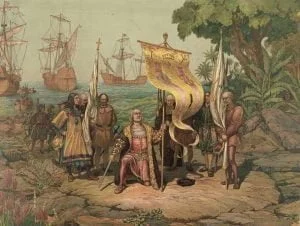
Columbus Landing on Hispaniola

In 1470, Christopher Columbus married Dona Felipa, daughter of a renowned navigator, and settled in Porto Santo, where they shared dreams of discovering lands to the West. Their ambitions fueled Columbus’s determination, leading to his 1492 voyage that resulted in the European discovery of the Americas. However, this event marked the beginning of devastation for native peoples, introducing warfare, disease, and colonization that would decimate their populations and cultures, ultimately transforming their rich, diverse societies into shadows of their former selves.

Narrative of the Captivity of Frances Noble – Indian Captivities

Narrative of the captivity of Frances Noble, who was, among others, taken by the Indians from Swan Island, in Maine, about the year 1755; compiled by John Kelly, Esq. of Concord, New Hampshire, from the minutes and memoranda of Phinehas Merrill. Esq. of Stratham, in the same state; and by the Former Gen. Tleman communicated for publication to the editors of the Historical Collections of New Hampshire.

War Between the Colonies and The Western Indians – From 1763 To 1765

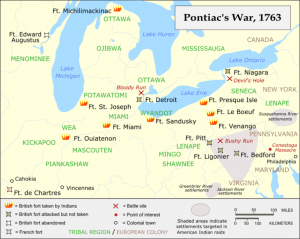
Map of Pontiacs War

Pontiac, a prominent chief, led a coalition of Great Lakes tribes against British forces following the French defeat in 1760. His strategic prowess came to fruition in June 1763, when his forces captured Michilimakinak, demonstrating his tactical superiority and uniting various tribes against the English. The siege of Detroit, lasting twelve months, highlighted his leadership as the British prepared for retaliation. By late 1765, following Colonel Bouquet’s campaigns, peace discussions ensued, marking a significant moment in the conflict between the colonies and Native Americans.

The French and Indian War from 1754 to 1759 – Beaver Wars

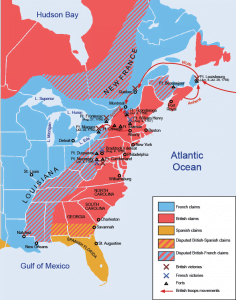
Map of French and Indian War

Following the conclusion of the peace in 1748, France sought to expand its territory westward in North America by constructing forts linking the St. Lawrence and Mississippi rivers. The English, alarmed by these actions, organized the Ohio Company to assert claims to western lands. Tensions escalated when French forces captured British traders, leading to conflicts involving both colonial and Indigenous forces. This set the stage for the French and Indian War, marked by George Washington’s early military engagements and the subsequent establishment of Fort Necessity, igniting wider hostilities in the region.

Biographical Sketch of Eric Wold

Eric Wold has served as city engineer of Burlingame for four years and currently applies his expertise to San Bruno. With a background in engineering that includes government service and railroad projects, he is enhancing San Bruno’s infrastructure with plans for bridges, sidewalks, and a water system. Born in Norway in 1878, Wold moved to the U.S. as a child, later graduating from the University of Minnesota in 1902. He has been a resident of California for the last decade and is actively involved in local organizations.

Biography of Terence Masterson

Terence Masterson, a prominent citizen of San Mateo for twenty-five years, has played a significant role as street commissioner and city trustee, overseeing major street improvements and enhancing the city’s infrastructure. A capitalist and proprietor of the Wisnom Hotel, he also holds interests in local banks and the Peninsula Rapid Transit Company. Born in Quebec in 1864, Masterson has strong ties to his roots. He is married with one son and actively participates in community service through the San Mateo County Development Association.

1851 Quebec Canada Directory, Engravers to Gunsmiths

The 1851 Quebec Canada Directory presents a comprehensive list of trades and services available in the region, highlighting various sectors such as engravers, gunsmiths, general merchants, and grocers. Notable names in the engravers and copperplate printers category include William A. Leggo, while gunsmiths listed are G. Cooke and the Parant brothers. The directory also outlines the addresses of businesses and their specific roles, reflecting the commercial landscape of Quebec during that era. Subscribers are denoted in capital letters, indicating their support for the directory.

1851 Quebec Canada Directory, Bakers to Butchers

The 1851 Quebec Directory includes a list of bakers, butchers, and tradespeople in the region. Notable bakers include E. McConrey and Thomas Parke, both offering various types of bread. The directory also lists numerous non-member bakers and a variety of other businesses such as boot and shoe stores, auctioneers, and boarding houses. Prominent butchers like James William Dinning and Thomas Edward Doran are featured, along with several market vendors. This resource reflects the diverse commercial landscape of Quebec in the mid-19th century.

1851 Quebec Canada Directory, Agencies of Assurance to Auctioneers

The 1851 Quebec Canada Directory enumerates various agencies, including assurance companies and educational institutions, highlighting their agents and locations. Notable assurance agencies listed are Aetna, Britannia, and Hartford. The directory also details academies and schools, such as Quebec High School and several ladies’ schools. Additionally, it provides names of advocates, architects, auctioneers, and other professions, reflecting the community’s commercial and educational landscape during this period. The names mentioned in capital letters indicate subscribers to this publication.