History of Pembroke New Hampshire

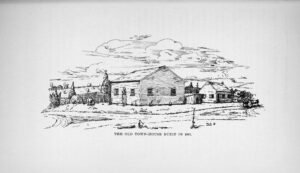
Old Pembroke NH Town House, built 1811

Nathan Carter and Trueworthy Ladd’s “History of Pembroke, N.H. 1730-1895” chronicles the town’s journey from its early settlement as Suncook to the close of the nineteenth century. Documenting key events and societal developments year by year, the authors emphasize accuracy and detail, covering land divisions, local conflicts, and the town’s involvement in the Revolutionary and Civil Wars. The volume preserves vital records and offers insight into Pembroke’s public life, industries, religious institutions, and education, establishing a comprehensive reference for its historical narrative.
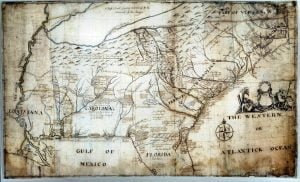
Map of part of North America from Cape Charles to the Mouth of the River Mississipi

1721 Barnwell Map of Southeast America

The 1721 Barnwell Map, created by Captain John Barnwell during the Tuscarora War, offers an important depiction of Southeast America drawn from his extensive travels and explorations. This map, now accessible in high resolution through People of One Fire, illuminates key geographical features, including the Georgia Mountains and their designation as Upper Creek territory. It also notes the Altamaha and St. Johns Rivers, providing historical context crucial for researchers of the region.

Sauthier’s 1779 Map of New York

Sauthier’s 1779 map of New York reflects British military mapping prior to the American Revolution. A multicultural figure, Sauthier was born in Strasbourg and served as surveyor for New York, determining disputed boundaries. His map incorporates his detailed surveys alongside those of fellow surveyor Bernard Ratzer. It emphasizes New York’s boundaries, areas of contention with New Jersey, and expansive claims in modern-day Vermont, while also marking the locations of Indian villages, Jesuit missions, and landowners’ names.

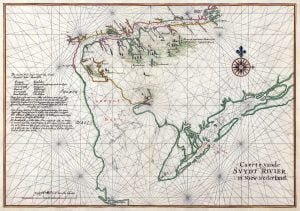
Map of Zwaanendael

Vinckeboons Map of Delaware-Bay

The nautical chart of Zwaanendael, founded by Samuel Godyn in 1629 as a patroonship in New Netherland, depicts the region’s early landscape and its Indigenous tribes. Following the massacre of its initial settlers by local Indians, Godyn relinquished the land to the Dutch West India Company, which retained local names like Godyns Bay. The map also features the various tribes living near the South River, highlighting their communal bonds and cultural practices, including their unique marriage customs and social structure.

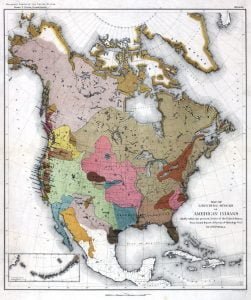
Linguistic Families of American Indians North of Mexico

Linguisitic Families of American Indians - Powell

Powell’s map, first published in 1891, categorizes the linguistic families of American Indian tribes north of Mexico, proving invaluable for historical study. Although it consolidates tribes into broader classifications, the complexity of tribal identities—such as the Iroquois Confederation or the Creeks—challenges uniform classification. The map illustrates the configuration of tribes, particularly their historical associations and linguistic ties, while acknowledging the dynamic nature of tribal boundaries over time. The project aims to present a comprehensive, yet accessible overview of North American Indigenous cultures for general readers.