
Cherokee
Trail of Tears Roll
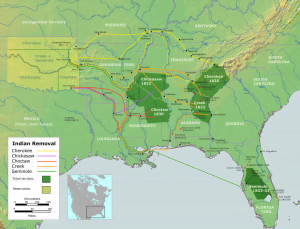
The Trail of Tears Roll is the name given by researchers to two different lists, both individually important, which provide an early glimpse into the Cherokees who went west in the early 1830’s. Lending to the confusion is the fact that both lists were created in 1835.
1851 Old Settlers Roll
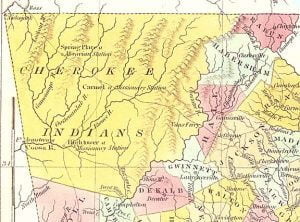
A listing of Cherokee still living in 1851 who were all ready residing in Oklahoma when the main body of the Cherokee arrived in the winter of 1839, as a result of the Treaty of New Echota (1835). Approximately one third of the Cherokee people were Old Settlers and two thirds new arrivals. The 1851 payroll lists Old Settlers (Cherokees who moved to Indian Territory prior to December 1835) entitled to participate in a per capita payment. There were 3,273 persons enumerated on this roll which is arranged by Cherokee district and grouped by family. Some persons who did not reside in the Cherokee Nation are listed as “Non-residents.” Three thousand, two hundred and seventy three Cherokees were enrolled and each received two hundred, seventy dollars and ninety five cents. The “Old Settlers” filed a protest against the sum. The Supreme Court decided that the original “Old Settlers” or their heirs would receive an additional one hundred, fifty nine dollars and ten cents per share in the 1896 “Old Settler” payment.
Improvements to Annexed Cherokee Lands
The Treaty of May 6, 1828, granted the Cherokee Nation 7 million acres as a permanent home, recognizing their sovereignty while mandating the cession of remaining lands to the United States. As a result, some Cherokee settlers were displaced from previously believed tribal lands. The treaty stipulated that land ceded would be appraised, and cash payments would be made for improvements made by proprietors. Numerous accounts detail the assessed value of various improvements, reflecting the complexities of land and ownership during this period.
Search the Dawes Rolls 1898-1914
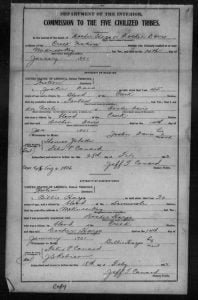
The Dawes Roll (Final Rolls) is a list of those members of the Five Civilized Tribes who removed to Indian Territory (Oklahoma) during the 1800’s and were living there during the above dates. If your ancestor was not living in Indian Territory during 1898-1914 they will not be listed on the Dawes Roll! Only those Indians who RECEIVED LAND under the provisions of the Dawes Act are listed. It also lists those Freedmen who received land allotments as provided for in the Dawes Act. These pages can be searched to discover the enrollee’s name, age, sex, blood degree, type, census card number and roll number. Check the headings in each column. Type denotes whether the record is from a Dawes card.
Dawes Final Rolls Index
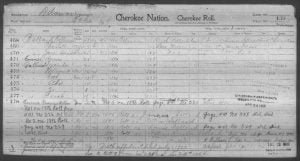
This is the index to the Dawes Final Rolls, listing individuals eligible for enrollment in the Five Civilized Tribes in Indian Territory. Each entry includes the enrollee’s name, final roll number, blood quantum, and index page.
Cherokee Indian Clans, Bands and Gens
The post discusses the existence of sub-tribes, bands, gens, clans, and phratries within various tribes, highlighting that some remain poorly documented or have disappeared. Specifically, it notes the Asahani, one of the seven Cherokee clans, whose name may have ancient ties to the word for blue but does not relate to ear cutting, as previously suggested. This inclusion aims to enrich understanding of tribal structures.
Cherokee Indian Tribe
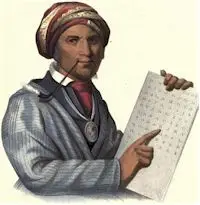
The Cherokee Indians, or Tsalagi nation, are a historically significant group of hill-dwelling people divided by the Alleghany mountains. Their settlements spanned regions from Tennessee to the Carolinas and Alabama. The Cherokee language features various dialects and shares affinities with Iroquois languages. Socially, they had a well-defined structure with warriors, chiefs, and clans. Culturally, they engaged in warfare and were noted for their distinct physical traits, traditional practices, and architectural skills. Their historical presence reflects a complex interplay with neighboring tribes and evolving social customs.
Henderson Roll: 1835 Cherokee East of the Mississippi Census
An extract from the 1835 Cherokee East of the Mississippi Census, also known as the Henderson Roll, this database lists Cherokee households remaining east of the Mississippi before removal. It includes heads of households, family members, enslaved people, and whites connected by marriage, along with residence. The roll was later used in Cherokee ancestry claims.
1835 Cherokee East Census – North Carolina
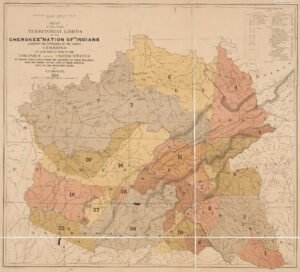
An index to the North Carolina portion of the 1835 Cherokee East of the Mississippi Census, also known as the Henderson Roll. This page provides a quick reference to household names and Henderson IDs for researchers, but users should consult the available full roll for detailed family information.
1835 Cherokee East Census – Tennessee
An index to the Tennessee portion of the 1835 Cherokee East of the Mississippi Census, also known as the Henderson Roll. This page provides a quick reference to household names and Henderson IDs for researchers, but users should consult the available full roll for detailed family information.
1835 Cherokee East Census – Alabama
An index to the Alabama portion of the 1835 Cherokee East of the Mississippi Census, also known as the Henderson Roll. This page provides a quick reference to household names and Henderson IDs for researchers, but users should consult the available full roll for detailed family information.
1835 Cherokee East Census – Georgia
An index to the Georgia portion of the 1835 Cherokee East of the Mississippi Census, also known as the Henderson Roll. This page provides a quick reference to household names and Henderson IDs for researchers, but users should consult the available full roll for detailed family information.
Pension Peggy Wilson, Widow of Lacy Wilson
A December 21, 1870 letter from Fort Gibson in the Cherokee Nation examines the pension claim of Peggy Wilson, widow of Lacy Wilson, and suspends payment over discrepancies in her declaration and deposition. The special agents question the authenticity of supporting documents, criticize fabricated Indian claims, and recommend holding similar cases pending further instructions.
Judges of Districts in the Cherokee Nation, July 1865, to July 1870
A 1871 Cherokee Nation executive letter from Acting Principal Chief James Vann encloses district and judge lists, along with marriage and estate laws and a seal-related act. The document notes there was no law legalizing customary marriages or authorizing judges to use seals, and it includes a detailed roster of district judges from 1865 to 1871.
Biographical Sketch of Mrs. Eliza C. Hefflefinger
Eliza C. Hefflefinger, born in the Cherokee Nation in 1853 to Jesse and Elizabeth Cochran, overcame the challenges of the Civil War’s impact on her education. In 1872, she married Greenville Pace Hefflefinger, a progressive farmer in their community. Together, they had two children, Joseph and Fannie. Eliza is recognized for her intelligence and active involvement in her community, as well as her membership in the Presbyterian church.
Biographical Sketch of Mrs. Jasper E. Smith
Catherine Ann, born on November 20, 1889, in Delaware District, was the daughter of John Parker and Sarah Elizabeth (Davis) Collies. Educated in Cherokee National Schools, she married Jasper E. Smith on December 24, 1908, in Vinita. They had four children: Watie, Don, Pauline, and Betty. Jasper, a farmer and cattle and hog dealer, resided near Ketchum. The post also briefly details the familial connections to Tomas Cordery and his descendants, establishing a broader context of interconnected Cherokee heritage.
Biography of Elbert Jacob Snider
Elbert Jacob Snider, born September 29, 1888, in Delaware District, was the son of Andrew Johnson and Cynthia Snider. He married Martha Elizabeth Daniels on September 26, 1912, and they had two children, Genevieve and Elbert Jacob. An educated man from Grove and Male Seminary, Snider was part of a notable lineage, being a great-great-grandson of Richard Fields, Chief of the Texas Cherokee. His family included several siblings and in-laws, reflecting a rich connection to the local community and its history.