The Five Civilized Tribes of Indian Territory

The Five Civilized Tribes—Cherokees, Chickasaws, Choctaws, Creeks, and Seminoles—are self-sustaining communities in Indian Territory, supported by agriculture and livestock. They prohibit alcohol and have limited U.S. court jurisdiction. Citizens live in sturdy homes and maintain livestock comparable to that of local white populations. Church membership is significant, with predominant denominations being Baptist, Methodist, and Presbyterian. Governed by treaties, the tribes have a rich history marked by forced removal from their ancestral lands in the East to this fertile territory, which is now part of Oklahoma.

Form of Government in Indian Territory

The governance of four of the Five Civilized Tribes in Indian Territory mirrors that of U.S. states, comprising executive, legislative, and judicial branches, with established legal codes. The Cherokees, Chickasaws, Choctaws, and Creeks maintain written laws, while the Seminoles adhere to Creek laws without a formal constitution. Each tribe’s political structure largely concentrates power among a few leaders, and the United States maintains a limited judicial presence to handle civil disputes. The Creek Nation’s constitution exemplifies the legal framework governing these tribes.

Five Civilized Tribe Survivors of the War of Rebellion

The census law sought to document surviving soldiers and widows from the War of Rebellion, presenting challenges due to reluctance from ex-soldiers and widows of the Five Civilized Tribes. These tribes, which aligned with the Confederacy, faced scrutiny regarding their treaty rights with the U.S. The War Department records indicate the formation of three regiments of Indian home guards and various Confederate units, totaling 5,238 men, with significant casualties and engagements in the war. Many Indian soldiers remain unrecognized in historical records.

Condition of the Alabama Indians in 1890

As of June 1, 1890, the total Indian population in Alabama numbered 1,148, including 384 reservation Indians and 759 self-supporting, taxed individuals. The latter, primarily descendants of various tribes, lived similarly to their non-Indian neighbors. The reservation group, consisting of Geronimos band of Apaches, showed significant improvement in living conditions and adopted a civilized lifestyle, with children attending school in Carlisle, Pennsylvania. They engaged in gardening, crafts, and other work, demonstrating intelligence and industriousness in their community.

Census of 1890 in Indian Territory

The census conducted among The Five Civilized Tribes in the Indian Territory highlighted the population and governance of these nations. Tribes regularly maintained census records to determine rightful citizens for land distribution and financial benefits. The 1890 census reported a total population of 178,097, including varying degrees of Indian and Negro descent. Despite challenges in obtaining accurate data, including the influence of non-citizen “intruders,” these tribes demonstrated a self-sustaining community with distinct governmental structures and cultural practices. Relationships and conflicts with U.S. authorities were also evident, particularly regarding citizenship rights.

Wallace Roll

Freedmen Notice

The Wallace Roll of Cherokee Freedmen in Indian Territory was created due to the citizenship of many ex-slaves (freedmen) being disputed by the Cherokee Tribe. To the freedmen, the ability to establish their status was important, not only for the sharing of the Cherokee lands, but also the payments and annuities the Cherokee Tribe was to receive in the future. A series of investigations were conducted by John W. Wallace, 1889-1890; Leo E. Bennett, 1891-92; Marcus D. Shelby, 1893; James G. Dickson, 1895-96; William Clifton, William Thompson, and Robert H. Kern, 1896-97. These investigations resulted in the Cherokee Freedmen Rolls known as the Wallace Roll, and the Kern-Clifton Roll.

Cherokee Indians

The Cherokee Indians, whose name origins are uncertain, are historically significant Native Americans predominantly residing in the southern Appalachian region. They speak an Iroquoian language and were divided into three dialect groups linked to separate settlements in Tennessee and neighboring states. The tribe has a complex history marked by early contact with European settlers, significant migrations, and cultural adaptations, such as the creation of a written language by Sequoya. Over time, they faced numerous challenges, including disease and forced removal, yet they have maintained a notable cultural and historical presence.

Interpreting the Starr Genealogies

Understanding the Starr Genealogies involves several key elements. Numbers indicate familial relationships, with left-side numbers representing individual position and right-side numbers denoting generational affiliation. Specific symbols indicate relationships like birth order, half-sibling status, and illegitimacy. To trace ancestry, one must drop numbers corresponding to generations and locate identical numbers in prior generations. Children are identified by adding one to the parent’s number. This structured system enables detailed navigation through the genealogy, ensuring clarity in examining familial connections.

Indians of the Southern States

The tribes of the Southern States, including the Creeks, Cherokees, Choctaws, Chickasaws, and Catawbas, shared significant similarities in habits and experiences, rendering a collective history more insightful than individual accounts. Early accounts, particularly by James Adair, document the tribes’ challenges, such as the devastating impact of smallpox and alcohol. Through various political shifts and interactions with European powers, their fates diverged. Notably, the Cherokees, initially prosperous, faced forced removals under U.S. policies, yet they adapted, maintaining cultural identity and thriving in new territories.

Mary “Polly” Beck Hildebrand Kesterson

Mattie Dial Hughes

Mary “Polly” Beck, born circa 1820 in Georgia, was the daughter of Jeffrey Beck and Susannah Buffington. After her father’s death, Susannah remarried Surry Eaton. Mary married Aaron Downing, but by 1838, she was listed as Polly Downing, suggesting a separation. She likely traveled the Trail of Tears with her family. Mary married Stephen Hildebrand before 1851, and they established a mill in the Goingsnake District. After Stephen’s death in 1867, she married James Kesterson in 1871 and passed away in 1872, leaving a significant legacy in Indian Territory.

The Trial and Goingsnake Massacre

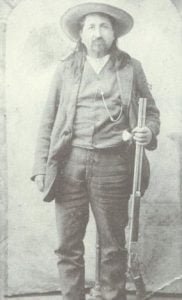
Surry Eaton Beck - White Sut Beck

Tensions escalated into violence during the trial of Ezekiel Proctor for the assault on a white man, leading to the Goingsnake Massacre. The Beck family sought justice in Federal Court, fearing Cherokee jurisdiction. When the trial commenced in a makeshift courtroom, armed Beck relatives forced their way in. A confrontation erupted, resulting in nine deaths, including Proctor’s brother, and numerous injuries. Despite the chaos, Proctor was acquitted, prompting him to flee into hiding from the vengeful Becks.

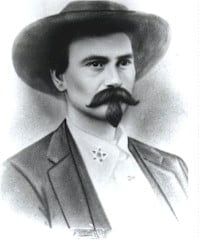
Ezekiel “Zeke” Proctor

Young Zeke Proctor

Ezekiel “Zeke” Proctor, born on July 4, 1831, to a mixed Cherokee family, experienced the Trail of Tears as a child. A Union soldier in the Civil War, he later held various positions within the Cherokee Nation, including Sheriff and Senator. Known for his stoic demeanor and distinctive appearance, Zeke lived a life marked by caution, often avoiding social interactions and traveling discreetly. He fathered children with multiple partners, married Rebecca Mitchell, and raised their five children following her death. Zeke passed away on February 18, 1907.

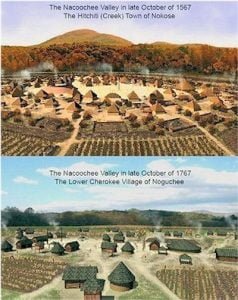
Cherokees in Nacoochee Valley

Hitchiti Creek town of Nokose

The Nacoochee Valley has a complex history involving Spanish Melungeon gold miners and the Cherokee peoples. In the 16th century, Spanish explorers noted gold in the nearby mountains, with Melungeons settling in the region. By the 18th century, Cherokee and Creek alliances led to conflicts for territorial control. The Cherokees faced significant losses from smallpox and warfare, resulting in their decline as a distinct group. By the American Revolution, the ethnic landscape shifted, but remnants of this hybrid culture lingered in place names and history.

Commissar of Pensions Suspends Payments

In a July 11, 1871 letter, Acting Secretary B. R. Cowen orders the Commissioner of Pensions to suspend payments in specified Indian pension cases, including Cherokee, Seminole, and Creek claimants, pending a full investigation. The directive also covers other cases in which attorney John W. Wright represented the applicants.

Marble Salt Works and Store

A historical account from the Cherokee Nation records a Union discharge, detailed store credits, and a 1870 letter from Marble Salt Works explaining hauling charges, salt and corn deliveries, and account adjustments with Alex Clapperton. The document offers a glimpse into postwar trade, labor, and bookkeeping in Indian Territory.

Department of Interior Reports 1A – 5A

A collection of Department of the Interior letters and reports traces the John W. Wright case involving Cherokee and Creek Indian Home Guard claims for back pay and bounty. The documents outline his appointment as special agent, the $100,000 bond, alleged failures to account for funds, and the Interior Department’s efforts to protect Indian claimants and pursue settlement.

Letter from Cherokee Nation for Bounty and Back Pay

A 1867 letter from the Creek Nation protests delays in paying bounties and back pay owed to discharged soldiers, widows, and orphans after the Civil War. It accuses merchant F. N. Nash and claim agent J. W. Wright of withholding funds and forcing unfair store purchases, while families face poverty, crop failure, and grasshopper devastation.

Cherokee Indian Research

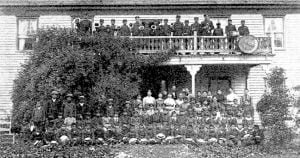
Cherokee Training School "Home" Swain County, North Carolina

This resource compiles essential information for researching Cherokee ancestry, detailing the tribe’s historical territory across various states, including Virginia and Georgia. It includes links to archives, biographies of notable Cherokee figures like John Ross and Sequoyah, genealogical resources, census data, military history, and the Trail of Tears. Additionally, it provides guides for tracing Indian ancestry, treating Cherokee culture, lore, and treaties. This comprehensive collection serves as a valuable tool for historians and genealogists studying the Cherokee heritage.

Regulations Governing Unrestricted Alienation of Lands for Town Site Purposes in Indian Territory

The document outlines regulations established by the Commission to the Five Civilized Tribes for the unrestricted alienation of lands designated for town-site purposes in the Indian Territory. It includes procedures for landowners from the Creek, Choctaw, Chickasaw, and Cherokee nations to petition for land alienation, detailing required information about the land and owners, and stipulating that approval from the Secretary of the Interior is necessary. The regulations also address the responsibilities of the Commission in reviewing petitions and ensuring financial accountability during land transactions.

Rules of Practice in Choctaw, Chickasaw and Cherokee Cases

The “Rules of Practice” established by the Commission to the Five Civilized Tribes in March 1903 outline procedures for contesting land allotments in the Choctaw, Chickasaw, and Cherokee nations. These rules dictate how contests can be initiated, requirements for complaints, service of notices, and protocols for trials. They ensure proper documentation and provide guidelines for appeals and motions for rehearing or review of decisions. The rules aim to facilitate fair and orderly legal processes regarding land disputes among these tribes.