
Language of the Cherokee Formulas

The language of Cherokee formulas is rich in archaic and figurative expressions that often perplex even the shamans. These phrases highlight the dialectic evolution of Cherokee, with remnants of the nearly extinct Lower dialect emerging in formulas composed in Middle or Upper dialects. The creative imagery in the formulas, particularly in love and curse prayers, showcases profound poetic beauty. The text notes the significance of retaining certain technical terms and the challenges of accurately translating the nuanced language, emphasizing a future comprehensive study of these expressions.
Cherokee Formula to Make Children Jump Down

The Cherokee formula for childbirth involves coaxing the unborn child to emerge by invoking fear. Boys are warned of an ugly old woman, while girls are told of their grandfather approaching, both figures instilling dread in children. This ritual, traditionally conducted by an elder female relative, now also uses a decoction during the process. The formula concludes with enticing the child with promises of toys, such as a bow for boys or a sifter for girls, thus blending fear with playful encouragement.

The Gatigwanasti Manuscript

The inquiry led to Wilnoti, son of the prominent shaman Gatigwanasti, who possessed a box of manuscripts and papers in the Cherokee alphabet. Among these was a manuscript containing 122 pages of sacred formulas, akin to those in Swimmer’s book. Despite initial resistance, Wilnoti eventually consented to lend the papers for study, valuing their preservation over sale. Ultimately, after several visits, the materials were purchased outright, comprising significant content on love charms and showcasing Gatigwanasti’s intelligence and writing skill, traits evident in his son.

Cherokee Formula for I Have Lost Something

The Cherokee formula for finding lost items involves a shaman utilizing a reddish-brown pebble, known as Brown Rock, to divine the location of the missing object. The shaman, fasting and repeating a specific incantation, observes the pebble’s swinging direction during various trials to narrow down the search area. This simple yet systematic approach includes marking a circle and cross on the ground as a final step. Additional formulas exist for stolen objects, adapting different mediums like straws or stones, reinforcing the cultural significance of these practices.

How the Formulas were Obtained

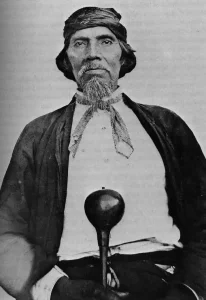
Swimmer - Cherokee

In the summer of 1887, the author studied Cherokee medicinal plants and their uses, uncovering a deeper connection between healing practices and accompanying ceremonies. A significant encounter with Swimmer, a knowledgeable Cherokee, led to the discovery of his secret book containing invaluable rituals, healing formulas, and songs necessary for successful hunting. Despite opposition from rival shamans concerned about preserving their knowledge, a deal was struck to document these practices, resulting in the preservation of this essential cultural information for future study.

Cherokee Indian Hygiene and Medicine

Cherokee hygiene practices reflect their lifestyle, characterized by exposure to the elements and a lack of sanitary precautions. Their log cabins, often without windows, maintain openness, while families frequently sleep outdoors. Traditional health methods include sweat baths, bleeding, and rubbing, with sweat baths considered a cure-all. However, after losing their traditional way of life, the Cherokee have faced poor health outcomes. Despite these challenges, some practices, like ceremonial bathing and the use of herbal remedies, persist, highlighting a blend of cultural beliefs and healthcare traditions.

Sacred Formulas of the Cherokees

Swimmer - Cherokee

The Cherokee Ayûnini Manuscript, authored by Swimmer, compiles approximately six hundred sacred formulas reflecting the tribe’s ancient beliefs and daily practices, including medicine, love, hunting, and war. Collected from Cherokee shamans in North Carolina during 1887-1888, these manuscripts were written in the Cherokee alphabet by Sikwâ´ya and preserved through oral tradition. Medical formulas dominate the collection, followed by love charms and hunting prayers. The decline of shamanistic societies has led to a fragmented transmission of this sacred knowledge, now closely guarded by individual shamans.

Cherokee Formula for Catching Large Fish

The Cherokee formula for catching large fish, as detailed in Ayûnini’s text, involves using the Yugwilû´ plant, known for its insect-trapping abilities. Fishermen are instructed to chew the plant, apply their spittle to the bait, and recite a specific formula while facing the stream. The prayer addresses the fish as if they reside in settlements, invoking their assembly to ensure a plentiful catch. The method reflects a deep cultural connection with nature and highlights the significance of mutual recognition among the fisherman and the fish.

Cherokee Formula for Hunting Birds

The Cherokee hunting formula recited by bird hunters emphasizes a spiritual connection to the fire, referred to as the Ancient White. Performed in the morning before the hunt, the ritual involves preparing arrows, addressing the fire, and shooting a short arrow at random to invoke the presence of birds. Hunters often climb trees to stealthily capture birds with their blowguns. Symbolic elements, such as offering bloodied leaves to the fire for omens, reflect the deep cultural practices surrounding hunting and respect for nature.

Cherokee Formula for Treating the Crippler – Rheumatism

The Cherokee formula for treating rheumatism, referred to as “the Crippler,” involves a series of invocations to powerful animal spirits, specifically the Red, Blue, Black, and White Dogs, along with the White Terrapin. The treatment employs specific fern roots and requires the patient and doctor to fast. The doctor performs the healing ritual early in the morning, repeating prayers and blowing at prescribed intervals. This tradition reflects the belief that rheumatism is caused by vengeful spirits, making the ceremony essential for relief.

The Gahuni Manuscript

The Gahuni Manuscript was obtained from Ayâsta, the widow of the late Gahuni, who had written the book containing eight unique formulas illuminating Indian beliefs. Ayâsta destroyed certain harmful spells at the advice of a shaman to protect her sons. The manuscript also includes around twenty pages of Scripture extracts, reflecting Gahuni’s dual role as a conjurer and preacher. Additionally, it features an incomplete Cherokee-English pronouncing dictionary created by Ayâsta’s youngest son, highlighting the linguistic challenges between the two languages.

Cherokee Formula Concerning Hunting

The Cherokee hunting formula is a ceremonial prayer to the gods Fire and Water, recited before setting out to hunt. It reflects the hunter’s desire for favorable conditions, invoking the Great Terrestrial Hunter, Ela-Kana´ti, and asking for the wind to conceal his presence from game. The ritual involves fasting, reciting the formula at water, and rubbing ashes on the breast for auspicious dreams. The hunter hopes for a fruitful hunt, symbolized by blood-stained leaves covering the water, representing a successful encounter with game.

Cherokee Formula Concerning Living Humanity – Love

The Cherokee formula concerning living humanity reflects a lover’s assertion of beauty and companionship, invoking the White Woman as a symbol of joy and fulfillment. The speaker claims to possess qualities that banish loneliness, positioning himself on a path of happiness. In contrast, he condemns his rivals as loathsome and miserable, emphasizing their loneliness. The formula emphasizes a strong emotional connection between the speaker and his beloved, depicting a union where loneliness is cast aside, and happiness prevails.

Cherokee Formula for Ball Play

The excerpt discusses a ceremonial formula used by Cherokee shamans to bless ball players before a game, focusing on a spiritual examination of their strengths and weaknesses. It depicts the contrasting fates of the players, with those aligned with the shaman receiving aid from mythical birds, representing swiftness and victory, while opponents are depicted as weak and clumsy. The stakes of the game are metaphorically linked to heavenly realms, demonstrating the significance of these rituals in Cherokee culture and their connection to the ball play tradition.

Cherokee Formula to Fix the Affections

The “Cherokee Formula to Fix the Affections” is a ceremonial chant designed to bond a husband and wife, particularly focusing on the emotional ties of a young wife named Ayâsta of the Deer clan. Conducted stealthily at night, the husband rubs spittle on her breast while chanting, invoking the Black Spider and the Ancient One for unity and permanence in their relationship. The formula emphasizes the deep connection between souls and aims to eliminate feelings of loneliness, ensuring a lasting bond.

Color Symbolism in Cherokee Formulas

Color symbolism is integral to Cherokee shamanistic practices, with each cardinal point represented by a specific color, imparting unique meanings and aligning with corresponding spirits. The Red Man in the East symbolizes power and success, while the Black Man in the West embodies death. Additional colors signify varying states such as happiness and defeat. This diverse system contrasts with other tribes but highlights universal themes where red often denotes power, reflecting similarities with ancient Eastern cultures.

Cherokee Formula to Attract and Fix the Affections

The Cherokee formula for attracting and fixing affections involves rituals performed by a newlywed husband to ensure his wife remains loyal. Over four nights, he recites specific phrases that symbolize taking her spittle, body, flesh, and heart, while applying his moist fingers to her breast. Each recitation culminates with a prayer to the Ancient One, aimed at binding her soul. This ceremony is believed to protect the relationship against external seduction, reinforcing commitment within marriage.

The Cherokee Gods and Their Abiding Places

The Cherokee religion is characterized by zootheism, encompassing a pantheon of gods that includes both animal and elemental deities. Animal gods, particularly quadrupeds and birds, outnumber others, with significant figures like the uktena and the rabbit. Elemental gods such as fire, water, and the sun hold immense importance. Personal deities, including the Red Man and Tsu’lkalû, figure prominently in rituals. Each spirit has a specific abode, and ceremonial prayers are tailored to address various needs, linking the Cherokee worldview to nature’s intricate balance.

Lands of the Five Civilized Tribes

The land holdings of the Five Civilized Tribes, particularly the Chickasaw and Choctaw, are complex and valuable, governed by treaties that stipulate shared ownership and restrictions on land transactions. The United States retains authority over land titles, preventing dispossession without federal approval. Allotment issues remain contentious, with individual claims leading to concerns about monopolization. The Cherokee Nation’s Chief Mayes emphasized the importance of equitable land distribution and adherence to treaty obligations to safeguard tribal interests, highlighting the historical context of land negotiations and their implications for the tribes’ futures.

Historical Outline of the Five Civilized Tribes

The Five Civilized Tribes—Cherokees, Creeks, Seminoles, Choctaws, and Chickasaws—originated from the Atlantic coast before migrating west. Representing different linguistic stocks, they developed unique tribal characteristics. Their rich oral traditions, though not extensively documented, preserve their history, culture, and notable figures like Osceola. The tribes engaged in significant conflicts, such as the Creek War and Seminole War, demonstrating remarkable resilience and military prowess. Over time, their descendants have become integrated, showing civic responsibility while maintaining a rich cultural heritage reflective of their past.