Half Indian blood and Incompetent

The following are cases of claimants who never made application for enrollment within the time fixed by law, but who are of half Indian blood or more and incompetent to look after their own interests. The attention of the department was directed to these cases as indicated herein.

Facts Covering Meritorious Cases

This list includes individuals, primarily full-blood Native Americans, who appeared before Judge Pollock in relation to meritorious claims concerning their rights, likely tied to land ownership or tribal citizenship. The names encompass adults and minors, many of whom are members of the Choctaw and Chickasaw Nations. These individuals were expected to be included in a report submitted to a congressional committee, reflecting their legal status and potential eligibility for land or other benefits under relevant treaties and laws.

List 3, Cherokees

List of Cherokees and Cherokee Freedmen whose names were omitted from final rolls because no application was made or by reason of mistake or oversight. Shows the names of 125 Cherokees by blood and 2 Cherokee freedmen all except 5 being minors, and most of them less than 4 years of age March 4, 1906.

Conditions which Arose During the Course of the Enrollment Work

At the conclusion of the enrollment work on March 4, 1907, the process was far from complete, resulting in significant confusion and ongoing litigation. The Department of the Interior faced a complex situation, as it had to balance the enrollment of citizens and freedmen of the Five Civilized Tribes with numerous other responsibilities, such as allotting tribal lands, resolving land contests, segregating town sites, and managing rights of way for infrastructure projects. These tasks, combined with the necessity of creating and enforcing regulations, significantly constrained the time available for enrollment work. Additionally, the administrative and legal challenges, coupled with the pressures from various stakeholders, highlighted the impracticality of the March 4 deadline and its resultant injustices.

Conditions In Indian Territory Prior to the Making of the Rolls

This text discusses the legal and historical aspects of land titles held by the Five Civilized Tribes, particularly the Choctaw and Chickasaw Nations, after their forced removal to Indian Territory. It examines treaties, such as the 1820 and 1830 agreements, which influenced land ownership rights. The document outlines claims by individuals of Choctaw and Chickasaw descent regarding their rights to land, the legal interpretations of these claims, and congressional involvement. Additionally, it highlights the difficulties of removal, tribal policies toward returning members, and later legal decisions impacting tribal land ownership.

Cherokee by Blood and Newborn, Act of July 1, 1902

The document discusses the enrollment cases of individuals who were entitled to be listed as citizens of the Cherokee Tribe but were omitted due to various reasons, including government oversight. Cherokees by Blood: Jennie Cloud, Joe Kingfisher, case No. 7713; Viola Grazier, case No. 4079; Maggie Beamer, case No. 9365; Jim Wolfe, case No. 10991; Eli Springwater, case No. Memo. 200; Alta May Brassfield, case No. 6415. Cherokee Freedmen by Birth: Lucy Scott, case No. 542.

Acts of Special Character

The Choctaw and Chickasaw Agreement, ratified in 1902, significantly impacted tribal enrollment processes, particularly by restricting new applications after a set deadline. It also established the Choctaw and Chickasaw Citizenship Court to review prior enrollment decisions, leading to the controversial Riddle case, which nullified many previous rulings. Similarly, the Cherokee Agreement of 1902 maintained enrollment limitations and faced legal disputes over application deadlines and roll confirmations.

Eastern Cherokee Schools

Eastern Cherokee Training School

The Eastern Cherokee Training School, a boarding institution with four white teachers, serves 84 boarders and 24 day scholars, averaging 80 attendees daily. In 1890, its maintenance cost was $11,264.47, covered by a U.S. appropriation. The school comprises 11 buildings and a barn, jointly owned by the U.S. and the Cherokees, and is managed by the Society of Friends. Additionally, the Cherokee school buildings are owned by the Eastern Band, with expenses funded by their education fund’s interest.

Eastern Cherokee Nation

The Qualla Reservation serves as the home of the Eastern Band of Cherokees in North Carolina, who, as of 1889, had shown significant development into self-sufficient, law-abiding citizens. They engage primarily in farming, lumbering, and day labor, with only minimal federal educational support. The band, incorporated by North Carolina’s general assembly, has demonstrated a steady population increase from 1850 to 1890. The bulletin detailing their status was prepared by Thomas Donaldson and reported by General Henry B. Carrington.

Eastern Cherokee in the 11th US Census

Nimrod J. Smith

The 1890 report on the Eastern Band of Cherokees in North Carolina highlights their self-sufficiency and integration as citizens. With a population increase from 710 in 1850 to 1,520, they live in Cherokee, Graham, Jackson, and Swain counties, occupying 65,000 acres known as the Qualla boundary. Though not recognized as reservation Indians, they are voters and taxpayers, supporting themselves primarily through farming and labor. They receive minimal educational aid from the U.S. and are not entitled to annuities given to Cherokees in Indian Territory.

Eastern Cherokee Band, Government and Politics

James Blythe

On December 9, 1868, the Eastern Cherokees established a structured government, reflecting their desire for organized representation similar to other tribes. Each settlement was allotted delegates to a general council, which was to meet annually and elect leadership. The council was empowered to create by-laws, oversee education, and regulate governance, including eligibility for office. The Eastern Band was formally incorporated by North Carolina in 1889, granting them corporate rights, the ability to sue, and validating their land claims, securing their political status and communal property.

Eastern Cherokee Enumeration, 1890

Eastern Cherokee Lumbermen, 1891

In 1890, the Eastern Band of Cherokees in North Carolina was enumerated, reporting a total population of 1,520 individuals. Education was emphasized, with 365 adults and 300 youths able to read; 180 youths could write, thanks to a functioning school system. Land usage highlighted 8,400 acres cultivated, including illegally occupied areas. Crop production was valued at approximately $3,859.50, while livestock reported included 38 horses and 210 cattle. The average wealth per capita was $217.25, reflecting their economic conditions in relation to nearby white settlers.

Eastern Band of Cherokee Historical Outline

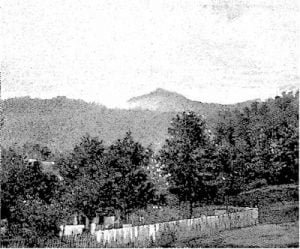
Rattlesnake Peak, North Carolina

The Eastern Band of Cherokees, distinct from those who migrated west, has navigated a complex history of treaties, land cessions, and legal disputes regarding their rights and lands. From the 1809 westward movement resulting in significant land exchanges with the United States to the enforcement of removal policies, the band has faced continuous challenges. Despite their resilience and commitment to community, they contend with legal uncertainties over land ownership and ongoing encroachments. Federal courts have been involved in adjudicating their claims since the 1870s.

Eastern Band of Cherokee Industries

The Eastern Band of Cherokees in Swain County, North Carolina predominantly engage in farming, often utilizing hand sowing due to the impracticality of machinery on steep terrain. Despite limited acreage, they manage to produce sufficient crops for their needs. While some mechanical trades exist, traditional crafts like pottery and blacksmithing are less profitable. The community demonstrates industriousness, with potential for industrial growth hindered by costs and access issues. Improved infrastructure, such as bridges and roads, could enhance their quality of life and economic opportunities.

Eastern Band of Cherokee, Religion and Morals

The Eastern Band of Cherokee has seen a decline in traditional superstitions and religious practices, though some belief in witchcraft persists. While Christian in theory, church organizations struggle to thrive. The Baptists and Methodists, who once had significant influence, now face challenges in maintaining congregations. Educational institutions serve dual roles as places of worship, fostering moral development without bigotry. Signs of progress include decreasing illegitimate births and a commitment to morality by tribal leaders. A central place of worship is sought to unify religious efforts.

Eastern Band of Cherokee, Schools

The Eastern Band of Cherokees operates three common schools and the Cherokee Training School, founded by Barnabas Hobbs. The schools serve as educational resources for local youth, focusing on moral, educational, and industrial training. The Cherokee Training School, located on 50 acres and supported by government funds, has shown significant success in agricultural production and comprehensive education for its students. However, issues concerning management and further resources highlight the ongoing challenges and needs for expansion and support within these educational establishments.

Eastern Band of Cherokees of North Carolina

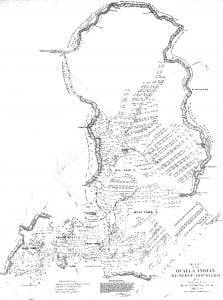
Qualla Reservation

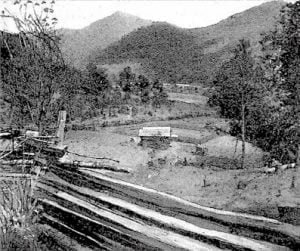
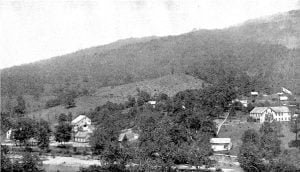
The Qualla Reservation, home to the Eastern Band of Cherokee Indians, encompasses a diverse landscape in southwestern North Carolina. The area features fertile lands, swift streams, and abundant wildlife, supporting agricultural practices that include corn, potatoes, and fruits. Settlements consist mainly of block houses with simple construction, while a network of roads connects mountain communities. Historical surveys have defined land boundaries, but conflicts persist. The Cherokees maintain a strong community spirit, emphasizing neighborly relations and a dedication to education and agriculture.

Eastern Band of Cherokee, Photos

Ocona Lufta Valley

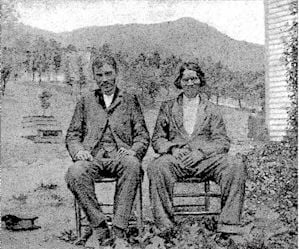
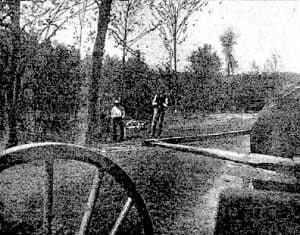
The provided content highlights various historical sites and figures of the Eastern Band of Cherokee in Swain County, North Carolina, from the late 19th century. It features key locations such as the Boys Dormitory at the Eastern Cherokee Training School, Bird Town School, and the Bryson City Courthouse. Notable individuals include Councilman Wesley Crow and Rev. John Jackson Graham. The imagery includes scenes of community life, education, and work among the Cherokee, illustrating their cultural and historical significance within the region.