
Surnames Kelly to Love

This document contains genealogical statements regarding various individuals and families of Creek, Choctaw, Chickasaw, and Mississippi Choctaw descent who sought recognition and enrollment in tribal rolls. The records, primarily from 1909 reports, detail claimants’ ancestry, enrollment issues, and tribal affiliations. Many individuals were denied enrollment due to factional disputes, legal technicalities, or failure to apply within deadlines. The document includes references to official reports and affidavits, offering insights into the complexities of Native American citizenship and land rights during the early 20th century.
Surnames Maharda to Mullie

This document contains genealogical statements regarding various individuals and families of Creek, Choctaw, Chickasaw, and Mississippi Choctaw descent who sought recognition and enrollment in tribal rolls. The records, primarily from 1909 reports, detail claimants’ ancestry, enrollment issues, and tribal affiliations. Many individuals were denied enrollment due to factional disputes, legal technicalities, or failure to apply within deadlines. The document includes references to official reports and affidavits, offering insights into the complexities of Native American citizenship and land rights during the early 20th century.

Surname Da-nu-wa to Dunford

This document contains genealogical statements regarding various individuals and families of Creek, Choctaw, Chickasaw, and Mississippi Choctaw descent who sought recognition and enrollment in tribal rolls. The records, primarily from 1909 reports, detail claimants’ ancestry, enrollment issues, and tribal affiliations. Many individuals were denied enrollment due to factional disputes, legal technicalities, or failure to apply within deadlines. The document includes references to official reports and affidavits, offering insights into the complexities of Native American citizenship and land rights during the early 20th century.

Surnames Edwards to Frenchman

This document contains genealogical statements regarding various individuals and families of Creek, Choctaw, Chickasaw, and Mississippi Choctaw descent who sought recognition and enrollment in tribal rolls. The records, primarily from 1909 reports, detail claimants’ ancestry, enrollment issues, and tribal affiliations. Many individuals were denied enrollment due to factional disputes, legal technicalities, or failure to apply within deadlines. The document includes references to official reports and affidavits, offering insights into the complexities of Native American citizenship and land rights during the early 20th century.

Surname Gamblin to Greenleaf

This document contains genealogical statements regarding various individuals and families of Creek, Choctaw, Chickasaw, and Mississippi Choctaw descent who sought recognition and enrollment in tribal rolls. The records, primarily from 1909 reports, detail claimants’ ancestry, enrollment issues, and tribal affiliations. Many individuals were denied enrollment due to factional disputes, legal technicalities, or failure to apply within deadlines. The document includes references to official reports and affidavits, offering insights into the complexities of Native American citizenship and land rights during the early 20th century.

Surname Hall to Hyden

This document contains genealogical statements regarding various individuals and families of Creek, Choctaw, Chickasaw, and Mississippi Choctaw descent who sought recognition and enrollment in tribal rolls. The records, primarily from 1909 reports, detail claimants’ ancestry, enrollment issues, and tribal affiliations. Many individuals were denied enrollment due to factional disputes, legal technicalities, or failure to apply within deadlines. The document includes references to official reports and affidavits, offering insights into the complexities of Native American citizenship and land rights during the early 20th century.

Surnames Bacon to Buzzard

This document contains genealogical statements regarding various individuals and families of Creek, Choctaw, Chickasaw, and Mississippi Choctaw descent who sought recognition and enrollment in tribal rolls. The records, primarily from 1909 reports, detail claimants’ ancestry, enrollment issues, and tribal affiliations. Many individuals were denied enrollment due to factional disputes, legal technicalities, or failure to apply within deadlines. The document includes references to official reports and affidavits, offering insights into the complexities of Native American citizenship and land rights during the early 20th century.

Surnames Boyd to Byars

This document contains genealogical statements regarding various individuals and families of Creek, Choctaw, Chickasaw, and Mississippi Choctaw descent who sought recognition and enrollment in tribal rolls. The records, primarily from 1909 reports, detail claimants’ ancestry, enrollment issues, and tribal affiliations. Many individuals were denied enrollment due to factional disputes, legal technicalities, or failure to apply within deadlines. The document includes references to official reports and affidavits, offering insights into the complexities of Native American citizenship and land rights during the early 20th century.

Surnames Camp to Cummins

This document contains genealogical statements regarding various individuals and families of Creek, Choctaw, Chickasaw, and Mississippi Choctaw descent who sought recognition and enrollment in tribal rolls. The records, primarily from 1909 reports, detail claimants’ ancestry, enrollment issues, and tribal affiliations. Many individuals were denied enrollment due to factional disputes, legal technicalities, or failure to apply within deadlines. The document includes references to official reports and affidavits, offering insights into the complexities of Native American citizenship and land rights during the early 20th century.

Surnames Abbott to Austin

This document contains genealogical statements regarding various individuals and families of Creek, Choctaw, Chickasaw, and Mississippi Choctaw descent who sought recognition and enrollment in tribal rolls. The records, primarily from 1909 reports, detail claimants’ ancestry, enrollment issues, and tribal affiliations. Many individuals were denied enrollment due to factional disputes, legal technicalities, or failure to apply within deadlines. The document includes references to official reports and affidavits, offering insights into the complexities of Native American citizenship and land rights during the early 20th century.

Rolls Relating to Citizens of the Cherokee Nation

This memorandum, dated November 28, 1908, provides a detailed account of various Cherokee Nation rolls compiled by tribal authorities and others from 1835 to 1900. It outlines the purpose, indexing status, and condition of each roll, including census rolls, pay rolls, and special enrollment lists such as the Chapman, Siler, and Mullay Rolls. The document highlights inconsistencies, missing records, and erasures found in certain rolls, emphasizing their role in enrollment decisions. It also notes that some rolls were used in determining Cherokee citizenship, while others, like early Eastern Cherokee rolls, were excluded from the final Dawes Commission enrollment process.

Report of Secretary Ballinger, February 1910

This letter from the Department of the Interior, dated February 12, 1910, addresses concerns about the enrollment process of the Five Civilized Tribes—Choctaw, Chickasaw, Cherokee, Creek, and Seminole. It discusses the legislative history governing the tribal rolls, issues related to the March 4, 1907, enrollment deadline, and complaints regarding rejected applications. The letter outlines various proposals to reopen the rolls or reconsider specific cases but ultimately advises against a general reopening, recommending only limited revisions for certain groups, including minors, orphans, and those whose applications were delayed.

Report of W. C. Pollock, January 15, 1912

This document is a report by W. C. Pollock, dated January 15, 1912, concerning the enrollment of citizens and freedmen of the Five Civilized Tribes. Pollock was tasked with investigating claims that eligible individuals were omitted from the final rolls. The report, addressed to the Secretary of the Interior, outlines the methods used to identify such individuals, including collaboration with the Commissioner to the Five Civilized Tribes, field investigations, and examinations of relevant records. It highlights the challenges and findings, listing those who might have been wrongly excluded, and suggests provisions for adding omitted names to the rolls.

Report of J. George Wright, Proposing to Extend the Act of February 6, 1901

This letter, dated November 3, 1909, from the Commissioner to the Five Civilized Tribes in Muskogee, Oklahoma, addresses a proposed bill by Senator Clapp seeking to extend the provisions of a 1901 law to Choctaw and Chickasaw citizens. The Commissioner outlines concerns about reopening the enrollment process, citing past fraudulent claims and the inefficiency of prior legal proceedings. He opposes the bill but suggests limited legislative action to enroll 52 individuals whose applications were wrongfully omitted. The letter also references broader enrollment disputes, including rejected applications and pending legal cases, particularly among Choctaw and Chickasaw freedmen.

Report Relating to the Enrollment of Citizens and Freedmen of the Five Civilized Tribes

This report, compiled by Joseph W. Howell on March 3, 1909, addresses the complex process of enrolling citizens and freedmen of the Five Civilized Tribes in accordance with various acts of Congress and treaties. Submitted to the Secretary of the Interior, the report meticulously evaluates the claims of individuals asserting rights to land and monetary benefits associated with tribal distributions. Howell discusses the historical and legal challenges that arose during and after the enrollment process, which officially concluded on March 4, 1907. The report sheds light on the intricate legal and administrative issues encountered, revealing the difficulties in accurately identifying rightful beneficiaries amidst widespread legal and political debates. Howell’s detailed account emphasizes the importance of this work, outlining both the procedural undertakings and the broader implications for the tribes and their members, suggesting further actions to address unresolved issues and ensure equitable treatment of all claimants.

Report of Secretary Adams, July 17, 1912

The document is a report from the Department of the Interior, dated July 17, 1912, addressed to Hon. John H. Stephens, Chairman of the Committee on Indian Affairs. It discusses H.R. 22334, a bill concerning the enrollment of certain persons omitted from the final rolls of the Five Civilized Tribes by March 4, 1907. The report details three classes of persons with claims to enrollment, references previous reports by the department, and comments on sections of the bill related to the sale of unallotted lands and the distribution of tribal funds. It is signed by First Assistant Secretary Samuel Adams and approved by Secretary Walter L. Fisher.

Letter of Dixon J. Bynum, January 1911

Dixon H. Bynum’s 1911 report reviews the enrollment status of Five Civilized Tribes members in prisons, orphan homes, schools, and asylums. It identifies hundreds of tribal members at Leavenworth and Atlanta, explains why some could not be matched to rolls, and concludes that confinement did not prevent enrollment, with most children already recorded.

The Five Civilized Tribes in Oklahoma

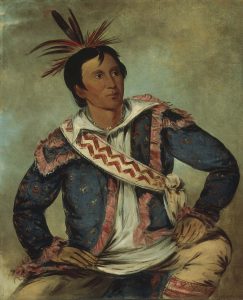
Há-tchoo-túc-knee, Snapping Turtle, a Half-breed, George Catlin, 1834

This manuscript has been extracted from Congressional records relating to relief of specific individuals of the Five Civilized Tribes in Oklahoma. If one of your ancestors was rejected or added to the rolls of any of the five civilized tribes in Oklahoma, you should peruse the information here. It contains a lot of case work involving specific Native Americans and those that attempted to prove themselves as part of the five civilized tribes in Oklahoma.