History of Newport New Hampshire

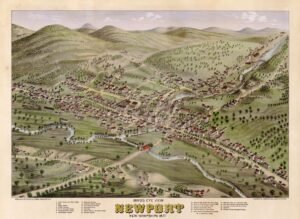
Bird's Eye View of Newport New Hampshire 1877

The History of Newport, New Hampshire, from 1766 to 1878 is a record of Newport’s growth from its early settlement through the close of the nineteenth century. It opens with the original charter and proprietary arrangements and follows the development of Newport’s physical setting, transportation routes, and economy. Particular attention is given to mills, banks, hotels, manufacturing, and the coming of the railroad, all of which shaped the town’s commercial life. The concluding genealogical section identifies families connected with Newport and other chapters provide biographical details that might otherwise be lost.

New Hampshire Men

1892 Map of New Hampshire

New Hampshire Men presents 407 biographical sketches, with portraits, of men who were active in commercial, professional, and political life in New Hampshire in 1893.

Vital Records of Sheffield Massachusetts, 1733-1792

Map of Sheffield, Harstville, Southfield and New Marlborough Massachusetts

The vital records of Sheffield, Massachusetts from 1733 to 1792 detail the town’s historical births, marriages, and deaths. While names and dates are transcribed accurately, some wording has been abbreviated for clarity. Marriage records often specify the union of couples, while birth records typically include parental names. Notably, some families lack marriage entries, starting instead with a child’s birth. The records also document a few out-of-wedlock births, emphasizing lineage through parental names, even in adult death records.

1932 New Hampshire Notables

1892 Map of New Hampshire

New Hampshire Notables,” published by the Concord Press in 1932, is a biographical compilation that follows a previous work by Henry H. Metcalf. It contains 474 brief sketches of notable individuals, both natives and residents of New Hampshire, recognized for their contributions across various fields such as public life, business, and education. This edition focuses on living subjects as of 1932, with an alphabetical index for easy reference. While not exhaustive, it serves as a valuable resource for researchers and libraries, preserving important biographical data.

History of Bedford, New Hampshire

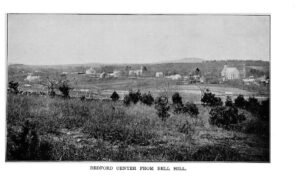
Bedford Center from Bell Hill

This volume, titled History of Bedford, New Hampshire, from 1737, was compiled by Peter P. Woodbury, Thomas Savage, and William Patten. It was published in Concord, N.H., by The Rumford Printing Co. in 1903. The primary objective of this edition was to incorporate all facts from the predecessor’s work, along with additional details and events that occurred since its publication, documenting the town’s history up to the occasion of the one hundred and fiftieth anniversary of its incorporation on May 15, 1900. A significant portion of the work is dedicated to Genealogies of 157 families, furnished largely by family representatives and compiled by Miss Mary E. Manning. The book also includes Biographies of notable figures associated with Bedford and a chapter on Vital Statistics (births, deaths, and marriages) compiled from town records, with recognized limitations due to the incompleteness of earlier record-keeping.

History of Amherst New Hampshire

Residence of Isaac Brooks in Amherst New Hampshire

The history of Amherst, New Hampshire, unfolds from its 1675 land grant to veterans of the Narraganset War, marking the impetus for settlement along the Souhegan River. From its early governance and incorporation in 1760 to territorial adjustments that birthed Mont Vernon and Milford, this narrative encompasses local geography, economy, and Indigenous presence. Key military engagements, civic institutions, and genealogical records are explored up to 1882, offering a comprehensive view of the town’s evolution and its prominent figures.

History of the Town of Cornwall Connecticut

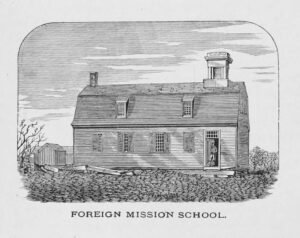
Foreign Mission School, Cornwall, Connecticut

The History of the Town of Cornwall Connecticut is a comprehensive account of the town’s evolution from colonial organization in 1731 to its involvement in national events like the Civil War. They include detailed geographical descriptions, ecclesiastical histories of local churches, and biographical sketches of families such as the Sedgwicks and Golds. The records also reflect social life, farming, early fashion, and the noteworthy Foreign Mission School.

The Old Dutch Burying Ground in North Tarrytown New York

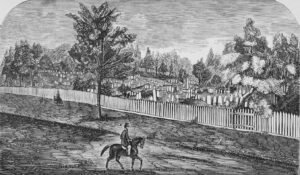
Old Dutch Church Graveyard

This book documents the early gravestones and inscriptions of the Old Dutch Burying Ground in North Tarrytown, New York, focusing on preservation efforts led by William Graves Perry. Commissioned for the church’s 250th anniversary, it records the deteriorating brownstone and marble markers, some dating back to the 18th century. The text highlights the artistry of gravestones and the community’s historical significance. Despite losses, surviving inscriptions are important for understanding the genealogy of early settlers in the area.

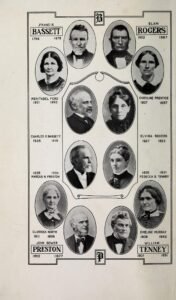
Bassett-Preston Ancestors

Bassett-Preston Ancestors

Miss Belle Preston initiated her ancestry research in 1898 in Hinsdale, Illinois, later tracing the Bassett lineage after moving to Brooklyn. Using various libraries as resources, she documented numerous New England colonial immigrants from both families, including six Mayflower ancestors. The book details eighty-nine Bassett and ninety-two Preston ancestors in the ninth generation. Belle’s connection to New England relatives is highlighted, noting an impending loss of that intimate knowledge as family members pass away. Read and download the PDF.

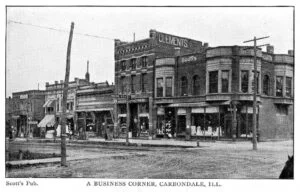
History of Carbondale, Illinois, 1852-1905

A Business Corner, Carbondale

Carbondale, Illinois, spans about 6,000 acres, primarily in the southwest quarter of Carbondale Township, established following congressional guidelines. Early settlers settled near Little Crab Orchard and Piles Fork creeks. The city’s growth is intertwined with the contributions of its founders, highlighted through 330 biographical sketches in the book, which offer details into their lives during challenging times. Carbondale’s history reflects the influence of individual leadership on municipal progress, celebrated here in the context of the nation’s bicentennial.

History of Natrona County, Wyoming

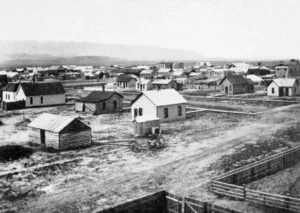
Casper Wyoming in 1894

For individuals researching ancestors who lived in Natrona County between 1888 and 1922, this book offers valuable context and potential leads. It includes names of county officials, war veterans, pioneers, and individuals involved in notable local events, as well as detailed accounts of institutions such as schools, churches, newspapers, and civic organizations. Descriptions of towns, industries, and public records provide insight into the communities where ancestors may have lived or worked. While not a genealogical record in and of itself, the book’s extensive local detail can help place family histories within the broader social and economic framework of the time. And who knows, perhaps your ancestor was one of the more colorful citizens portrayed…

Genealogies of Cornish New Hampshire

History of Cornish New Hampshire

Volume II of History of the Town of Cornish, New Hampshire, with Genealogical Record, 1763–1910, compiled by William Henry Child and published in 1911, presents a detailed genealogical account of the families who settled in Cornish from its founding through the early 20th century.

History of Buffalo New York

Buffalo Village from the Light House, 1828

“History of the City of Buffalo and Erie County” by Henry Perry Smith offers a comprehensive account of the development and significant events in Buffalo and Erie County, New York. Published in 1884 by D. Mason & Co. in Syracuse, New York, this two-volume work delves into the early settlement, growth, and transformation of the area. Volume II focuses on the history of Buffalo, New York. For the detailed history of Erie County, readers should refer to Volume I.

Over the Misty Blue Hills: The Story of Cocke County, Tennessee

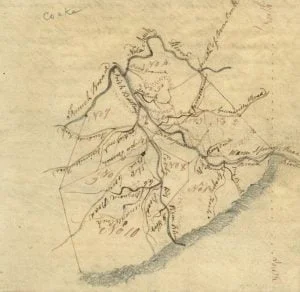
1836 Map of Cocke County, Tennessee

“Over the Misty Blue Hills: The Story of Cocke County, Tennessee,” written by Ruth Webb O’Dell and published in 1951, provides a historical account of Cocke County. The book covers various aspects of Cocke County’s history, including its political, social, religious, and industrial developments. The contents are divided into several detailed sections: the political history of Cocke County, the significance of local names, the natural resources and setting, early settlers, religious history, industrial development, and notable figures from the county. Additionally, it delves into specific family histories, offering insights into the lives of many influential families such as the Allens, Burnetts, Huff, McMahan, and many others.

Early Settlers of Ralls County, Missouri

1930 Map of Ralls County, Missouri

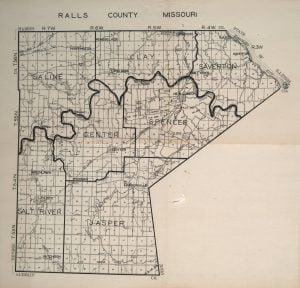
The manuscript “Early Settlers of Ralls County, Missouri” compiled by Eunice Moore Anderson in 1951 serves as a valuable resource for those tracing their family genealogy in Ralls County. Divided into three parts, the compilation focuses on documenting early settlers prior to 1878, drawing from sources such as county atlases and historical records spanning Marion, Ralls, Pike Counties, and beyond. While not aiming to provide a comprehensive history, Anderson’s work catalogues pioneer families, offering insights into their origins, migration dates to Ralls County, and family connections. This structured approach, supplemented by an alphabetical index, aids researchers in navigating through ancestral records and locating further detailed information within related historical volumes.

Marriages of Charlotte County Virginia, 1784-1815

1911 Map of Charlotte County Virginia

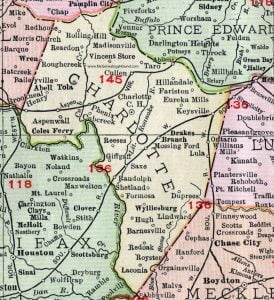
This volume, “Marriages of Charlotte County, Virginia, 1784-1815,” compiles the marriage bonds and minister’s returns from Charlotte County during the specified period. The original work was painstakingly copied by Catherine Lindsay Knorr and published in 1951. The book spans 119 pages and includes a wealth of historical data on marriages that took place in this Virginia county. This publication presents several challenges for readers. Some pages are slightly tattered and torn, and the manuscript features irregular pagination. Additionally, there are tight or nonexistent margins, particularly at the bottom of the pages, and one page is typed on different paper than the rest.

Seth Hastings Family of Clinton New York

Family Record of Dr Seth Hastings of Clinton, Oneida County, New York

The “Family Record of Dr. Seth Hastings, Senior” by Francis H. Hastings is a genealogical account that documents the ancestry and descendants of Dr. Seth Hastings, Sr., born in Hatfield, Massachusetts, in 1745. This work briefly traces his lineage back to Deacon Thomas Hastings, who emigrated from Ipswich, England, to New England on the ship Elizabeth in 1634. Deacon Thomas Hastings became a freeman in Watertown, Massachusetts, in 1635. The book then advances to a brief overview of the family of Dr. Seth Hastings, Sr., before delving into detailed records of his descendants. The genealogy extends to various families allied to the Hastings through marriage, incorporating a wide array of surnames.

Wintergreen Cemetery, Port Gibson, Mississippi

Wintergreen Cemetery, Port Gibson, Mississippi

This survey of Wintergreen Cemetery, Port Gibson, Mississippi, was completed in 1956 by Mr. Gordon M. Wells and published by Joyce Bridges the same year. It contains the cemetery readings Mr. Wells was able to obtain at that date. It is highly likely that not all of the gravestones had survived up to that point, and it is even more likely that a large portion of interred individuals never had a gravestone.

Logan County, Kentucky Wills – Book A, with index

Will book A, Logan County, Kentucky

The wills in this book come from Book A of the Wills found at the Logan County Court house in Russellville, Kentucky. The information was extracted in 1957 by Mrs. Vick on behalf of the DAR located in Russellville. The text in this book was done with an old manual typewriter and has the usual faint and filled-in type often found with such papers. On top of the difficulty in interpreting the print from the typewriter, the scanning process was also deficient, and led to the creation of a faint digital copy exacerbating the difficult to read text.

Spokane Story

Spokane Story

“Spokane Story: A Colorful Early History of the Capital City of the Inland Empire” by Lucile Foster Fargo offers readers an evocative journey through the formative years of Spokane, Washington. Published in 1957 by Northwestern Press in Minneapolis, this work seeks to straddle the realms of history and storytelling, presenting a narrative that is neither entirely factual history nor pure fiction. Fargo accepts the challenging task of depicting Spokane’s cultural and developmental evolution from its fur trade beginnings to its emergence as a municipal entity in the early twentieth century.