Descendants of Alexander Bisset Munro of Bristol, Maine
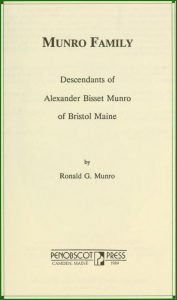
Munro Family

Alexander Bisset Munro was born 25 Dec. 1793 at Inverness, Scotland to Donald and Janet (Bisset) Munro. Alexander left Scotland at the age of 14, and lived in Dimecrana in the West Indies for 18 years. He owned a plantation, raising cotton, coffee and other produce. He brought produce to Boston Massachusetts on the ship of Solomon Dockendorff. To be sure he got his money, Solomon asked his to come home with him, where he met Solomon’s sister, Jane Dockendorff. Alexander went back to the West Indies, sold out, and moved to Round Pond, Maine, and married Jane. They had 14 children: Janet, Alexander, Margaret, Nancy, Jane, Mary, Solomon, Donald, John, William, Bettie, Edmund, Joseph and Lydia.

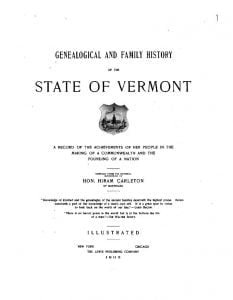
Genealogical and Family History of Vermont

Genealogical and Family History of the State of Vermont vol 1

Hiram Charlton took on the publication of the Genealogical and Family History of the State of Vermont for Lewis Publishing. In it, he enlisted the assistance of living residents of the state in providing biographical and genealogical details about their family, and then he published all 1104 family histories in two distinct volumes.

Seneca County New York Biographies

Seneca County History Newsletter Drawing

In the 1980’s a series of newsletters were published four times a year by Seneca County NY featuring historical information concerning Seneca county and her past residents. The current historian for Seneca County placed these online using PDF files. One of the main features of each edition were biographical sketches of early settlers of Seneca County. This is a list of those biographical sketches linked to the pdf copy of the newsletter.

Sons of Quebec 1778-1843

Fils de Quebec cover

The Sons of Quebec (Fils de Québec) were written by Pierre-Georges Roy and published in 1933 in a four volume set. They provide a series of short biographies of one to three pages of Quebec men from 1778-1843. Warning… this manuscript is in French!

Prominent White Men among the Chickasaws

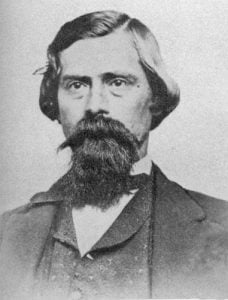
Holmes Colbert

In the early days, a few cultured white men, drawn by the Chickasaw way of life, integrated into the nation. Notably, figures such as James Gunn, Logan Colbert, and Malcomb McGee became part of Chickasaw society, aiding in moral and educational advancements. Despite myths of a McIntosh, who was misrepresented as influential, the true contributions of these men remain significant. They sought genuine connections with the Chickasaws, contrasting sharply with later intruders motivated by avarice, casting a long shadow over indigenous relationships.

Gov. Perier and Bienville

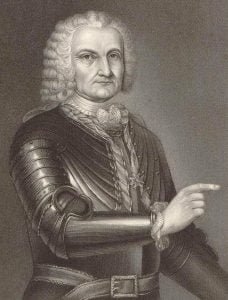
Bienville

The English colonists, wary of French expansion along the Mississippi, fostered conflicts between French and Native American tribes, particularly igniting animosity with the Chickasaws after a failed French escort led to their warriors’ deaths. Bienville, the French governor, attempted to use the Choctaws against the Chickasaws but faced significant resistance. Subsequent military expeditions by both Bienville and d’Artaguette ended in disastrous defeats against Chickasaw defenses. Ultimately, the Chickasaws showcased their resilience, marking critical victories that hindered French ambitions in the region.

Governor George M. Troup and the McIntosh Family

History of Alabama and incidentally of Georgia and Mississippi, from the earliest period

The narrative recounts the historical significance of McIntosh Bluff in Alabama, notably as the birthplace of Governor George M. Troup. His lineage traces back to Captain John McIntosh, a British officer awarded land for his service, and includes colorful family figures like Roderick McIntosh, known for his bold character and military exploits. While some McIntosh family members aligned with the British during the Revolution, others, like General Lachlan McIntosh, fought for American independence, establishing a complex legacy of loyalty and valor.

Treaty of February 15, 1861

On February 18, 1861, a treaty was signed at Fort Wise between U.S. commissioners and chiefs of the Arapahoe and Cheyenne tribes, ceding their lands except for a designated reservation. This agreement aimed to promote individual land ownership among tribe members, facilitating agricultural development. The U.S. pledged annual financial support for fifteen years, alongside resources for education, agriculture, and infrastructure. Additionally, provisions were made to encourage all tribe members to reunite and participate in the benefits of the treaty, reinforcing U.S. obligations towards the tribes’ welfare.

Muster Roll of Captain John Stuarts Company

The muster roll for Captain John Stuart’s Company covers the period from July 15, 1756, to March 25, 1757. It details the names, ranks, and service duration of enlisted men, with financial sums owed for their service. The document lists various soldiers, including sergeants, corporals, and other ranks, along with their respective discharge dates and total pay amounts. The overall total pay due to the company amounts to £7113.16.8, with John Stuart serving as Captain and James Adamfon as Lieutenant.

Roll of Captain John Stuarts Company

The Roll of Captain John Stuart’s Company, stationed at Fort Loudoun on July 11th, 1757, lists the following personnel: Captain John Stuart, Lieutenant James Adamson, Sergeants John Miller and Jacob Glaughenberg, alongside a number of corporals and soldiers. Notable individuals include Lawrence Masterson, Archibald Watson Senr., and William Campbell, among others. This roster highlights the structure and personnel involved in military operations during this period, reflecting the organization under Captain Stuart’s command.

1757, July 11, Muster Roll of Cap’t John Stuarts Comapany

The financial records for Captain John Stuart’s Company detail the pay given to various ranks, including the captain, lieutenants, ensigns, and sergeants, from their enlistment through March 1757. On March 25, 1757, a balance of £8661.13 was noted, with payments recorded for different ranks and amounts received. Captain Stuart requested the payment of this balance to appointed agents, Ogelvy and Ward, affirming the accuracy of the muster roll dated July 11, 1757, at Fort Loudoun.

Treaty of February 18, 1861

On February 18, 1861, at Fort Wise, U.S. commissioners and chiefs of the Arapahoe and Cheyenne tribes signed a treaty whereby the tribes ceded their lands while retaining a designated reservation. The agreement aimed to establish settled agricultural practices among the tribes by assigning individual plots of land, promoting their welfare through various supports, such as financial aid and agricultural resources. The treaty emphasized the tribes’ rights and outlined provisions for education, land ownership, and future tribal assistance, reinforcing the U.S. commitment to their integration and development.

Biography of Edward C. Stuart

Edward C. Stuart, born on March 2, 1879, in Powhattan, Arkansas, began his banking career as a clerk at the First National Bank of Cape Girardeau. After significant advancement, he became vice president of the First National Bank of St. Louis, illustrating his expertise in banking and financial management. Educated at Cape Girardeau State Normal School and Eastmans Business College, Stuart’s career reflects a commitment to mastering his profession. Married to Lucy Gentry, he has three children and is actively involved in community affairs without holding a political office.

Biographical Sketch of James Stuart

James Stuart, originally from Kent, Litchfield County, Connecticut, moved to Chicago in 1871, where he worked in the wholesale grocery business for nearly nine years. In the spring of 1880, he relocated to Madison, Wisconsin, where he has since pursued a career in banking.

Biographical Sketch of James D. Stuart

James D. Stuart, born in 1860 in Council Bluffs, Iowa, pursued a career in pharmacy after graduating from the State Pharmacy in 1880. That same year, he began his professional journey as a druggist in Mondamin, where he established his business.

Slave Narrative of Cindy Kinsey

Cindy Kinsey, approximately 86 years old, reflects on her life during slavery near Little Rock, Arkansas. She recalls her family and their work on a cotton plantation, overseen by Marse Louis Stuart and Missy Nancy. Kinsey fondly remembers the abundance of food, festive occasions, and her mother’s role in managing funerals. She expresses nostalgia for a time she perceived as joyful, despite the hardships, and shares stories of community life, religious practices, and her Baptist faith, emphasizing a strong connection to her past.