History of the Town of Cornwall Connecticut

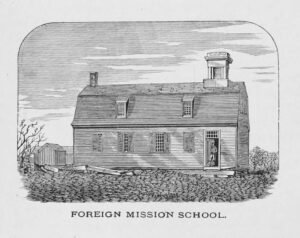
Foreign Mission School, Cornwall, Connecticut

The History of the Town of Cornwall Connecticut is a comprehensive account of the town’s evolution from colonial organization in 1731 to its involvement in national events like the Civil War. They include detailed geographical descriptions, ecclesiastical histories of local churches, and biographical sketches of families such as the Sedgwicks and Golds. The records also reflect social life, farming, early fashion, and the noteworthy Foreign Mission School.

Marriages of Charlotte County Virginia, 1784-1815

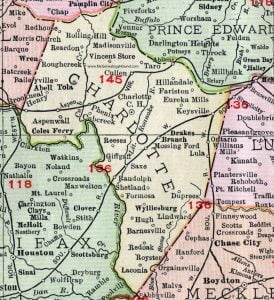
1911 Map of Charlotte County Virginia

This volume, “Marriages of Charlotte County, Virginia, 1784-1815,” compiles the marriage bonds and minister’s returns from Charlotte County during the specified period. The original work was painstakingly copied by Catherine Lindsay Knorr and published in 1951. The book spans 119 pages and includes a wealth of historical data on marriages that took place in this Virginia county. This publication presents several challenges for readers. Some pages are slightly tattered and torn, and the manuscript features irregular pagination. Additionally, there are tight or nonexistent margins, particularly at the bottom of the pages, and one page is typed on different paper than the rest.

Wintergreen Cemetery, Port Gibson, Mississippi

Wintergreen Cemetery, Port Gibson, Mississippi

This survey of Wintergreen Cemetery, Port Gibson, Mississippi, was completed in 1956 by Mr. Gordon M. Wells and published by Joyce Bridges the same year. It contains the cemetery readings Mr. Wells was able to obtain at that date. It is highly likely that not all of the gravestones had survived up to that point, and it is even more likely that a large portion of interred individuals never had a gravestone.

Brown Genealogy

Brown Genealogy

In 1895, Cyrus Henry Brown began collecting family records of the Brown family, initially with the intention of only going back to his great-grandfathers. As others became interested in the project, they decided to trace the family lineage back to Thomas Brown and his wife Mary Newhall, both born in the early 1600s in Lynn, Massachusetts. Thomas, John, and Eleazer, three of their sons, later moved to Stonington, Connecticut around 1688. When North Stonington was established in 1807, the three brothers were living in the southern part of the town. Wheeler’s “History of Stonington” contains 400 records of early descendants of the Brown family, taken from the town records of Stonington. However, many others remain unidentified, as they are not recorded in the Stonington town records. For around a century, the descendants of the three brothers lived in Stonington before eventually migrating to other towns in Connecticut and New York State, which was then mostly undeveloped. He would eventually write this second volume of his Brown Genealogy adding to and correcting the previous edition. This book is free to search, read, and/or download.

A Genealogy of the Lake Family

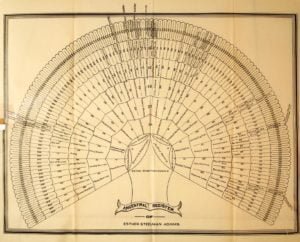
Ancestor Register of Esther Steelman Adams

A genealogy of the Lake family of Great Egg Harbour in Old Gloucester County in New Jersey : descended from John Lade of Gravesend, Long Island; with notes on the Gravesend and Staten Island branches of the family. This volume of nearly 400 pages includes a coat-of-arms in colors, two charts, and nearly fifty full page illustrations – portraits, old homes, samplers, etc. The coat-of-arms shown in the frontspiece is an unusually good example of the heraldic art!

Descendants of Philip Taber of New Bedford, MA

Philip Taber, born in 1605 and passed in 1672, was an early settler of New Bedford, MA, with a distinguished public service record, including roles as a deputy and representative. He had two wives, Lydia Masters and Jane, and fathered several children, including Thomas Taber, who continued the family legacy through civic duties in Dartmouth. The Taber lineage expanded with Joseph and Benjamin Taber, leading to notable descendants like Edward Smith Taber, who achieved success in various industries, including the Morse Twist Drill Company.

Rounseville Family of Fall River, MA

The Rounseville family, believed to have French roots, settled in Freetown, Massachusetts, due to religious persecution. The lineage traces back to Philip Rounseville, who arrived from England in the early 18th century. Among the notable descendants is Capt. Cyrus Cole Rounseville, a master mariner and successful businessman in Fall River, where he became treasurer of the Shove Mills. His son, also named Cyrus Cole Rounseville, further contributed to the community through various leadership roles in business and local government.

Rounseville Family of Fall River, MA

The Rounseville family, believed to originate from France due to religious persecution, established themselves in Freetown and later in Fall River, MA. Their lineage traces back to Philip Rounseville, who arrived in New England in the early 1700s. Capt. Cyrus Cole Rounseville, a prominent whaling master, and his son, Cyrus Cole Rounseville Jr., became influential figures in Fall River’s manufacturing sector, holding significant positions in local banks and the Shove Mills, contributing greatly to the community’s development throughout the years.

Biographies of Western Nebraska

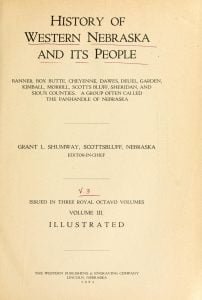
History of Western Nebraska and its People

A historical overview of western Nebraska and its pioneer settlers, this volume highlights the men who helped build counties across the Nebraska Panhandle, including Cheyenne, Box Butte, Deuel, Garden, Sioux, Kimball, Morrill, Sheridan, Scotts Bluff, Banner, and Dawes. It also points readers to biographies, history volumes, and a gallery of 143 photographs.

History of Kossuth, Hancock, and Winnebago Counties, Iowa

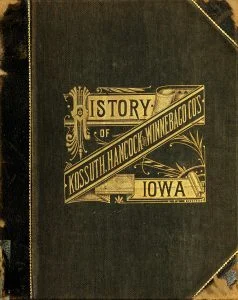
History of Kossuth, Hancock, and Winnebago counties, Iowa

History of Kossuth, Hancock, and Winnebago Counties, Iowa together with sketches of their cities, villages and townships, educational, civil, military and political history; portraits of prominent persons, and 638 biographies of representative citizens. Also included is a history of Iowa embracing accounts of the pre-historic races, and a brief review of its civil and military history.

1899 Directory for Middleboro and Lakeville Massachusetts

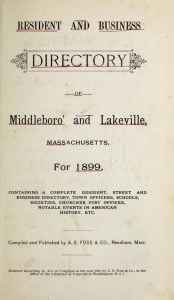
1899 Middleboro and Lakeville Massachusetts Directory Cover

The 1899 Directory for Middleboro and Lakeville, Massachusetts, compiled by A. E. Foss & Co., provides a comprehensive list of residents and businesses, alongside town officers, schools, churches, and societies. It includes notable historical events and offers a detailed account of the local community, featuring numerous surnames from both towns. This directory serves as an essential resource for understanding the demographics and social structure of Middleboro and Lakeville during that period.

Nansemond Tribe

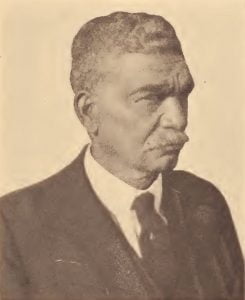
Augustus A. Bass, Nansamond

The Nansemond Tribe, descendants of the Powhatan tribes, primarily reside near Portsmouth and Suffolk, Virginia. Although their numbers have declined over the past century, around 200 individuals are recognized as descendants. In 1923, they formed the Nansemond Indian Association to unite with other indigenous groups. Key family names include Bass and Weaver. Their culture retains elements of bear-hunting and wolf-trapping traditions, as well as agricultural practices and the use of dugout canoes, reflecting their historical connection to the land.

Biographical Sketch of Henry Holloway

Henry Holloway, born in Berkshire, England, to Philip and Charlotte Holloway, was educated in London and trained as a cabinet-maker. He emigrated to America in March 1854 after marrying Ellen Castleman in December 1849. The couple had six children and were active members of the Episcopal Church for over forty years. Holloway settled in Jamesport in 1875, where he established himself as a capable and industrious businessman, contributing to the community throughout his residency.

Biographical Sketch of Mrs. Allen D. Holloway

Eva, born on June 20, 1886, to Artemus Andrews and Mary A. Barker, was educated at St. Teresa Academy and Forest Park University. She married Allen D. Holloway on May 10, 1906, in Vinita, Oklahoma. The couple had two children, Mary Dee and William Andrew. Active in her community, Mrs. Holloway is a member of the Methodist Church and the Eastern Star Chapter, while her husband serves as the cashier of the Oklahoma State Bank in Welch, Oklahoma.

Slave Narrative of Mary Veals

Mary Veals was born in Newberry, South Carolina, and, though she does not remember the era of slavery, she recounts her parents’ experiences as enslaved individuals under Judge J.B. ONeall. Veals highlights her family’s traditions, including fishing and hunting for food, and describes her journey to education. She recalls the founding of colored churches after the Civil War and shares insights into community life, games, and herbal medicine. Veals expresses respect for influential figures like Abraham Lincoln and Booker T. Washington and emphasizes her faith and commitment to the church.

Slave Narrative of Mary Veals

In a 1937 interview, Mary Veals recounted her experiences during and after slavery in Newberry, South Carolina. She noted her parents, Washing and Polly Holloway, were enslaved by Judge O’Neall. After the Civil War, Veals struggled economically due to high prices and limited resources. Despite this, she received an education from Miss Sallie, Judge O’Neall’s daughter. The interview highlights the formation of a Black church, led by preacher Simon Miller, symbolizing community resilience post-emancipation.

Holloway, Margaret Caldwell – Obituary

Margaret Caldwell Holloway, 91, formerly of La Grande, Oregon, passed away on June 6 in Amelia, Ohio. Born on November 9, 1916, in Fort Duchesne, Utah, she graduated from La Grande High School in 1935 and married Jess Holloway in 1942. They worked as ranchers in Durkee before returning to La Grande in 1975. Margaret had a long career working for Dr. John Higgins and her sister’s bowling alley. She is survived by her family, including her granddaughters, and was preceded in death by her husband and son.

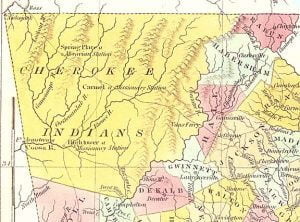
Biographies of the Cherokee Indians

1830 Map of Cherokee Territory in Georgia

The Cherokee Indians, primarily from the Southeastern U.S., have a rich history marked by their early adoption of a written language and a government structure similar to that of the United States. Despite their forced relocation to Oklahoma in the 1830s, they maintained significant genealogical ties, often intermarrying with Whites. Emmet Starr’s “History of the Cherokee Indians and Their Legends and Folklore” emphasizes personal biographies and genealogies, providing insights into the lives and connections of many Cherokee families across generations, thereby enriching their cultural narrative.