History of Newport New Hampshire

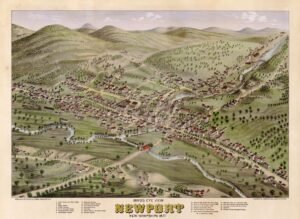
Bird's Eye View of Newport New Hampshire 1877

The History of Newport, New Hampshire, from 1766 to 1878 is a record of Newport’s growth from its early settlement through the close of the nineteenth century. It opens with the original charter and proprietary arrangements and follows the development of Newport’s physical setting, transportation routes, and economy. Particular attention is given to mills, banks, hotels, manufacturing, and the coming of the railroad, all of which shaped the town’s commercial life. The concluding genealogical section identifies families connected with Newport and other chapters provide biographical details that might otherwise be lost.

History of Francestown New Hampshire

Map of Francestown New Hampshire

History of Francestown, New Hampshire is a historic and genealogical record of the town from its first settlement in 1758 through the beginning of 1891. It records Francestown’s settlement, civic growth, religious and educational institutions, military participation, industries, and social customs, followed by an extensive genealogical register of families associated with the town.

Vital Records of Bellingham, Massachusetts

Vital Records of Bellingham Massachusetts to the year 1850

Alphabetical indexes to the vital records of Bellingham, Massachusetts, up to the year 1850, supplemented by information from bible records, church registers, cemetery inscriptions and other private sources to include the diary kept by Samuel Wight and his daughters.

Medway Massachusetts vital records

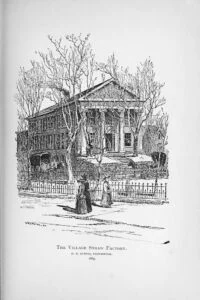
Medway Village Straw Factory

Alphabetical indexes to the vital records of Medway, Massachusetts, up to the year 1850, supplemented by information from church registers, cemetery inscriptions and other private sources to include Rev. Dr. Jacob Ide’s account of Marriages and Deaths, 1814-1849.

The history of Medway Massachusetts

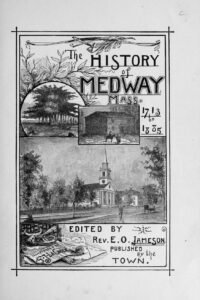
History of Medway title page

The History of Medway, Massachusetts, 1713–1885, covers the entire period of local history, embracing two hundred and twenty-five years, from 1660 to 1885; or, from the first appearance of a white settler within the territory, to the recent date of the incorporation of the town of Millis. The book is divided into ten sections, and gives, in consecutive order, an account of the first settlement, the municipal doings, the churches, the schools and other institutions, the industries, the military service, the miscellaneous matters, the cemeteries, the biographies of many persons, and the genealogies of numerous families.

History of Amherst New Hampshire

Residence of Isaac Brooks in Amherst New Hampshire

The history of Amherst, New Hampshire, unfolds from its 1675 land grant to veterans of the Narraganset War, marking the impetus for settlement along the Souhegan River. From its early governance and incorporation in 1760 to territorial adjustments that birthed Mont Vernon and Milford, this narrative encompasses local geography, economy, and Indigenous presence. Key military engagements, civic institutions, and genealogical records are explored up to 1882, offering a comprehensive view of the town’s evolution and its prominent figures.

Ashfield Massachusetts Vital Records

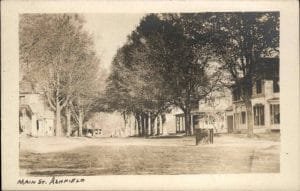
Main Street, Ashfield, Massachusetts

Alphabetical indexes to the vital records of Ashfield, Massachusetts, up to the year 1850, supplemented by information from bible records, church registers, cemetery inscriptions and other sources. PDF file is free to read and download.

History of Buffalo New York

Buffalo Village from the Light House, 1828

“History of the City of Buffalo and Erie County” by Henry Perry Smith offers a comprehensive account of the development and significant events in Buffalo and Erie County, New York. Published in 1884 by D. Mason & Co. in Syracuse, New York, this two-volume work delves into the early settlement, growth, and transformation of the area. Volume II focuses on the history of Buffalo, New York. For the detailed history of Erie County, readers should refer to Volume I.

Southborough Massachusetts vital records

Vital records of Southborough, Massachusetts, to the end of the year 1849 title page

The list of vital records of Southborough, Massachusetts, comprised in this volume includes all which were entered in the Town Books during the period from the earliest date there found to the end of the year 1849. Some additions and corrections of names and dates have been made from the records of the First Church, these being indicated in each instance by proper reference. There are a total of 6,267 births, marriages, and deaths recorded. This book is free to read or download.

Brown Genealogy

Brown Genealogy

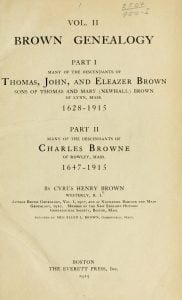
In 1895, Cyrus Henry Brown began collecting family records of the Brown family, initially with the intention of only going back to his great-grandfathers. As others became interested in the project, they decided to trace the family lineage back to Thomas Brown and his wife Mary Newhall, both born in the early 1600s in Lynn, Massachusetts. Thomas, John, and Eleazer, three of their sons, later moved to Stonington, Connecticut around 1688. When North Stonington was established in 1807, the three brothers were living in the southern part of the town. Wheeler’s “History of Stonington” contains 400 records of early descendants of the Brown family, taken from the town records of Stonington. However, many others remain unidentified, as they are not recorded in the Stonington town records. For around a century, the descendants of the three brothers lived in Stonington before eventually migrating to other towns in Connecticut and New York State, which was then mostly undeveloped. He would eventually write this second volume of his Brown Genealogy adding to and correcting the previous edition. This book is free to search, read, and/or download.

Abbe-Abbey Genealogy

A genealogical dictionary of the first settlers of New England vol 1

The “Abbe-Abbey Genealogy” serves as a comprehensive and meticulously compiled homage to the heritage of the Abbe and Abbey families, tracing its roots back to John Abbe and his descendants. Initiated by the life-long passion of Professor Cleveland Abbe, this genealogical exploration began in his youth and expanded throughout his illustrious career, despite numerous challenges. It encapsulates the collaborative efforts of numerous family members and researchers, including significant contributions from individuals such as Charles E. Abbe, Norah D. Abbe, and many others, each bringing invaluable insights and data to enrich the family’s narrative.

Hawes Family of Wrentham, MA

The Hawes family has deep roots in Wrentham, Massachusetts, tracing back to Edward Hawes, born circa 1620. His descendants, including notable figures like Oliver Snow Hawes and George H. Hawes, contributed significantly to local industries and governance. Oliver established a successful machinery firm in Fall River, emphasizing cash payments to employees, while George excelled in the cotton cloth brokerage. They were known for their charitable involvement and community leadership, leaving a lasting legacy in Wrentham and Fall River.

Copeland Family of Easton, MA

copeland

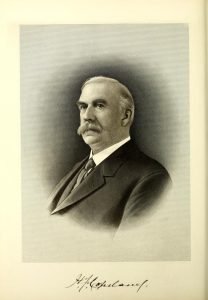
The Copeland family, with roots tracing back to Lawrence Copeland in 1651, has been a prominent part of southeastern Massachusetts history, particularly in Easton and the new town of Whitman. Notable descendants include George Copeland and his brother, Dr. Horatio Franklin Copeland, a Civil War veteran and esteemed physician who played a significant role in local governance and social affairs. The family’s lineage includes connections to the Pilgrims and various civic engagements, showcasing their longstanding influence in the region.

Richard Dexter Genealogy, 1642-1904

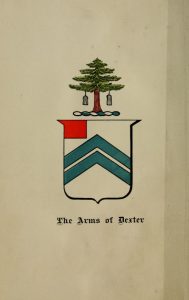
Arms of Dexter

Being a history of the descendants of Richard Dexter of Malden, Massachusetts, from the notes of John Haven Dexter and original researches. Richard Dexter, who was admitted an inhabitant of Boston (New England), Feb. 28, 1642, came from within ten miles of the town of Slane, Co. Meath, Ireland, and belonged to a branch of that family of Dexter who were descendants of Richard de Excester, the Lord Justice of Ireland. He, with his wife Bridget, and three or more children, fled to England from the great Irish Massacre of the Protestants which commenced Oct. 27, 1641. When Richard Dexter and family left England and by what vessel, we are unable to state, but he could not have remained there long, as we know he was living at Boston prior to Feb. 28, 1642.

Descendants of Alexander Bisset Munro of Bristol, Maine

Munro Family

Alexander Bisset Munro was born 25 Dec. 1793 at Inverness, Scotland to Donald and Janet (Bisset) Munro. Alexander left Scotland at the age of 14, and lived in Dimecrana in the West Indies for 18 years. He owned a plantation, raising cotton, coffee and other produce. He brought produce to Boston Massachusetts on the ship of Solomon Dockendorff. To be sure he got his money, Solomon asked his to come home with him, where he met Solomon’s sister, Jane Dockendorff. Alexander went back to the West Indies, sold out, and moved to Round Pond, Maine, and married Jane. They had 14 children: Janet, Alexander, Margaret, Nancy, Jane, Mary, Solomon, Donald, John, William, Bettie, Edmund, Joseph and Lydia.

Dodge Genealogy of Blue Hill, Maine

Historical Sketches of Bluehill Maine

The Dodge family lineage in Blue Hill, Maine, traces back to Reuben Dodge, who built the family home circa 1800. Reuben, born in 1773, served the community in various capacities, marrying Sally Peters and having multiple children. His descendants included Reuben George Washington Dodge, a shipbuilder and researcher, who furthered the family’s involvement in maritime ventures. Other Dodge branches, like those of Phineas, Merrill, and Ezra, contributed to the town’s history through shipbuilding and farming. Many family homes now exist as seasonal residences.

Robertson Genealogy of Bluehill, Maine

Early New England People

Robert Robertson, a sailor turned resident of Bluehill, Maine, built his house around 1830 after moving from Deer Isle. He had notable maritime connections during the embargo of 1811. His family included several children, with his son William M. Robertson marrying Elizabeth Jane Grindle and raising twelve children. The family lineage continued with George Robertson, who also had numerous children. Following the deaths of Robert and his wife, their home was occupied by Capt. Foster Hardin, highlighting the family’s lasting presence in the community.

Sawyer Genealogy of Narraguagus Valley Maine

Narraguagus Valley Some Account of its Early Settlement and Settlers

Josiah Sawyer settled near the Narraguagus River in Milbridge, Maine, around 1757, along with his wife Elizabeth Brown. They had eight children, including Josiah Jr., who married Rebecca Grindle and had numerous descendants. Other notable family branches include William Sawyer, who married Sarah Dyer, and Joseph Sawyer, who settled in Dyers Bay. The Sawyer lineage expanded significantly, with various members marrying into other families and spreading across the region, including into Augusta and Addison, Maine.

Leighton Genealogy of Narraguagus Valley Maine

Narraguagus Valley Some Account of its Early Settlement and Settlers

The Leighton family, prominent in the Narraguagus Valley, traces its roots back to Thomas and Samuel Leighton, who settled in the area around 1760. Samuel’s descendants include Theodore, Isaac, Parritt, and Phineas, who established families in Columbia, Addison, and Pembroke. Thomas, with a large family, also played a significant role. Another line from Thomas Leighton 2nd originated from Dover, NH, settling in Gouldsboro and later Steuben. Both branches produced numerous descendants, integrating into various local families and communities.