My Recollection of the 1920 Peggs Tornado

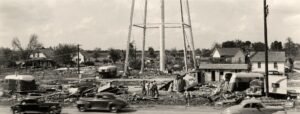
Tornado damage in Peggs, Oklahoma, May 1920

Walter Neel’s firsthand recollection of the 1920 Peggs cyclone describes the storm’s deadly impact on Peggs, Oklahoma, and nearby families. He recounts the warning signs, the destruction of homes and businesses, the loss of friends and relatives, and the grim work of helping identify bodies and dig graves in the aftermath.

History of Glastonbury Connecticut, 1653-1853

Indian Map of Glastonbury

The history of Glastonbury, Connecticut, from 1653 to 1853 chronicles an account of its schools, commerce, mills, and ecclesiastical societies. The author, Alonzo Bowen Chapin, balances the general history with personal narratives, making the reading engaging for individuals tracing their ancestry. The work provides valuable insights into the town’s development, the contributions of its early ministers, and the influences of religion and learning that shaped the community. Unfortunately, the work is limited in the depths of the genealogy presented.

Ashfield Massachusetts Vital Records

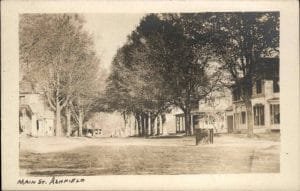
Main Street, Ashfield, Massachusetts

Alphabetical indexes to the vital records of Ashfield, Massachusetts, up to the year 1850, supplemented by information from bible records, church registers, cemetery inscriptions and other sources. PDF file is free to read and download.

1893 Ieshatubby Roll

Shonian, Chickasaw

This is a verified roll of Chickasaws registered by Ieshatubby in the Choctaw Nation under the act of June 20, 1893. The sheets are divided into columns for names, number of men, number of women, number of boys, number of girls, and totals. This roll does not indicate the amount paid or the recipients of the payments. It consists of two sheets of legal-cap paper; some names are written in ink, others in pencil. The word “paid” is generally written or indicated by ditto marks in the totals column. This roll was utilized by the Dawes Commission for enrollment purposes but was never indexed.

Wintergreen Cemetery, Port Gibson, Mississippi

Wintergreen Cemetery, Port Gibson, Mississippi

This survey of Wintergreen Cemetery, Port Gibson, Mississippi, was completed in 1956 by Mr. Gordon M. Wells and published by Joyce Bridges the same year. It contains the cemetery readings Mr. Wells was able to obtain at that date. It is highly likely that not all of the gravestones had survived up to that point, and it is even more likely that a large portion of interred individuals never had a gravestone.

Brown Genealogy

Brown Genealogy

In 1895, Cyrus Henry Brown began collecting family records of the Brown family, initially with the intention of only going back to his great-grandfathers. As others became interested in the project, they decided to trace the family lineage back to Thomas Brown and his wife Mary Newhall, both born in the early 1600s in Lynn, Massachusetts. Thomas, John, and Eleazer, three of their sons, later moved to Stonington, Connecticut around 1688. When North Stonington was established in 1807, the three brothers were living in the southern part of the town. Wheeler’s “History of Stonington” contains 400 records of early descendants of the Brown family, taken from the town records of Stonington. However, many others remain unidentified, as they are not recorded in the Stonington town records. For around a century, the descendants of the three brothers lived in Stonington before eventually migrating to other towns in Connecticut and New York State, which was then mostly undeveloped. He would eventually write this second volume of his Brown Genealogy adding to and correcting the previous edition. This book is free to search, read, and/or download.

Families of Ancient New Haven

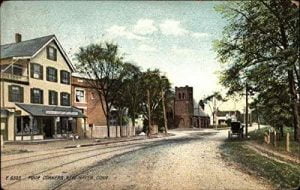
Four Corners New Haven Connecticut

The Families of Ancient New Haven compilation includes the families of the ancient town of New Haven, covering the present towns of New Haven, East Haven, North Haven, Hamden, Bethany, Woodbridge and West Haven. These families are brought down to the heads of families in the First Census (1790), and include the generation born about 1790 to 1800. Descendants in the male line who removed from this region are also given, if obtainable, to about 1800, unless they have been adequately set forth in published genealogies.

History of Minneapolis and Hennepin County, Minnesota

History of Minneapolis and Hennepin County, Minnesota

The aim of this history was to present in a permanent form the key incidents in the history of Minneapolis, from its earliest settlement to its publication in 1895. The primary facts and events recounted were mostly obtained from living witnesses and participants. It was rare for a city with more than two hundred thousand inhabitants to have so many of its first settlers still alive. The city’s growth had been so extraordinary and unprecedented that many of its earliest settlers remained. Some information was also gleaned from the notes left by now-deceased writers who witnessed the events described. Great care was taken to verify the accuracy of all facts and incidents mentioned. While it might have been too much to hope that the work was entirely free from errors, it was confidently believed that any such errors were few and insignificant.

Weymouth ways and Weymouth people

Weymouth ways and Weymouth people

Edward Hunt’s “Weymouth ways and Weymouth people: Reminiscences” takes the reader back in Weymouth Massachusetts past to the 1830s through the 1880s as he provides glimpses into the people of the community. These reminiscences were mostly printed in the Weymouth Gazette and provide a fair example of early New England village life as it occurred in the mid 1800s. Of specific interest to the genealogist will be the Hunt material scattered throughout, but most specifically 286-295, and of course, those lucky enough to have had somebody “remembered” by Edward.

Kansas Registrations of Enemy Aliens, 1917 – 1921

Enemy Alien Registration Affidavit for Bernhardt Vick - Cropped Photo

The series contains original affidavits of registration that record personal information about each registrant, their photograph affixed to the majority of documents, and the registrants fingerprints. All of these are specific to Kansas, and most have the actual documents attached.

Benton Family of Oxford County Maine

saco valley settlements and families cover

Dr. Joseph Benton, originally from Westmoreland, Connecticut, practiced medicine in Fryeburg before moving to Denmark and later Baldwin, where he died in 1838. Renowned for his skill, he successfully treated a deadly outbreak in New Hampshire, famously declaring he had “driven death through the Notch.” All five of his sons served in the War of 1812, with Nathaniel S. and Charles later becoming Congress members. His eldest son, Alfred Benton, held various local positions and died in 1887, leaving a substantial family legacy.

1899 Directory for Middleboro and Lakeville Massachusetts

1899 Middleboro and Lakeville Massachusetts Directory Cover

The 1899 Directory for Middleboro and Lakeville, Massachusetts, compiled by A. E. Foss & Co., provides a comprehensive list of residents and businesses, alongside town officers, schools, churches, and societies. It includes notable historical events and offers a detailed account of the local community, featuring numerous surnames from both towns. This directory serves as an essential resource for understanding the demographics and social structure of Middleboro and Lakeville during that period.

Migration of Families out of Norwich VT

In the late 18th and early 19th centuries, Norwich, Vermont, experienced significant emigration, leading to a notable decline in its population. Initially home to 40 families in 1771, the town saw many residents relocate to newer settlements, such as Royalton and Randolph, during and after the Revolutionary War. Prominent families, including the Hibbards and Carpenters, contributed to the establishment of towns in northern Vermont and beyond. By the 1800s, the trend of outmigration intensified, marking a long-term shift in the region’s demographic landscape.

Norwich Vermont and Dartmouth College

Norwich, Vermont, and Dartmouth College share a significant historical bond. Founded around the same time, both institutions benefited from mutual support, with Norwich contributing land and donations for the college’s establishment in Hanover. The founders of Norwich had personal ties with Dartmouth’s founder, Rev. Dr. Wheelock, who nearly chose Norwich as the college’s location. Over the years, Norwich supplied a substantial number of students to Dartmouth, highlighting a close relationship that fostered mutual growth and education amidst the challenges of their early settlements.

List of the Principal Pioneer Settlers in Norwich Vermont

In 1771, the population of Norwich, Vermont, was recorded at 206 people in forty families, highlighting its growth since being chartered by New Hampshire. The town was part of Gloucester County after 1772, previously belonging to Cumberland County. The census showed a predominance of youth, with 92 children under sixteen. The list of pioneer settlers includes notable names such as Daniel Baldwin, Ebenezer Ball, and Medad Benton, many of whom contributed to the establishment of the community by clearing land and building essential structures.

First Settlements in Norwich Vermont

The early settlement of Norwich, Vermont, began in 1762 when Samuel Slafter’s son, John, explored the area, reporting its fertile land and water sources. In 1763, after receiving his father’s rights, he commenced clearing lots but faced challenges, as his initial choice proved unsuitable. By 1765-66, a few families settled permanently, including the Hutchinsons and Manns, establishing homes and farms. Pioneers endured various hardships, yet they built foundations for a thriving community, characterized by a homogeneous population primarily from Connecticut.