Genealogies of Pembroke New Hampshire

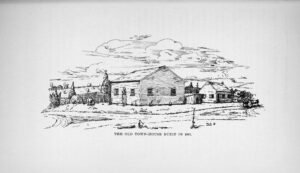
Old Pembroke NH Town House, built 1811

The “Genealogies of Pembroke, New Hampshire” is derived from the town’s second historical volume, and documents the connections of early settler families through the nineteenth century. It emphasizes families of the first settlers and families who resided in Pembroke over a long period of time. Organized alphabetically by surname, the genealogies use a consistent numbering system for easy reference. Carter draws from diverse sources, including town records and personal accounts of Pembroke’s citizens, while acknowledging possible inaccuracies in both their memory and the collection of information. However, by preserving these family lineages, Carter enhances the town’s historical narrative, complementing the first volume’s historical content. Supplementing this volume of genealogies is a compilation of marriage records which occurred in Pembroke, New Hampshire, from 1739 through 1895.
History of Rindge New Hampshire

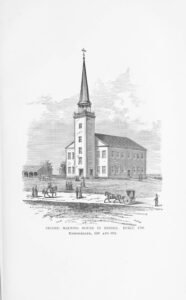
Second Meeting House in Rindge New Hampshire

The History of the Town of Rindge, New Hampshire by Ezra S. Stearns, was published in 1875, and covers the period from the original Rowley Canada grant or Massachusetts charter through the year 1874. Stearns traces the legal, territorial, and institutional development of Rindge, beginning with colonial land grants and boundary disputes and proceeding through settlement, incorporation into a town and development into a small manufacturing hub. More than half the volume is devoted to genealogical material. The genealogical register of Rindge families includes thousands of names compiled from a wide range of sources and assisted by contributions from residents and researchers beyond the town.

Abington Massachusetts Marriage and Death Records

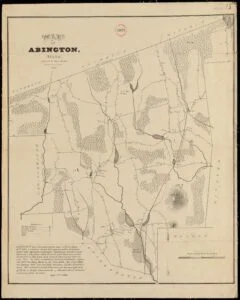
1830 Map of Abington, Massachusetts

Volume 2 of the Abington, Massachusetts vital records compiles marriage and death records up to 1850, complementing Volume 1, which contains birth records. Established in 1712, Abington’s boundaries have shifted, affecting historical jurisdiction. Extensive research from town records, cemeteries, and family Bibles ensured comprehensive documentation, including the identification of Black families recorded by given names. The volume is organized alphabetically by marriages and deaths.

Abington Massachusetts Birth Records

1830 Map of Abington, Massachusetts

Volume 1 of the Abington, Massachusetts vital records details births recorded in the town up to 1850, featuring comprehensive research from town records, cemeteries, and church documents. Established in 1712, Abington’s jurisdictional changes may affect genealogical searches. The records also include separate listings for Black families, primarily by given names. Additionally, various surnames are cataloged, emphasizing the need to consider alternate spellings. For marriages and deaths, researchers should consult Volume 2.

History of Francestown New Hampshire

Map of Francestown New Hampshire

History of Francestown, New Hampshire is a historic and genealogical record of the town from its first settlement in 1758 through the beginning of 1891. It records Francestown’s settlement, civic growth, religious and educational institutions, military participation, industries, and social customs, followed by an extensive genealogical register of families associated with the town.

Vital Records of Bellingham, Massachusetts

Vital Records of Bellingham Massachusetts to the year 1850

Alphabetical indexes to the vital records of Bellingham, Massachusetts, up to the year 1850, supplemented by information from bible records, church registers, cemetery inscriptions and other private sources to include the diary kept by Samuel Wight and his daughters.

Medway Massachusetts vital records

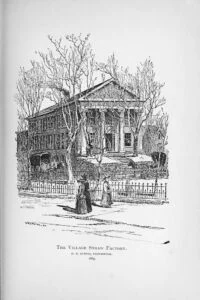
Medway Village Straw Factory

Alphabetical indexes to the vital records of Medway, Massachusetts, up to the year 1850, supplemented by information from church registers, cemetery inscriptions and other private sources to include Rev. Dr. Jacob Ide’s account of Marriages and Deaths, 1814-1849.

Seth Hastings Family of Clinton New York

Family Record of Dr Seth Hastings of Clinton, Oneida County, New York

The “Family Record of Dr. Seth Hastings, Senior” by Francis H. Hastings is a genealogical account that documents the ancestry and descendants of Dr. Seth Hastings, Sr., born in Hatfield, Massachusetts, in 1745. This work briefly traces his lineage back to Deacon Thomas Hastings, who emigrated from Ipswich, England, to New England on the ship Elizabeth in 1634. Deacon Thomas Hastings became a freeman in Watertown, Massachusetts, in 1635. The book then advances to a brief overview of the family of Dr. Seth Hastings, Sr., before delving into detailed records of his descendants. The genealogy extends to various families allied to the Hastings through marriage, incorporating a wide array of surnames.

Southborough Massachusetts vital records

Vital records of Southborough, Massachusetts, to the end of the year 1849 title page

The list of vital records of Southborough, Massachusetts, comprised in this volume includes all which were entered in the Town Books during the period from the earliest date there found to the end of the year 1849. Some additions and corrections of names and dates have been made from the records of the First Church, these being indicated in each instance by proper reference. There are a total of 6,267 births, marriages, and deaths recorded. This book is free to read or download.

History of Bentleysville, Pennsylvania

Bentleysville title page

This book is a collection of stories, letters, and historical records detailing the brief history of Bentleysville, a rural community in southwestern Pennsylvania. Established around a mill operated by Sheshbazzar Bentley Sr. and Jr. on Pigeon Creek in 1816, the town grew to a population of 300 by 1868. The author traces the origins of Bentleysville back to the 1770s to document the earliest settlers, while also providing context through significant national events like the Whiskey Rebellion and the Civil War. Although Bentleysville’s history as a village ended before 1900, this work preserves its legacy for future generations.

A history of Parsonsfield Maine

A history of Parsonsfield Maine

A history of the first century of the town of Parsonsfield, Maine. Incorporated Aug 29, 1785, and celebrated with impressive ceremonies at North Parsonfield August 29, 1885.

Families of Ancient New Haven

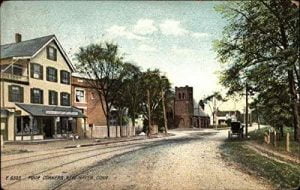
Four Corners New Haven Connecticut

The Families of Ancient New Haven compilation includes the families of the ancient town of New Haven, covering the present towns of New Haven, East Haven, North Haven, Hamden, Bethany, Woodbridge and West Haven. These families are brought down to the heads of families in the First Census (1790), and include the generation born about 1790 to 1800. Descendants in the male line who removed from this region are also given, if obtainable, to about 1800, unless they have been adequately set forth in published genealogies.

Abbe-Abbey Genealogy

A genealogical dictionary of the first settlers of New England vol 1

The “Abbe-Abbey Genealogy” serves as a comprehensive and meticulously compiled homage to the heritage of the Abbe and Abbey families, tracing its roots back to John Abbe and his descendants. Initiated by the life-long passion of Professor Cleveland Abbe, this genealogical exploration began in his youth and expanded throughout his illustrious career, despite numerous challenges. It encapsulates the collaborative efforts of numerous family members and researchers, including significant contributions from individuals such as Charles E. Abbe, Norah D. Abbe, and many others, each bringing invaluable insights and data to enrich the family’s narrative.

Abbott Genealogical Register

Abbott Genealogical Register

In 1847, Abiel Abbot and Ephraim Abbot compiled a comprehensive genealogical record titled “Abbott Genealogical Register,” detailing the lineage of several Abbott families originating from early New England settlers. Initially aimed to document the descendants of George Abbot, Sr. of Andover, the scope expanded to include numerous branches such as George Abbot, Jr., Thomas Abbot of Andover, Arthur Abbot of Ipswich, Robert Abbot of Branford, Ct., and George Abbot of Norwalk, Ct., among others. This volume, published by J. Munroe and Company in Boston, Massachusetts, integrates meticulously gathered data, revealing the expansive and intertwined genealogies of the Abbott families. The authors’ painstaking research and dedication to accuracy, despite challenges in data completeness, provide a valuable resource for anyone tracing the Abbott lineage or studying early American familial structures.

Ancestry of Elmer C. Packard of Brockton Massachusetts

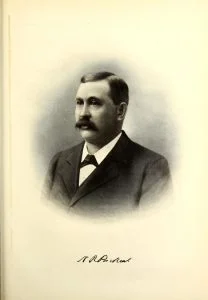
Elmer C. Packard

The Packard family has held a significant presence in New England for nearly 275 years, tracing its origins to Samuel Packard, an early settler in Bridgewater, Massachusetts. The lineage includes prominent figures, such as Elmer C. Packard, who succeeded his father, Ellis Packard, in a successful grain and coal business in Brockton. The family has deep roots in various trades and public service, with Elmer continuing the legacy through active community involvement and progressive business practices.

Washburn Genealogy of Bridgewater Massachusetts

Old Families of Southeastern Massachusetts

The Washburn family, among the earliest settlers of Bridgewater, Massachusetts, traces its roots to John Washburn, who arrived in New England by 1632. His lineage includes notable descendants such as Capt. Abraham Washburne, a Revolutionary War soldier, and his son Seth, who became a successful entrepreneur in cotton gins. The family continued to thrive, with later generations like George and Lucy Eaton, who contributed to the community’s legacy. The Washburns remain a significant part of Bridgewater’s history, exemplifying the town’s early growth and development.

Howard Genealogy of Bridgewater and New Bedford Mass.

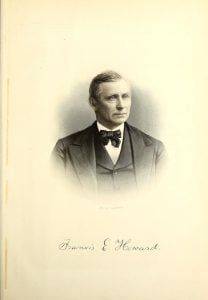
Frances E. Howard

The Howard family, prominent in the history of Bridgewater and New Bedford, Mass., traces its lineage back to John Howard, an early settler. Key figures include Capt. Benjamin Beal Howard, founder of Howard Seminary and known for his philanthropic deeds, and his son, Francis Edward Howard, an influential public servant and community leader. Both men embodied the family’s commitment to education and civic duty, contributing significantly to the community’s development and welfare, leaving a lasting legacy through their charitable efforts and public service.

Descendants of Matthew Watson of Leicester, Massachusetts

Watson Coat of arms

Matthew Watson (d. 1720), of English lineage, married Mary Orr in 1695, and in 1718 the family immigrated from Ireland to Boston, Massachusetts and settled in Leicester, Massachusetts. Descendants and relatives lived in New England, New York, New Jersey, Pennsylvania, Ohio, Nebraska, Rhode Island, California, Nevada, Michigan and elsewhere. Includes Watson, Armington, Bemis, Denny, Draper, Kent, Washburn, Bailey, Barnard, Belcher, Bent, Biscoe, Bolles, Breckenridge, Bright, Browning, Bryant, Bullock, Burrage, Dennis, Fisher, Foster, Green, Hayward, Hobbs, Hodgkins, Holman, Howard, Jenks, Jones, Kellogg, Kitchell, Knight, Lazelle, Livermore, Loring, Mason, Maynard, Munger, Patrick, Prouty, Remington, Reed, Rice, Richardson, Rogers, Sadler, Sibley, Snow, Sprague, Stone, Studley, Symonds, Taitt, Thomas, Thompson, Trask, Tucker, Waite, Webster, Westcott, Wheeler, Whittermore, Wilson, Woods and related families.

Ancestry of Walter Lyman French

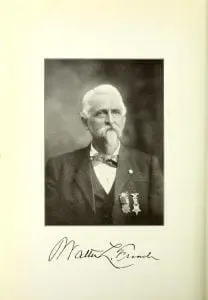
Walter L. French

Walter Lyman French, born on May 4, 1843, in Brockton, was a prominent entrepreneur known for his contributions to various industries, particularly in the shoe and grocery trades. Descended from early New England settlers, he engaged in military service during the Civil War and later established himself in business after the war. French was active in local politics and community organizations, reflecting a dedication to service and leadership. He married Lucy Ames, and they had a daughter, Ellen Lucinda. French has been recognized for his significant impact on the Brockton community.

Weymouth ways and Weymouth people

Weymouth ways and Weymouth people

Edward Hunt’s “Weymouth ways and Weymouth people: Reminiscences” takes the reader back in Weymouth Massachusetts past to the 1830s through the 1880s as he provides glimpses into the people of the community. These reminiscences were mostly printed in the Weymouth Gazette and provide a fair example of early New England village life as it occurred in the mid 1800s. Of specific interest to the genealogist will be the Hunt material scattered throughout, but most specifically 286-295, and of course, those lucky enough to have had somebody “remembered” by Edward.