Micmac Customs And Traditions

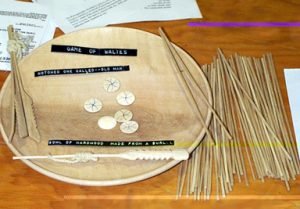
Waltes Bowl and Sticks

The Micmac Indians of Nova Scotia possess rich customs and traditions, primarily documented through the Glode brothers, who are esteemed for their knowledge of native lore. Their communication methods in the woods utilize symbolic sticks, and traditional games, such as altestakun, reflect their cultural values and complexities. Notably, the serpent dance, once common, symbolizes transformation and seasonal cycles, while folktales, like those of water fairies and the culloo, illustrate their deep mythological roots. However, much of this heritage is fading as fewer individuals retain knowledge of these legends and practices.
The Micmac Indians At Bay d’Espoir

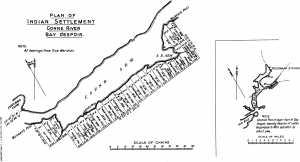
Plan of Indian Settlement Conne River Bay Despoir

A detailed report on the Micmac settlement at Bay d’Espoir in Newfoundland, describing the community’s land, housing, church, school, diet, trapping economy, and leadership. It also warns that declining game, encroaching Europeans, and lack of land titles threaten their future, while historical notes trace the Micmacs’ arrival in Newfoundland and their impact on the Beothuks.

The Mi’kmaq Language

The Eastern Algonquian languages, including Micmac (or Mi’kmaq), are a subgroup characterized by limited documentation and linguistic diversity. Micmac is spoken primarily in Nova Scotia, New Brunswick, and parts of Quebec, with approximately 8,100 speakers. It features a rich grammatical structure, distinct from English, and has faced challenges in preservation. Notable resources for learning include dictionaries and grammars developed by Silas T. Rand and others. Recent audio recordings contribute to the ongoing effort to document and revitalize the language.

Micmac Tribe

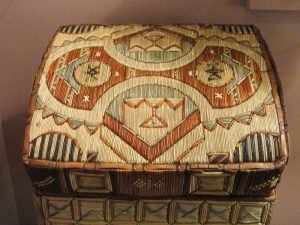
Micmac Birchbark Box with Porcupine Quills

The Micmac, or Mikmaq First Nation, is an Algonquian tribe primarily located in Nova Scotia, Cape Breton, Prince Edward Island, and parts of New Brunswick and Newfoundland. Historically noted for their early contact with Europeans, the Micmac formed strong ties with the French and resisted English encroachment post-1713. They practiced limited agriculture, relied on fishing, and lived in wigwams. Their society was divided into seven districts, with a rich cultural heritage that included games, a unique language, and a complex system of communication in the woods.

Abenaki Tribe

The Abenaki Tribe, part of an Algonquian confederacy, was primarily located in present-day Maine and included various subgroups such as the Penobscot and Passamaquoddy. Their history, noted since Verrazano’s visit in 1524, involves interactions with European settlers and conflicts with other tribes. Culturally, they lived in wigwams and practiced agriculture alongside fishing. Their societal structure included war and civil chiefs, and they held beliefs in a dualistic spiritual world. Over time, Abenaki populations diminished, leading many to relocate to Canada.