Memoirs of Nathaniel Folsom

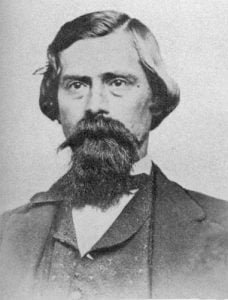
The memoirs of Nathaniel Folsom recount his life, beginning in North Carolina in 1756 and his family’s journey to the Choctaw Nation. Folsom details his early education, family struggles, and life as a trader among the Choctaws for thirty years. He describes significant cultural practices, community dynamics, and his eventual conversion to Christianity. Folsom, who had two wives and fathered twenty-four children, emphasizes his moral values and enduring ties to the Choctaw people until his death in 1833.

Memoirs of the Durant and Crowder Families

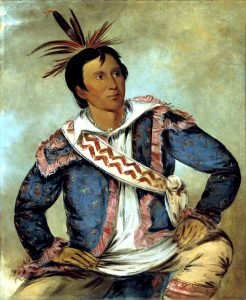
The Durant family, led by Louis Durant, arrived in the Choctaw Nation around 1770 alongside the LeFlore brothers. Louis married a Choctaw woman, and they had five children, including sons who fought in the Creek War of 1812. Margaret, one of Louis’s daughters, married Eli Crowder, known as Muscokubi for his battlefield prowess. Crowder lived to 102 and had multiple wives and children. Notably, his son Louis became a respected interpreter in the Choctaw Nation, illustrating the family’s prominence and contributions within their community.

Memoirs of the Harkins Family

John Harkins, a prominent figure in the Choctaw nation, arrived around 1800 and married Major Lewis LeFlore’s daughter, fathering four sons, including notable leaders like Col. George W. Harkins. George distinguished himself as a lawyer and advocate for Choctaw rights. His sister Salina, a well-educated and independent woman, worked as a telegraph operator. The Harkins family exemplified the virtues of their community, contributing to the moral and intellectual advancement of their people, while the author reflects on their enduring legacy and the need for greater recognition of Indigenous achievements.

Choctaws views on God and Murder

The Choctaws, like many North American tribes, held a profound belief in a Supreme Being known as the Great Spirit, attributing the creation of all to this divine force. They viewed nature as a manifestation of the Great Spirit, expressing their reverence through songs and dances. When it came to justice, the Choctaws executed murderers through a process that emphasized honor and accountability, with the condemned typically accepting their fate with composure. This approach highlighted their commitment to truth and moral integrity, distinguishing their practices from those of white society.

Views on the Choctaw and Fables – North American Indians

In 1723, the Choctaw territories spanned from the Mississippi River to the Black Warrior and included over sixty towns, with an estimated twenty-five thousand warriors. Their fables, known as Shukha Anump, reflect moral lessons, akin to Aesop’s. One fable recounts a turkey and a terrapin, illustrating that arrogance can lead to downfall, as the underestimated terrapin outsmarts the turkey. The author emphasizes that the ancient Indians valued traits like truth, honor, and hospitality, suggesting their readiness for civilization and Christianity, despite skepticism from others.

Memoirs of John Pitchlynn

Peter Perkins Pitchlynn was the Choctaw Principal Chief from 1864-1866

John Pitchlynn was a notable figure in the Choctaw Nation, recognized as a benefactor who integrated into their society by marrying a Choctaw woman and serving as an interpreter for the U.S. government. He gained the respect of both the Choctaws and missionaries through his moral conduct. His son, Peter P. Pitchlynn, became a prominent leader and advocate for education and peace among tribes, notably facilitating a treaty with the Osages. Known for his integrity and leadership, Peter’s legacy reflects the potential for collaborative progress within Native communities.

Missionaries among the Native Americans

Missionaries, notably Rev. Cyrus Kingsbury, began their work among the Choctaws in 1818, establishing the first Protestant mission in the region. Initially met with goodwill, the missionaries faced challenges, including local superstitions, exemplified by the tragic killing of a woman accused of witchcraft. Over time, the missionaries gained the trust of the Choctaws, promoting education and moral teachings. Their efforts led to the formation of schools, churches, and local governance, fostering a significant spiritual and social transformation among the Choctaw Nation.

The Choctaw Life & Warrior

The Choctaw people’s rich cultural heritage is reflected in their singing, hospitality, and social etiquette. They were known for their politeness, valuing kindness and generosity, especially toward travelers. The Choctaws exhibited remarkable decorum in conversations and councils, fostering a sense of community. Their artistry in song was limited to group settings, reflecting their cultural reluctance to perform alone. However, the profound changes over the past seventy-five years have led to a decline in their former independence and spirit, leaving the current generation feeling estranged and sorrowful.

Mound Builders

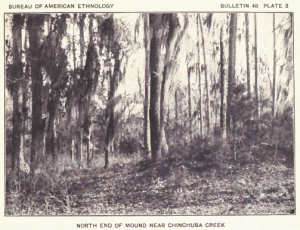
Bottle Creek Mounds

The post discusses the connection between ancient mounds in North America and the indigenous tribes, refuting the notion that these structures were built by a distinct race known as the Mound Builders. Evidence presented includes similarities in skull structure among various tribes and the fortified nature of their towns. Early European explorers observed these communities engaged in agriculture and crafting, challenging the idea of indigenous nomadism. The author argues that the mounds are the work of Native Americans, the true ancestors of today’s tribes, and emphasizes the importance of understanding their legacy.

Choctaw Indian Mounds

Bayou Lacomb Choctaw Mound

H. F. Buckner references Mr. Maxwell’s historical address, discussing the advanced military engineering of the Mound Builders in Carthage, Alabama, contrasting it with the warfare strategies of tribes encountered by De Soto. The mounds are suggested to have served as sepulchers for ancient leaders, drawing connections to traditions of the Choctaw and other tribes. Buckner emphasizes the need for further archaeological investigation to establish the Mound Builders’ link to North American Indians, particularly the Choctaws, who practiced distinct burial customs.

Choctaw Culture

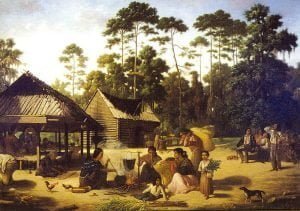
Choctaw Village near the Chefuncte, The women appear to be making dye to color the strips of cane beside them, by François Bernard, 1869

The Choctaw people historically relied on unwritten customs for governance, engaging in barter without contracts or money, resulting in a society free of lawyers and prisons. Their beliefs emphasized respect for the dead and a connection to nature. Despite a lack of written language, they conveyed knowledge through symbols and oral traditions. The Choctaws demonstrated remarkable advancements in agriculture and intellectual capacity, sustaining social equality without established hierarchies. Their governance reflected communal interests, prioritizing the well-being of their tribe above individual gain.

The Story of Hohtak Lahba and his Choctaw Mother

The Choctaw people had laws rooted in blood revenge, compelling relatives to avenge murders. This harsh system, however, had a sobering effect on their society, as individuals refrained from violence to avoid retribution. A poignant story is that of Toh-to Pe-hah, a mother who sacrificed her life for her son, Hohtak Lahba, condemned for murder. Her selfless act was accepted as atonement, reflecting profound maternal love. Tragically, Hohtak Lahba, feeling branded a coward, ultimately took his own life to reclaim his honor. This tale highlights the complexities of honor, love, and cultural law among the Choctaw.

History of the Shakchi Humma Tribe

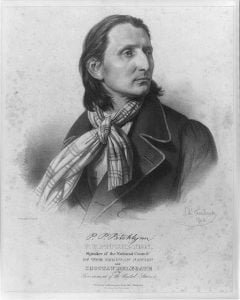
P.P. Pitchlynn, Speaker of the National Council of the Choctaw Nation and Choctaw delegate to the government of the United States

Oktibbeha County, Mississippi, witnessed fierce conflicts among various tribes, notably the Shakchi Humma, who were ultimately exterminated by the allied Choctaws and Chickasaws around 1721. The Shakchi Hummas, initially a powerful tribe led by Chief Shakchi Humma, engaged in violent skirmishes following their aggressive expansion into neighboring territories. Despite their initial successes, they faced a brutal three-year war characterized by strategic ambushes and desperate defenses. Ultimately, they were obliterated, leaving only one survivor, a girl who was adopted by the Choctaws and lived to see the arrival of missionaries.

Prominent White Men among the Chickasaws

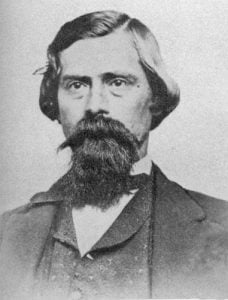
Holmes Colbert

In the early days, a few cultured white men, drawn by the Chickasaw way of life, integrated into the nation. Notably, figures such as James Gunn, Logan Colbert, and Malcomb McGee became part of Chickasaw society, aiding in moral and educational advancements. Despite myths of a McIntosh, who was misrepresented as influential, the true contributions of these men remain significant. They sought genuine connections with the Chickasaws, contrasting sharply with later intruders motivated by avarice, casting a long shadow over indigenous relationships.

Treaty of 1832 against the Chickasaws

The Chickasaw territory, now part of northern Mississippi, was renowned for its natural beauty and rich resources. The landscape, characterized by open forests and vibrant flora, supported abundant wildlife, creating a serene environment. Following their forced removal in the 1830s, the area remained undisturbed for years, echoing the life that once thrived there. The Treaty of 1832, signed on October 20, effectively displaced the Chickasaws, led by U.S. representatives John Eaton and John Coffee, marking a significant loss for this Indigenous nation.

Chickasaw Courtship and Dance

Chickasaw courtship involved a subtle approach where a prospective groom sent a bundle of clothing to his desired bride through a female relative. Acceptance of the gift indicated mutual interest, bypassing the need for direct parental approval. Marriages were marked by the exchange of food, symbolizing roles in providing for the household. Additionally, the Chickasaws celebrated various dances, including sacred ones for women and communal dances, often accompanied by prayerful rituals, especially during healing ceremonies, highlighting their rich cultural traditions.

Chickasaw Districts, Death, and Doctors

Before their westward migration (1836-1838), the Chickasaws were organized into three districts: Tishomingo, Sealy, and McGilvery, each led by a chief officer. Ishtehotohpih was the king at the time, who died in 1840, marking the end of their monarchical system. Tishu Miko, his chief counselor, was influential but passed away a year earlier. The Chickasaws practiced prompt burial rites and had complex mourning customs. Their doctors, skilled in herbal remedies, were vital to their health, blending traditional practices with spiritual beliefs.

Laws of the Chickasaw Tribe

The Chickasaw Tribe, organized into divisions called Yakissah, had strict marriage laws prohibiting unions within the same Yakissah. They valued trust, often exploited by unscrupulous traders. Their legal system comprised four stringent laws: murder was met with exact retribution, minor offenses resulted in whipping without dishonor, and property inheritance favored siblings over children. This unique system, recounted by Governor Cyrus Harris in 1886, reflects their cultural values and societal structure, emphasizing honor and familial connections.

Choctaw and Chickasaw War Preparations

Among southern and northern tribes, war preparations included a solemn council of elders who deliberated on grievances. Upon deciding to act, an embassy sought redress, and if denied, warriors gathered to discuss war measures, signified by smoking the Pipe of War. During this period, ceremonial practices, including feasts and war-dances, were observed to instill courage and focus. Furthermore, the Chickasaws exhibited a commendable virtue in their care for orphans, ensuring no child faced abandonment, a trait recognized by missionaries and attributed to all North American Indians.

Chickasaw Religion

Holmes Colbert

The Chickasaws, unlike the Choctaws, approached natural phenomena like eclipses rationally, viewing them as “sun hidden” rather than omens. Their history includes the notable town of Pakitakohlih, where De Soto’s army wintered in 1540. The Chickasaws fiercely defended their land against French incursions but eventually faced forced removal, leaving behind cherished memories of their homeland. Despite hardships, they maintained their spiritual beliefs and rebuilt their society, demonstrating resilience and determination. Nevertheless, their struggles intensified with further encroachments on their territory and autonomy.