History of Newport New Hampshire

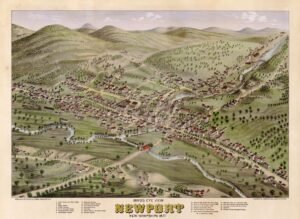
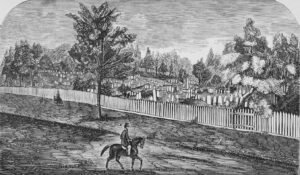
Bird's Eye View of Newport New Hampshire 1877

The History of Newport, New Hampshire, from 1766 to 1878 is a record of Newport’s growth from its early settlement through the close of the nineteenth century. It opens with the original charter and proprietary arrangements and follows the development of Newport’s physical setting, transportation routes, and economy. Particular attention is given to mills, banks, hotels, manufacturing, and the coming of the railroad, all of which shaped the town’s commercial life. The concluding genealogical section identifies families connected with Newport and other chapters provide biographical details that might otherwise be lost.
Acton Massachusetts History

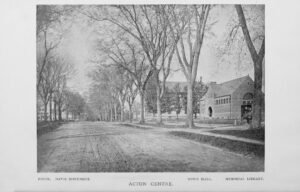
Acton Center,Acton Massachusetts

Acton in History traces the town’s development from its beginnings as Concord Village in the seventeenth century through its emergence as a modest industrial community. It gives particular attention to the religious life of the town, including the building of early meetinghouses and the long ministries of figures such as the Rev. John Swift and the Rev. James T. Woodbury. The work devotes substantial space to Acton’s role in the Revolution, especially the events at the North Bridge in 1775 and the loss of Captain Isaac Davis and his company of minute-men. It also follows the growth of local industries, from blacksmithing and cooperage to the far-reaching effects of the Fitchburg Railroad after its arrival in 1844. Later chapters include brief sketches of notable residents in the 1880s. Throughout, the narrative weaves in discussions of Acton’s everyday life, civic engagement, and social values.

New Hampshire Men

1892 Map of New Hampshire

New Hampshire Men presents 407 biographical sketches, with portraits, of men who were active in commercial, professional, and political life in New Hampshire in 1893.

Abington Massachusetts Marriage and Death Records

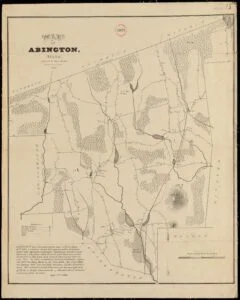
1830 Map of Abington, Massachusetts

Volume 2 of the Abington, Massachusetts vital records compiles marriage and death records up to 1850, complementing Volume 1, which contains birth records. Established in 1712, Abington’s boundaries have shifted, affecting historical jurisdiction. Extensive research from town records, cemeteries, and family Bibles ensured comprehensive documentation, including the identification of Black families recorded by given names. The volume is organized alphabetically by marriages and deaths.

Abington Massachusetts Birth Records

1830 Map of Abington, Massachusetts

Volume 1 of the Abington, Massachusetts vital records details births recorded in the town up to 1850, featuring comprehensive research from town records, cemeteries, and church documents. Established in 1712, Abington’s jurisdictional changes may affect genealogical searches. The records also include separate listings for Black families, primarily by given names. Additionally, various surnames are cataloged, emphasizing the need to consider alternate spellings. For marriages and deaths, researchers should consult Volume 2.

Vital Records of Sheffield Massachusetts, 1733-1792

Map of Sheffield, Harstville, Southfield and New Marlborough Massachusetts

The vital records of Sheffield, Massachusetts from 1733 to 1792 detail the town’s historical births, marriages, and deaths. While names and dates are transcribed accurately, some wording has been abbreviated for clarity. Marriage records often specify the union of couples, while birth records typically include parental names. Notably, some families lack marriage entries, starting instead with a child’s birth. The records also document a few out-of-wedlock births, emphasizing lineage through parental names, even in adult death records.

1932 New Hampshire Notables

1892 Map of New Hampshire

New Hampshire Notables,” published by the Concord Press in 1932, is a biographical compilation that follows a previous work by Henry H. Metcalf. It contains 474 brief sketches of notable individuals, both natives and residents of New Hampshire, recognized for their contributions across various fields such as public life, business, and education. This edition focuses on living subjects as of 1932, with an alphabetical index for easy reference. While not exhaustive, it serves as a valuable resource for researchers and libraries, preserving important biographical data.

Genealogies of the Town of Goffstown New Hampshire

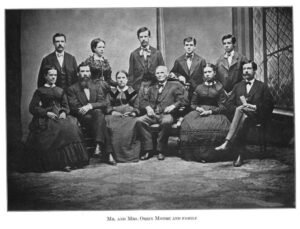
Orrin Moore and family of Goffstown, New Hampshire

The genealogical record of Goffstown, New Hampshire, was a substantial undertaking, hampered by the extinction of early families and the widespread scattering of descendants. Efforts to gather vital statistics necessitated considerable travel and correspondence, often revealing discrepancies in recorded dates across various sources. Despite challenges, contributions from former works and assistance from individuals proved invaluable in compiling this record. The comprehensive index reflects the depth of research involved in documenting the town’s heritage.

Vital Records of Bellingham, Massachusetts

Vital Records of Bellingham Massachusetts to the year 1850

Alphabetical indexes to the vital records of Bellingham, Massachusetts, up to the year 1850, supplemented by information from bible records, church registers, cemetery inscriptions and other private sources to include the diary kept by Samuel Wight and his daughters.

Medway Massachusetts vital records

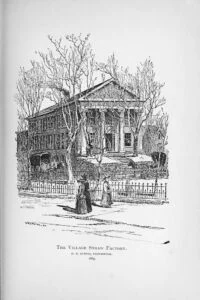
Medway Village Straw Factory

Alphabetical indexes to the vital records of Medway, Massachusetts, up to the year 1850, supplemented by information from church registers, cemetery inscriptions and other private sources to include Rev. Dr. Jacob Ide’s account of Marriages and Deaths, 1814-1849.

History of Amherst New Hampshire

Residence of Isaac Brooks in Amherst New Hampshire

The history of Amherst, New Hampshire, unfolds from its 1675 land grant to veterans of the Narraganset War, marking the impetus for settlement along the Souhegan River. From its early governance and incorporation in 1760 to territorial adjustments that birthed Mont Vernon and Milford, this narrative encompasses local geography, economy, and Indigenous presence. Key military engagements, civic institutions, and genealogical records are explored up to 1882, offering a comprehensive view of the town’s evolution and its prominent figures.

History of Glastonbury Connecticut, 1653-1853

Indian Map of Glastonbury

The history of Glastonbury, Connecticut, from 1653 to 1853 chronicles an account of its schools, commerce, mills, and ecclesiastical societies. The author, Alonzo Bowen Chapin, balances the general history with personal narratives, making the reading engaging for individuals tracing their ancestry. The work provides valuable insights into the town’s development, the contributions of its early ministers, and the influences of religion and learning that shaped the community. Unfortunately, the work is limited in the depths of the genealogy presented.

The Old Dutch Burying Ground in North Tarrytown New York

Old Dutch Church Graveyard

This book documents the early gravestones and inscriptions of the Old Dutch Burying Ground in North Tarrytown, New York, focusing on preservation efforts led by William Graves Perry. Commissioned for the church’s 250th anniversary, it records the deteriorating brownstone and marble markers, some dating back to the 18th century. The text highlights the artistry of gravestones and the community’s historical significance. Despite losses, surviving inscriptions are important for understanding the genealogy of early settlers in the area.

History of Carbondale, Illinois, 1852-1905

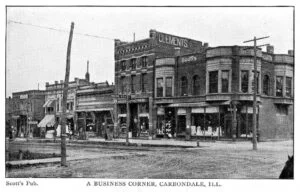
A Business Corner, Carbondale

Carbondale, Illinois, spans about 6,000 acres, primarily in the southwest quarter of Carbondale Township, established following congressional guidelines. Early settlers settled near Little Crab Orchard and Piles Fork creeks. The city’s growth is intertwined with the contributions of its founders, highlighted through 330 biographical sketches in the book, which offer details into their lives during challenging times. Carbondale’s history reflects the influence of individual leadership on municipal progress, celebrated here in the context of the nation’s bicentennial.

Essex County Massachusetts Probate Records 1675-1681

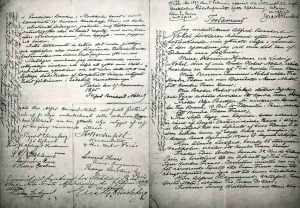
Sample Last Will and Testament

The “Governor and Company of Massachusetts Bay” established a judicial system in 1628, with a General Court in Boston and quarterly courts in major towns like Salem and Ipswich by 1635. These courts managed probate matters, and after Essex County’s formation in 1643, individual probate courts were later established in 1692. These are the probate records from 1675 to 1681, sourced from various original documents, including detailed wills and estate settlements.

Essex County Massachusetts Probate Records 1665-1674

Sample Last Will and Testament

The “Governor and Company of Massachusetts Bay” established a judicial system in 1628, with a General Court in Boston and quarterly courts in major towns like Salem and Ipswich by 1635. These courts managed probate matters, and after Essex County’s formation in 1643, individual probate courts were later established in 1692. These are the probate records from 1665 to 1674, sourced from various original documents, including detailed wills and estate settlements.

Essex County Massachusetts Probate Records 1635-1664

Sample Last Will and Testament

The “Governor and Company of Massachusetts Bay” established a judicial system in 1628, with a General Court in Boston and quarterly courts in major towns like Salem and Ipswich by 1635. These courts managed probate matters, and after Essex County’s formation in 1643, individual probate courts were later established in 1692. These are the probate records from 1635 to 1664, sourced from various original documents, including detailed wills and estate settlements.

1832 Cherokee Muster Roll

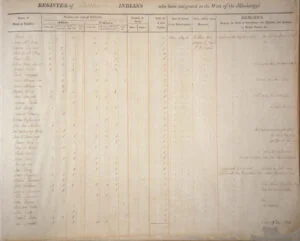
1834 Cherokee Muster Roll - page 1

This Muster Roll details Cherokee Indians who migrated west of the Mississippi River under B. F. Curry’s supervision. It includes payments made by Capt. Vashon, outlining the number of individuals and slaves receiving subsistence. Each Indian received $32.50, with payments occurring in April or May 1832. The document lists heads of families and their respective counts of males, females, and slaves, totaling 231 men, 193 women, and 157 slaves, with a cumulative total of 561 individuals.

Genealogies of Cornish New Hampshire

History of Cornish New Hampshire

Volume II of History of the Town of Cornish, New Hampshire, with Genealogical Record, 1763–1910, compiled by William Henry Child and published in 1911, presents a detailed genealogical account of the families who settled in Cornish from its founding through the early 20th century.

Ashfield Massachusetts Vital Records

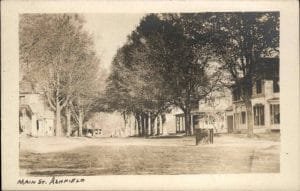
Main Street, Ashfield, Massachusetts

Alphabetical indexes to the vital records of Ashfield, Massachusetts, up to the year 1850, supplemented by information from bible records, church registers, cemetery inscriptions and other sources. PDF file is free to read and download.