History of Rindge New Hampshire

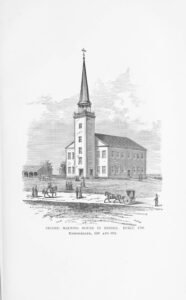
Second Meeting House in Rindge New Hampshire

The History of the Town of Rindge, New Hampshire by Ezra S. Stearns, was published in 1875, and covers the period from the original Rowley Canada grant or Massachusetts charter through the year 1874. Stearns traces the legal, territorial, and institutional development of Rindge, beginning with colonial land grants and boundary disputes and proceeding through settlement, incorporation into a town and development into a small manufacturing hub. More than half the volume is devoted to genealogical material. The genealogical register of Rindge families includes thousands of names compiled from a wide range of sources and assisted by contributions from residents and researchers beyond the town.

History of Francestown New Hampshire

Map of Francestown New Hampshire

History of Francestown, New Hampshire is a historic and genealogical record of the town from its first settlement in 1758 through the beginning of 1891. It records Francestown’s settlement, civic growth, religious and educational institutions, military participation, industries, and social customs, followed by an extensive genealogical register of families associated with the town.

Vital Records of Bellingham, Massachusetts

Vital Records of Bellingham Massachusetts to the year 1850

Alphabetical indexes to the vital records of Bellingham, Massachusetts, up to the year 1850, supplemented by information from bible records, church registers, cemetery inscriptions and other private sources to include the diary kept by Samuel Wight and his daughters.

History of Amherst New Hampshire

Residence of Isaac Brooks in Amherst New Hampshire

The history of Amherst, New Hampshire, unfolds from its 1675 land grant to veterans of the Narraganset War, marking the impetus for settlement along the Souhegan River. From its early governance and incorporation in 1760 to territorial adjustments that birthed Mont Vernon and Milford, this narrative encompasses local geography, economy, and Indigenous presence. Key military engagements, civic institutions, and genealogical records are explored up to 1882, offering a comprehensive view of the town’s evolution and its prominent figures.

Early Settlers of Ralls County, Missouri

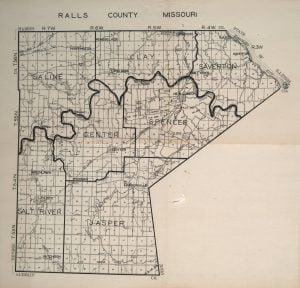
1930 Map of Ralls County, Missouri

The manuscript “Early Settlers of Ralls County, Missouri” compiled by Eunice Moore Anderson in 1951 serves as a valuable resource for those tracing their family genealogy in Ralls County. Divided into three parts, the compilation focuses on documenting early settlers prior to 1878, drawing from sources such as county atlases and historical records spanning Marion, Ralls, Pike Counties, and beyond. While not aiming to provide a comprehensive history, Anderson’s work catalogues pioneer families, offering insights into their origins, migration dates to Ralls County, and family connections. This structured approach, supplemented by an alphabetical index, aids researchers in navigating through ancestral records and locating further detailed information within related historical volumes.

Marriages of Charlotte County Virginia, 1784-1815

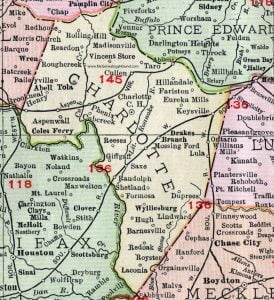
1911 Map of Charlotte County Virginia

This volume, “Marriages of Charlotte County, Virginia, 1784-1815,” compiles the marriage bonds and minister’s returns from Charlotte County during the specified period. The original work was painstakingly copied by Catherine Lindsay Knorr and published in 1951. The book spans 119 pages and includes a wealth of historical data on marriages that took place in this Virginia county. This publication presents several challenges for readers. Some pages are slightly tattered and torn, and the manuscript features irregular pagination. Additionally, there are tight or nonexistent margins, particularly at the bottom of the pages, and one page is typed on different paper than the rest.

Records of Pleasant Hill Methodist Church, 1829-1894

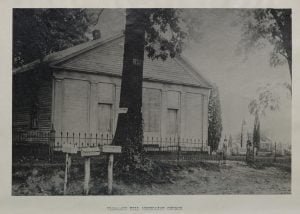
Pleasant Hill Methodist Church, 1953

This is a copy of a record book of the Pleasant Hill Methodist Church in Washington Township, Guernsey County, Ohio. The front portion of this manuscript contains the history of Pleasant Hill Methodist Church, which we provide here, and biographies of their pastors up to 1953. Starting on page 18 you will find the Membership Record for the church beginning in 1829 and through January of 1894.

Marriage records of Liberty County Georgia, 1785-1895

Marriage records of Liberty County, Georgia, 1785-1895

These marriage records were abstracted from unbound marriage bonds and licenses in the Liberty County Courthouse, Hinesville, Georgia. The names were copied as they were spelled on the bonds, often barely legible and often spelled differently on the same bond. Sometimes the marriages were performed before the licenses were issued. The first date given in the abstracts is the date of the license or bond; the second is the date of marriage. The following abbreviations are used in these abstracts with the meaning indicated:

History of Adair County Iowa and its People – vol 2

History of Adair County, Iowa, and its people vol 2 title page

Back in 1915, Lucian Moody Kilburn, was engaged to write a history of Adair County Iowa by the Pioneer Publishing Company of Chicago Illinois, he then being at that time a resident of the county for 50 years. The manuscript was divided into two volumes. This volume, numbered 2, provides biographical sketches of 348 leading men and women of the County of Adair including many of its founding families. You can read or download the free eBook from this website.

St. Charles County’s Participation in the World War

St. Charles County's Participation in the World War

Soon after World War 1 localities across the country wished to honor the men and women who had served the Nation from their locality. St. Charles County, Missouri, is one of these counties. This manuscript isn’t limited to just the men who fought overseas, it also includes the women who had participated via Red Cross and the men who had actively served in the various campaigns backing the War here at home.

1st Mississippi Light Artillery

The 1st Mississippi Light Artillery, also known as Withers’ Light Artillery, comprised several companies raised across Mississippi, participating in key battles during the Civil War. Initially assembled in May 1862, the regiment played a crucial role in the defense of Vicksburg against Union forces, with notable contributions at Chickasaw Bayou and the Vicksburg campaign. Throughout its service, the artillery faced significant casualties and challenges, ultimately surrendering at Vicksburg in July 1863. Afterward, surviving members regrouped as infantry before continuing their service in various capacities.

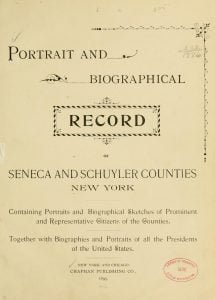
Portrait and Biographical Record of Seneca and Schuyler Counties, NY

Portrait and Biographical Record of Seneca and Schuyler Counties New York

An online index to the Portrait and Biographical Record of Seneca and Schuyler Counties, New York, this volume preserves portraits and biographical sketches of prominent local citizens, including many overlooked by public records. Compiled with care for accuracy, it offers valuable material for genealogists and historians, along with biographies of all U.S. presidents.

Bloody Scenes in Alabama and Georgia

History of Alabama and incidentally of Georgia and Mississippi, from the earliest period

In June 1787, Colonel James Robertson led an expedition against Upper Creek and Cherokee tribes in North Alabama, following increasing Indian attacks on American settlements. After engaging in skirmishes, Robertson’s forces captured supplies and destroyed a town while suffering no casualties. Meanwhile, the Creeks launched violent assaults on Georgia, prompting the state to seek Congressional military support, which went unfulfilled. Conflict persisted, with Colonel McGillivray emerging as a powerful leader, refusing peace talks and instigating further hostilities, including the notorious massacre of Colonel Kirkland and his party in 1788.

Biography of Ed. F. Winn

Ed. F. Winn, born on October 29, 1857, in Brownsville, Pennsylvania, became a pivotal figure in Idaho’s law enforcement. Initially a carpenter, he transitioned to deputy sheriff and later to deputy U.S. marshal, where his relentless efforts against rampant crime helped establish law and order in Oneida County. Beyond law enforcement, Winn contributed to local development by founding Winn’s Addition to Idaho Falls and building the Odd Fellows Orphans Home. A Republican and active Odd Fellow, he was also successful in various business ventures, including grocery and cattle trade.

Biography of William M. Winn

William M. Winn, born December 28, 1858, in Springville, Utah, moved with his family across various states before settling in Union County in 1898. He purchased a 320-acre farm and later expanded his estate to 480 acres, becoming a successful farmer and stock raiser. Despite starting with little at age nineteen, he built considerable wealth, evidenced by a home he refused to sell for $4,000. Married to Catherine K. Hendrickson, they have five children, and he is regarded as a valued community member.

Winn, Laura Susan – Obituary

Laura Susanna Winn passed away on May 25, 1920, in La Grande, Oregon, at the age of 30. She was the daughter of Fred Ratz of Union. Her funeral was held on May 27 at the Union undertaking parlors, led by Mrs. Julia R. Hackman, with solo performances by Mrs. Merton Kiddle. Attendees included several residents from La Grande.

1910 Census of Fort Shaw Industrial Indian School

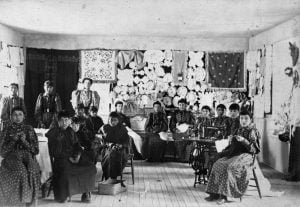
Girls at the Fort Shaw Indian School

Fort Shaw Industrial Indian Boarding School, established in Montana in 1891, ceased operations on June 30, 1910, due to decreasing enrollment. Known for its 1904 girls basketball team, which won a championship at the St. Louis World’s Fair, the school played a significant role in Indigenous education during its tenure. The 1910 census was compiled under the Department of the Interior to record enrolled students as part of Circular #448. Relevant records are preserved in the National Archives and the Family History Library.