Samuel Lane’s Journal, 1739-1803

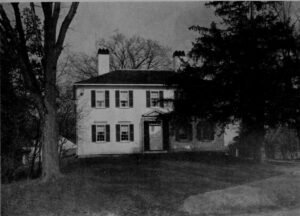
Jabez Lane House

Samuel Lane’s journal, covering 1739 to 1803, chronicles the life of a New Hampshire resident who experienced the colonial, Revolutionary, and early national periods. Lane transitioned from farming to various professions, including tanner and shoemaker, while actively participating in community roles. His meticulously kept journal captures local and national events, personal reflections, and societal changes. Edited by Charles Lane Hansen in 1937, it serves as a crucial primary source, offering insights into the daily life, hardships, and resilience of 18th-century New England.

New Hampshire Men

1892 Map of New Hampshire

New Hampshire Men presents 407 biographical sketches, with portraits, of men who were active in commercial, professional, and political life in New Hampshire in 1893.

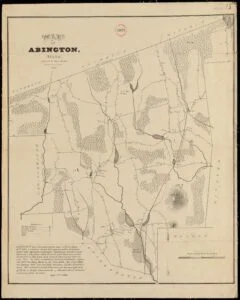
Abington Massachusetts Marriage and Death Records

1830 Map of Abington, Massachusetts

Volume 2 of the Abington, Massachusetts vital records compiles marriage and death records up to 1850, complementing Volume 1, which contains birth records. Established in 1712, Abington’s boundaries have shifted, affecting historical jurisdiction. Extensive research from town records, cemeteries, and family Bibles ensured comprehensive documentation, including the identification of Black families recorded by given names. The volume is organized alphabetically by marriages and deaths.

1932 New Hampshire Notables

1892 Map of New Hampshire

New Hampshire Notables,” published by the Concord Press in 1932, is a biographical compilation that follows a previous work by Henry H. Metcalf. It contains 474 brief sketches of notable individuals, both natives and residents of New Hampshire, recognized for their contributions across various fields such as public life, business, and education. This edition focuses on living subjects as of 1932, with an alphabetical index for easy reference. While not exhaustive, it serves as a valuable resource for researchers and libraries, preserving important biographical data.

Tories of New Hampshire

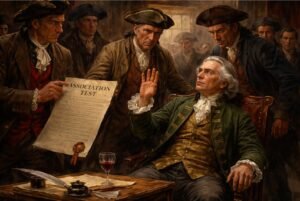
Refusing to Sign

This historical text provides an analysis of the Tory and Loyalist factions in New Hampshire during the American Revolution. Author Otis Grant Hammond clarifies that while the term “Tory” became a derogatory synonym for traitor, many individuals remained loyal to the King due to religious convictions, professional oaths, or a desire for political stability. The source details the Association Test, a loyalty oath used to identify those willing to take up arms against Britain, and notes that many who refused were passive non-combatants rather than active enemies.

Genealogies of the Town of Goffstown New Hampshire

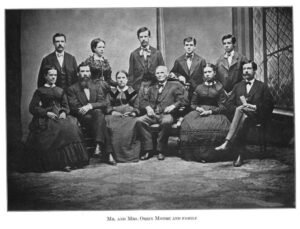
Orrin Moore and family of Goffstown, New Hampshire

The genealogical record of Goffstown, New Hampshire, was a substantial undertaking, hampered by the extinction of early families and the widespread scattering of descendants. Efforts to gather vital statistics necessitated considerable travel and correspondence, often revealing discrepancies in recorded dates across various sources. Despite challenges, contributions from former works and assistance from individuals proved invaluable in compiling this record. The comprehensive index reflects the depth of research involved in documenting the town’s heritage.

History of Bedford, New Hampshire

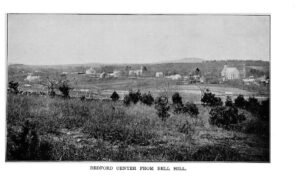
Bedford Center from Bell Hill

This volume, titled History of Bedford, New Hampshire, from 1737, was compiled by Peter P. Woodbury, Thomas Savage, and William Patten. It was published in Concord, N.H., by The Rumford Printing Co. in 1903. The primary objective of this edition was to incorporate all facts from the predecessor’s work, along with additional details and events that occurred since its publication, documenting the town’s history up to the occasion of the one hundred and fiftieth anniversary of its incorporation on May 15, 1900. A significant portion of the work is dedicated to Genealogies of 157 families, furnished largely by family representatives and compiled by Miss Mary E. Manning. The book also includes Biographies of notable figures associated with Bedford and a chapter on Vital Statistics (births, deaths, and marriages) compiled from town records, with recognized limitations due to the incompleteness of earlier record-keeping.

History of Francestown New Hampshire

Map of Francestown New Hampshire

History of Francestown, New Hampshire is a historic and genealogical record of the town from its first settlement in 1758 through the beginning of 1891. It records Francestown’s settlement, civic growth, religious and educational institutions, military participation, industries, and social customs, followed by an extensive genealogical register of families associated with the town.

Medway Massachusetts vital records

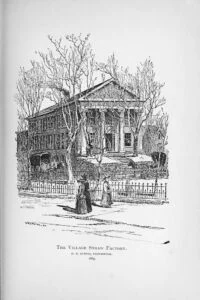
Medway Village Straw Factory

Alphabetical indexes to the vital records of Medway, Massachusetts, up to the year 1850, supplemented by information from church registers, cemetery inscriptions and other private sources to include Rev. Dr. Jacob Ide’s account of Marriages and Deaths, 1814-1849.

History of the Town of Cornwall Connecticut

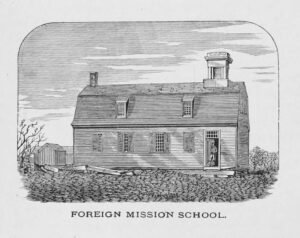
Foreign Mission School, Cornwall, Connecticut

The History of the Town of Cornwall Connecticut is a comprehensive account of the town’s evolution from colonial organization in 1731 to its involvement in national events like the Civil War. They include detailed geographical descriptions, ecclesiastical histories of local churches, and biographical sketches of families such as the Sedgwicks and Golds. The records also reflect social life, farming, early fashion, and the noteworthy Foreign Mission School.

History of Montville, Connecticut 1640-1896

Samson Occum House in Montville, Connecticut

This history of Montville, Connecticut spans from 1640 to 1896, highlighting the interactions between early colonial settlers and the Mohegan tribe, particularly regarding land disputes and legal challenges. The text, largely genealogical, traces the ancestry of local families across over 500 pages while detailing the region’s evolution from native subsistence to a burgeoning Colonial economy complete with industries like grist-mills, saw-mills, and the manufacturers of bog-iron and textiles.

Bassett-Preston Ancestors

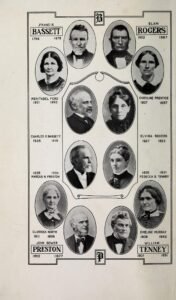
Bassett-Preston Ancestors

Miss Belle Preston initiated her ancestry research in 1898 in Hinsdale, Illinois, later tracing the Bassett lineage after moving to Brooklyn. Using various libraries as resources, she documented numerous New England colonial immigrants from both families, including six Mayflower ancestors. The book details eighty-nine Bassett and ninety-two Preston ancestors in the ninth generation. Belle’s connection to New England relatives is highlighted, noting an impending loss of that intimate knowledge as family members pass away. Read and download the PDF.

Essex County Massachusetts Probate Records 1675-1681

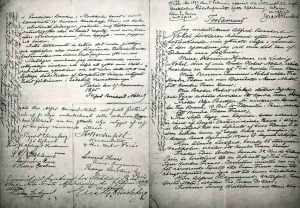
Sample Last Will and Testament

The “Governor and Company of Massachusetts Bay” established a judicial system in 1628, with a General Court in Boston and quarterly courts in major towns like Salem and Ipswich by 1635. These courts managed probate matters, and after Essex County’s formation in 1643, individual probate courts were later established in 1692. These are the probate records from 1675 to 1681, sourced from various original documents, including detailed wills and estate settlements.

Essex County Massachusetts Probate Records 1665-1674

Sample Last Will and Testament

The “Governor and Company of Massachusetts Bay” established a judicial system in 1628, with a General Court in Boston and quarterly courts in major towns like Salem and Ipswich by 1635. These courts managed probate matters, and after Essex County’s formation in 1643, individual probate courts were later established in 1692. These are the probate records from 1665 to 1674, sourced from various original documents, including detailed wills and estate settlements.

Essex County Massachusetts Probate Records 1635-1664

Sample Last Will and Testament

The “Governor and Company of Massachusetts Bay” established a judicial system in 1628, with a General Court in Boston and quarterly courts in major towns like Salem and Ipswich by 1635. These courts managed probate matters, and after Essex County’s formation in 1643, individual probate courts were later established in 1692. These are the probate records from 1635 to 1664, sourced from various original documents, including detailed wills and estate settlements.

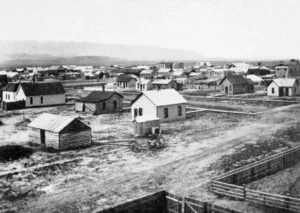
History of Natrona County, Wyoming

Casper Wyoming in 1894

For individuals researching ancestors who lived in Natrona County between 1888 and 1922, this book offers valuable context and potential leads. It includes names of county officials, war veterans, pioneers, and individuals involved in notable local events, as well as detailed accounts of institutions such as schools, churches, newspapers, and civic organizations. Descriptions of towns, industries, and public records provide insight into the communities where ancestors may have lived or worked. While not a genealogical record in and of itself, the book’s extensive local detail can help place family histories within the broader social and economic framework of the time. And who knows, perhaps your ancestor was one of the more colorful citizens portrayed…

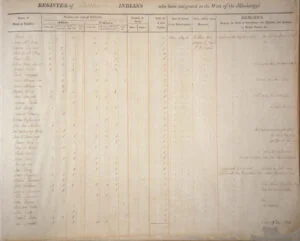
1832 Cherokee Muster Roll

1834 Cherokee Muster Roll - page 1

This Muster Roll details Cherokee Indians who migrated west of the Mississippi River under B. F. Curry’s supervision. It includes payments made by Capt. Vashon, outlining the number of individuals and slaves receiving subsistence. Each Indian received $32.50, with payments occurring in April or May 1832. The document lists heads of families and their respective counts of males, females, and slaves, totaling 231 men, 193 women, and 157 slaves, with a cumulative total of 561 individuals.

1838 Cherokee Muster Roll 2

The 1838 muster roll documents the journey of 1,072 Georgia Cherokees from Rosses Landing to Indian Territory, culminating with 635 survivors arriving on September 7, 1838. The official count recorded on July 23 noted 763 individuals, accounting for 144 deaths, 289 desertions, and 2 births along the Trail of Tears. The detailed enumeration lists 91 family groups, suggesting many of the missing were likely enslaved individuals whose descendants later became Cherokee freedmen.

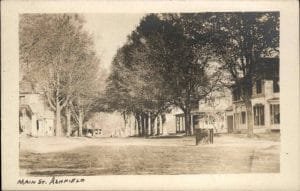
Ashfield Massachusetts Vital Records

Main Street, Ashfield, Massachusetts

Alphabetical indexes to the vital records of Ashfield, Massachusetts, up to the year 1850, supplemented by information from bible records, church registers, cemetery inscriptions and other sources. PDF file is free to read and download.

History of Buffalo New York

Buffalo Village from the Light House, 1828

“History of the City of Buffalo and Erie County” by Henry Perry Smith offers a comprehensive account of the development and significant events in Buffalo and Erie County, New York. Published in 1884 by D. Mason & Co. in Syracuse, New York, this two-volume work delves into the early settlement, growth, and transformation of the area. Volume II focuses on the history of Buffalo, New York. For the detailed history of Erie County, readers should refer to Volume I.