History of Newport New Hampshire

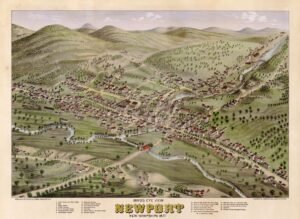
Bird's Eye View of Newport New Hampshire 1877

The History of Newport, New Hampshire, from 1766 to 1878 is a record of Newport’s growth from its early settlement through the close of the nineteenth century. It opens with the original charter and proprietary arrangements and follows the development of Newport’s physical setting, transportation routes, and economy. Particular attention is given to mills, banks, hotels, manufacturing, and the coming of the railroad, all of which shaped the town’s commercial life. The concluding genealogical section identifies families connected with Newport and other chapters provide biographical details that might otherwise be lost.
Genealogies of the Town of Goffstown New Hampshire

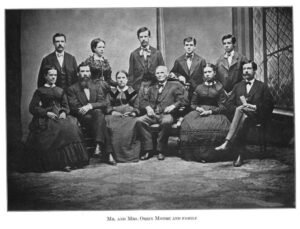
Orrin Moore and family of Goffstown, New Hampshire

The genealogical record of Goffstown, New Hampshire, was a substantial undertaking, hampered by the extinction of early families and the widespread scattering of descendants. Efforts to gather vital statistics necessitated considerable travel and correspondence, often revealing discrepancies in recorded dates across various sources. Despite challenges, contributions from former works and assistance from individuals proved invaluable in compiling this record. The comprehensive index reflects the depth of research involved in documenting the town’s heritage.

History of Francestown New Hampshire

Map of Francestown New Hampshire

History of Francestown, New Hampshire is a historic and genealogical record of the town from its first settlement in 1758 through the beginning of 1891. It records Francestown’s settlement, civic growth, religious and educational institutions, military participation, industries, and social customs, followed by an extensive genealogical register of families associated with the town.

The Old Dutch Burying Ground in North Tarrytown New York

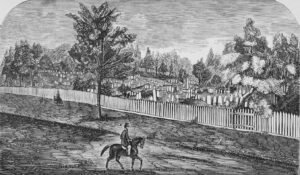
Old Dutch Church Graveyard

This book documents the early gravestones and inscriptions of the Old Dutch Burying Ground in North Tarrytown, New York, focusing on preservation efforts led by William Graves Perry. Commissioned for the church’s 250th anniversary, it records the deteriorating brownstone and marble markers, some dating back to the 18th century. The text highlights the artistry of gravestones and the community’s historical significance. Despite losses, surviving inscriptions are important for understanding the genealogy of early settlers in the area.

1819 Cherokee Reservation List

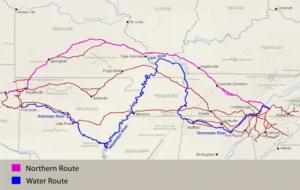
Map of the principal routes taken by Cherokee removal parties in the late 1830s.

This specific roll is of a list of 146 heads of families entitled to reservations under the Treaty with the Cherokee of the 27th February, 1819.

History of Erie County New York

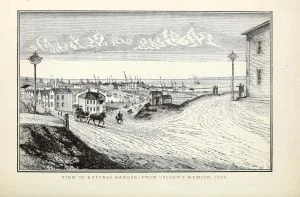
View of Buffalo Harbor, 1826

“History of the City of Buffalo and Erie County” by Henry Perry Smith, published in 1884, offers an extensive and detailed account of the development of Buffalo and Erie County. This two-volume work, enriched with illustrations and biographical sketches, serves as a comprehensive resource for understanding the historical progression of the region from its earliest days through the 19th century. Volume I focuses on the history of Erie County, New York, and its townships, excluding Buffalo. For the detailed history of Buffalo, readers should refer to Volume II.

History of Webster County Nebraska

80 years in Webster County

“80 Years in Webster County: A Compilation of Webster County Chronicles” presents an extensive collection of articles that chronicle the history and life of Webster County, Nebraska, from its early days to the mid-20th century. Authored by Dr. Elmer Alonzo Thomas, this compilation draws from a series of writings initially published in the Red Cloud Commercial Advertiser and the Blue Hill Leader, the county’s prominent newspapers. The book, printed in 1953 by Tribune Graphic Arts in Hastings, Nebraska, spans 148 pages and includes illustrations, portraits, and maps, offering readers a vivid portrayal of the county’s evolution over eight decades.

History of Mercer County Ohio

History of Mercer County Ohio

“History of Mercer County Ohio,” authored by Bronshart H. Gilberg and published in 1959 by the Mercer County Historical Society, serves as a comprehensive journey through the annals of Mercer County, Ohio. This book emerges from a deeply felt need among the residents of Mercer County for a cohesive and detailed account of their county’s past—a narrative that had been missing from local educational and cultural institutions.

Brown Genealogy

Brown Genealogy

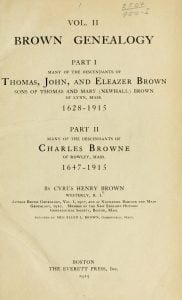
In 1895, Cyrus Henry Brown began collecting family records of the Brown family, initially with the intention of only going back to his great-grandfathers. As others became interested in the project, they decided to trace the family lineage back to Thomas Brown and his wife Mary Newhall, both born in the early 1600s in Lynn, Massachusetts. Thomas, John, and Eleazer, three of their sons, later moved to Stonington, Connecticut around 1688. When North Stonington was established in 1807, the three brothers were living in the southern part of the town. Wheeler’s “History of Stonington” contains 400 records of early descendants of the Brown family, taken from the town records of Stonington. However, many others remain unidentified, as they are not recorded in the Stonington town records. For around a century, the descendants of the three brothers lived in Stonington before eventually migrating to other towns in Connecticut and New York State, which was then mostly undeveloped. He would eventually write this second volume of his Brown Genealogy adding to and correcting the previous edition. This book is free to search, read, and/or download.

History of Littleton New Hampshire

1895 Map of Littleton New Hampshire

The History of Littleton New Hampshire is comprised of three volumes, two volumes of history, and a final volume of genealogies. Considered one of the best examples of local history written in the early 20th century, is your ancestors resided in Littleton then you need these books. Read and download for free!

Families of Ancient New Haven

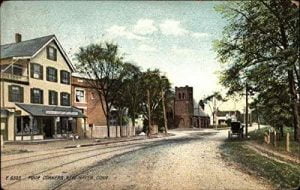
Four Corners New Haven Connecticut

The Families of Ancient New Haven compilation includes the families of the ancient town of New Haven, covering the present towns of New Haven, East Haven, North Haven, Hamden, Bethany, Woodbridge and West Haven. These families are brought down to the heads of families in the First Census (1790), and include the generation born about 1790 to 1800. Descendants in the male line who removed from this region are also given, if obtainable, to about 1800, unless they have been adequately set forth in published genealogies.

Abbe-Abbey Genealogy

A genealogical dictionary of the first settlers of New England vol 1

The “Abbe-Abbey Genealogy” serves as a comprehensive and meticulously compiled homage to the heritage of the Abbe and Abbey families, tracing its roots back to John Abbe and his descendants. Initiated by the life-long passion of Professor Cleveland Abbe, this genealogical exploration began in his youth and expanded throughout his illustrious career, despite numerous challenges. It encapsulates the collaborative efforts of numerous family members and researchers, including significant contributions from individuals such as Charles E. Abbe, Norah D. Abbe, and many others, each bringing invaluable insights and data to enrich the family’s narrative.

The genealogy and history of the Ingalls family in America

The genealogy and history of the Ingalls family in America

Edmund Ingalls, son of Robert, was born about 1598 in Skirbeck, Lincolnshire, England. He immigrated in 1628 to Salem, Massachusetts and with his brother, Francis, founded Lynn, Massachusetts in 1629. He married Ann, fathered nine children, and died in 1648.

The Descendants of Franklin Mary Noyes Rowe of Humboldt County, Iowa

Home of Franklin and Mary Noyes Rowe 1887-1905

This book, “The Descendants of Franklin Mary Noyes Rowe of Humboldt County, Iowa, with Some Notes on Their Ancestors,” authored by Velma Rowe Coffin in Storm Lake, Iowa, in 1955, is a meticulously researched genealogical record spanning 87 pages. It traces the lineage of Franklin Rowe, born December 30, 1836, in Onondaga County, New York, and provides insights into his ancestry and descendants. Free to read or download.

Colonel Dodge Reaches Villages of Western Indians

General Leavenworth’s expedition to the Wichita country faced significant challenges, suffering from sickness among his men and horses, leading to a drastic reduction in their numbers. Upon reaching the Washita River, Colonel Dodge took command of the reorganized force, now diminished to 250 men. Their journey included encounters with Comanche tribes, where they sought to establish peace and facilitate trade. As the expedition progressed, the troops faced further hardships, including loss of supplies and sickness, ultimately culminating in a crucial meeting with the Wichita tribe to discuss treaties and exchanges.

Richard Dexter Genealogy, 1642-1904

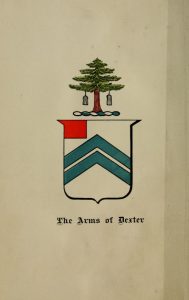
Arms of Dexter

Being a history of the descendants of Richard Dexter of Malden, Massachusetts, from the notes of John Haven Dexter and original researches. Richard Dexter, who was admitted an inhabitant of Boston (New England), Feb. 28, 1642, came from within ten miles of the town of Slane, Co. Meath, Ireland, and belonged to a branch of that family of Dexter who were descendants of Richard de Excester, the Lord Justice of Ireland. He, with his wife Bridget, and three or more children, fled to England from the great Irish Massacre of the Protestants which commenced Oct. 27, 1641. When Richard Dexter and family left England and by what vessel, we are unable to state, but he could not have remained there long, as we know he was living at Boston prior to Feb. 28, 1642.