Western Garrison Life

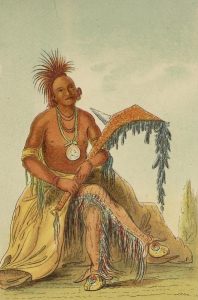
Clermont, Osage Chief

Holland Coffee, a trader at Fort Smith, led a trading expedition into western Indian territories alongside Robert M. French. They set up a trading post near the Red River, at the old Pawnee village, aiming to capitalize on friendly relations established by Colonel Dodge with western tribes. Despite challenges, including unrest among the tribes regarding treaty assurances, a significant conference was held at Fort Gibson in 1835, resulting in the first treaty with western prairie tribes, crucial for U.S. plans to relocate eastern Indians.
Richard Dexter Genealogy, 1642-1904

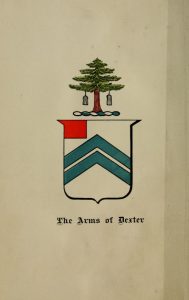
Arms of Dexter

Being a history of the descendants of Richard Dexter of Malden, Massachusetts, from the notes of John Haven Dexter and original researches. Richard Dexter, who was admitted an inhabitant of Boston (New England), Feb. 28, 1642, came from within ten miles of the town of Slane, Co. Meath, Ireland, and belonged to a branch of that family of Dexter who were descendants of Richard de Excester, the Lord Justice of Ireland. He, with his wife Bridget, and three or more children, fled to England from the great Irish Massacre of the Protestants which commenced Oct. 27, 1641. When Richard Dexter and family left England and by what vessel, we are unable to state, but he could not have remained there long, as we know he was living at Boston prior to Feb. 28, 1642.

1923 Historical and Pictorial Directory of Angola Indiana

1923 Angola Indiana Directory Book Cover

Luedders’ historical and pictorial city directory of Angola, Indiana for the year 1923, containing an historical compilation of items of local interest, a complete canvass of names in the city, which includes every member of the family, college students, families on rural lines, directory of officers of county, city, lodges, churches, societies, a directory of streets, and a classified business directory.

Biographical Sketch of Marble Lewis Payne

Marble Lewis Payne, born in 1850 in North Carolina to William and Nancy Payne, married Mahala Wilson in 1904 in Tahlequah. They had four children: Emma, Lula, Charles, and William, along with three from his second marriage. A progressive farmer in the Tahlequah area, Payne was involved with the Independent Order of Odd Fellows and served multiple terms on the local school board. His Cherokee name is Lu-ie-us-te-na and he belongs to the Wolf Clan. His son, William, served in the Spanish-American War.

Treaty of October 27, 1832 – Potawatomi

On October 27, 1832, a treaty was signed between U.S. commissioners and Potawatomi leaders at Tippecanoe River. The Potawatomi ceded lands in Indiana, Illinois, and Michigan, retaining specified reservations for various bands and individuals. In return, the U.S. committed to annual payments and goods, totaling $15,000 for twelve years and additional provisions for education and individual land grants. The treaty was contingent upon ratification by the President and Senate, marking a significant moment in the shifting landscape of Native American land rights.

Slave Narrative of Matthew Hume

Matthew Hume, a former slave interviewed in Indiana, reflects on his experiences in slavery. He recounts a relatively fortunate upbringing under a benevolent master, with freedoms and minimal overseer brutality, contrasting with harsher neighboring plantations. Hume shares various chores he performed as a child and the significance of communal support among enslaved families. He emphasizes the importance of the Emancipation Proclamation, which eventually led to his family’s migration to Indiana in 1865. Hume and his wife, married for over six decades, are well-respected community members today.

Slave Narrative of Annie Morgan

Annie Morgan, 65, recounts her childhood as the daughter of enslaved parents who served the Payne family in Kentucky. She fondly remembers celebratory gatherings on Proclamation Day and the joy of family reunions. Annie reflects on her belief in dreams, sharing a poignant account of a vision she had about her son’s fate, which brought her peace about his passing. She also recalls her marriage, where she and her husband jumped over a broomstick, a common practice among Black couples at the time.

World War 1 Troup County Georgia Soldiers Who Died in Service

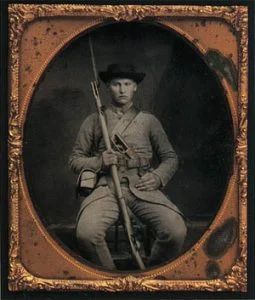
Civil War Soldier from Troup County GA

The post lists soldiers from Troup County, Georgia, who died in service during World War I, specifying that they predominantly served in the army. It notes that these individuals are not included in the official World War I Soldiers and Sailors Roster for the county.

Biography of Lyman H. Payne

Lyman H. Payne was born on February 17, 1835, in Warren, Vermont, and moved to Addison County with his family in 1837. He was educated locally and worked on the family farm until he traveled to California in 1859 for mining and farming. After seven years, he returned to Vermont, where he married Eliza M. Dana in 1868. They had four children and settled on a 100-acre farm in Cornwall, Vermont, previously part of the Wooster and Dana estates.

Biography of Richard Johnson Payne, M. D.

Dr. Richard Johnson Payne, born on April 14, 1888, in Fayette, Missouri, began his medical career in St. Louis in 1913 after graduating from St. Louis University. He served as an interne at Bethesda Hospital and later as resident physician at Deaconess Hospital. During World War I, he led the ear, nose, and throat department at Base Hospital No. 20 in France. Post-war, he returned to private practice and is known for his high ethical standards and contributions to the medical field. He is married with one child.

Biography of William H. Payne

William H. Payne, a prominent Democrat from Alton, Missouri, serves as the capable collector of Oregon County. Born in Giles County, Tennessee, in 1847, he moved to Oregon County at age ten after being raised by his grandmother. Payne became a successful farmer and stockraiser, owning 330 acres of land. He has held various public offices, including coroner and collector, and is currently seeking re-election. Married to Virgia A. George, they have five children and are active members of the Methodist Episcopal Church South.

Biography of Edward Bell Payne, M. D.

Dr. Edward Bell Payne, born on October 9, 1866, in Miami County, Kansas, has made significant contributions to medicine and his community. A graduate of the University Medical College of Kansas City and Bellevue Hospital, he began his practice in Galena before moving to Fort Scott in 1905. He held various leadership roles in medical societies and community services, promoting education and charity. Married to Rose Luckey, they have one daughter, Mary Esther. Dr. Payne remains dedicated to his profession and religious duties, balancing his medical career with farming.

Biography of Walter L. Payne

Walter L. Payne, born on April 13, 1867, in Kansas, is the son of pioneer Merton A. Payne. A prominent businessman, he served as vice-president of the Pioneer State Bank of Burlingame and was actively involved in state politics, becoming Kansas State Treasurer in 1916. His career included roles as a general merchant and assistant state treasurer. A dedicated Mason and community leader, Payne, alongside his wife Vienna, engaged deeply in church and charitable activities, reflecting their commitment to public service in Kansas.

Payne, Porter Alex “Tim” – Obituary

Porter Alex Tim Payne, 84, of Prineville, Oregon, passed away on June 11, 2005, at Ochoco Care Center. Born on March 29, 1921, in Troy, he grew up in Eastern Oregon and married Irene Looker in 1949. Tim worked in agriculture and maintenance, retiring from the Oregon Department of Transportation in 1983. A WWII Army veteran, he enjoyed outdoor activities and was involved in various organizations. He is survived by his children, siblings, and grandchildren. Memorial contributions are suggested to the National Rifle Association or Pioneer Memorial Hospice.

David Frank Payne

David Frank Payne served as a 1st Class Private in Company E of the 118th Infantry, 30th Division during World War I. Born in Guilford County, he was the son of L. D. Payne and the husband of P. M. Campbell Payne. He enlisted in 1917, trained at Camp Sevier and Camp Mills, and sailed to France in 1918. He participated in key battles, was slightly wounded, and returned to the U.S. in March 1919, with notable military lineage as his grandfather was a Civil War cavalry captain.

Lee A. Payne

1st Class Sergeant in the Medical Corps, born in Mecklenburg County, enlisted on April 3, 1916, in Charlotte, N.C. He served at Ft. Caswell with the Base Hospital Unit from July 25, 1917, until February 8, 1919, before being transferred to General Hospital No. 5 at Ft. Ontario, N.Y. He was mustered out of service at Ft. Ontario on July 26, 1919.

Biography of Albert E. Payne

Albert E. Payne, born in England in 1841, immigrated to the U.S. at age ten. He ventured to California in 1883, establishing the first general merchandise store in Ontario while engaging in horticulture. After selling his businesses in 1886, he focused on agriculture in Chino Township, cultivating prunes, apples, and nursery stock. A Republican and former Ontario Postmaster, Payne actively supported his community through public service and education. He married Mary Sheppard, and they had three children, solidifying his legacy in the region.