Abington Massachusetts Marriage and Death Records

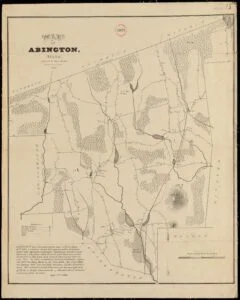
1830 Map of Abington, Massachusetts

Volume 2 of the Abington, Massachusetts vital records compiles marriage and death records up to 1850, complementing Volume 1, which contains birth records. Established in 1712, Abington’s boundaries have shifted, affecting historical jurisdiction. Extensive research from town records, cemeteries, and family Bibles ensured comprehensive documentation, including the identification of Black families recorded by given names. The volume is organized alphabetically by marriages and deaths.

Abington Massachusetts Birth Records

1830 Map of Abington, Massachusetts

Volume 1 of the Abington, Massachusetts vital records details births recorded in the town up to 1850, featuring comprehensive research from town records, cemeteries, and church documents. Established in 1712, Abington’s jurisdictional changes may affect genealogical searches. The records also include separate listings for Black families, primarily by given names. Additionally, various surnames are cataloged, emphasizing the need to consider alternate spellings. For marriages and deaths, researchers should consult Volume 2.

Vital Records of Alford Massachusetts

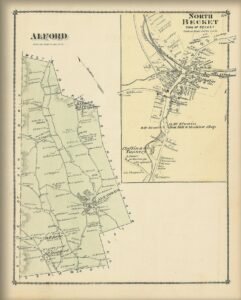
Map of Alford and North Becket Massachusetts

Alphabetical indexes to the vital records of Alford, Massachusetts, up to the year 1850. The Town of Alford, Berkshire County, was established as the District of Alford, February 16, 1773, from a part of Great Barrington and certain common lands. These vital records start about that time and run up to the year 1850. Free PDF to read or download.

History of Bland County Virginia

History of Bland County Virginia

The History of Bland County was compiled in 1961 and published to coincide with the 100th Anniversary of the formation of Bland County. Largely comprised of interesting anecdotes concerning early settlers, it is one of the most valuable secondary source available for researchers of Bland County Virginia ancestry. Free to read and download.

Brown Genealogy

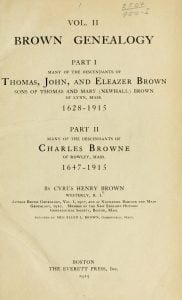
Brown Genealogy

In 1895, Cyrus Henry Brown began collecting family records of the Brown family, initially with the intention of only going back to his great-grandfathers. As others became interested in the project, they decided to trace the family lineage back to Thomas Brown and his wife Mary Newhall, both born in the early 1600s in Lynn, Massachusetts. Thomas, John, and Eleazer, three of their sons, later moved to Stonington, Connecticut around 1688. When North Stonington was established in 1807, the three brothers were living in the southern part of the town. Wheeler’s “History of Stonington” contains 400 records of early descendants of the Brown family, taken from the town records of Stonington. However, many others remain unidentified, as they are not recorded in the Stonington town records. For around a century, the descendants of the three brothers lived in Stonington before eventually migrating to other towns in Connecticut and New York State, which was then mostly undeveloped. He would eventually write this second volume of his Brown Genealogy adding to and correcting the previous edition. This book is free to search, read, and/or download.

The Amidon Family of Rehoboth, MA

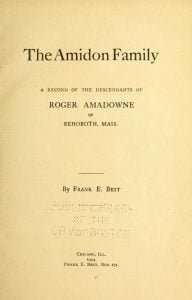
The Amidon Family

The Amidon Family genealogy book details the lineage of Roger Amadowne, a French Huguenot who fled to England and later to America after the revocation of the Edict of Nantes. Documented in Salem, Massachusetts in 1637, variations of his surname include Amadon, Amidown, and Ammidon. The work, organized with biographical sketches and two helpful indexes, presents the family’s history and is richly illustrated. Originally published in 1904, it serves as a valuable resource for descendants and historians alike.

History of Bentleysville, Pennsylvania

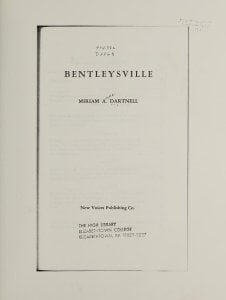
Bentleysville title page

This book is a collection of stories, letters, and historical records detailing the brief history of Bentleysville, a rural community in southwestern Pennsylvania. Established around a mill operated by Sheshbazzar Bentley Sr. and Jr. on Pigeon Creek in 1816, the town grew to a population of 300 by 1868. The author traces the origins of Bentleysville back to the 1770s to document the earliest settlers, while also providing context through significant national events like the Whiskey Rebellion and the Civil War. Although Bentleysville’s history as a village ended before 1900, this work preserves its legacy for future generations.

Washburn Genealogy of Bridgewater Massachusetts

Old Families of Southeastern Massachusetts

The Washburn family, among the earliest settlers of Bridgewater, Massachusetts, traces its roots to John Washburn, who arrived in New England by 1632. His lineage includes notable descendants such as Capt. Abraham Washburne, a Revolutionary War soldier, and his son Seth, who became a successful entrepreneur in cotton gins. The family continued to thrive, with later generations like George and Lucy Eaton, who contributed to the community’s legacy. The Washburns remain a significant part of Bridgewater’s history, exemplifying the town’s early growth and development.

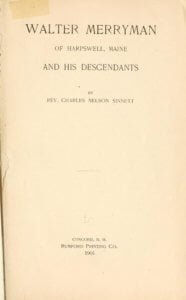
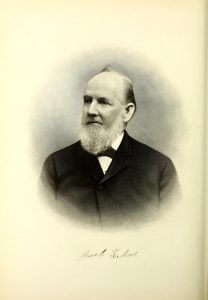
Walter Merryman of Harpswell, Maine, and his descendants

Walter Merryman of Harpswell, Maine, and his descendants - FM

Walter Merryman was kidnapped in an Irish port in 1700 and brought to Boston, Massachusetts, where he was indentured to a shipbuilder in Portland, Maine. He married Elizabeth Potter and settled in Harpswell, Maine. Descendants and relatives lived in Maine, New Hampshire, Connecticut, New York, Pennsylvania, Idaho and elsewhere. Includes Alexander, Curtiss, Hamilton, McManus, Stover, Webber and related families.

Ancestry of Capt. Jacob Taber of New Bedford, Massachusetts

Jacob Taber

Capt. Jacob Taber, born in 1813 in Acushnet, Massachusetts, descended from the early New England family of Philip Taber. A master mariner in the whaling industry, Jacob began his seafaring career at nineteen, later commanding successful voyages to the South Atlantic, Hudson Bay, and the Arctic. Known for his remarkable record—never losing a vessel—he retired in 1870 after a distinguished career. A kind and jovial man, he engaged in local politics and was married to Hannah Mendell Blackmer, with whom he had several children.

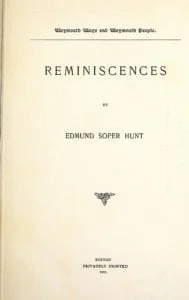
Weymouth ways and Weymouth people

Weymouth ways and Weymouth people

Edward Hunt’s “Weymouth ways and Weymouth people: Reminiscences” takes the reader back in Weymouth Massachusetts past to the 1830s through the 1880s as he provides glimpses into the people of the community. These reminiscences were mostly printed in the Weymouth Gazette and provide a fair example of early New England village life as it occurred in the mid 1800s. Of specific interest to the genealogist will be the Hunt material scattered throughout, but most specifically 286-295, and of course, those lucky enough to have had somebody “remembered” by Edward.

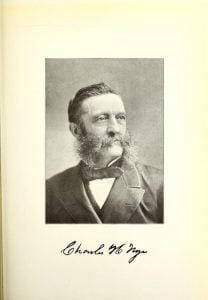
Ancestry of Charles Henry Nye of Hyannis, MA

Charles Henry Nye of Hyannis, MA

Charles Henry Nye of Hyannis, a direct descendant of Benjamin Nye from Sandwich, MA, represents a storied lineage beginning with early settlers. Benjamin Nye arrived in Lynn, Massachusetts, in 1635 and was active in community affairs, eventually establishing mills and serving in various public roles. Charles Henry, born in 1821, was an accomplished machinist and influential in the Cape Cod railroad. He married three times, last to Rose Berry, and contributed to local society while remaining engaged in community and fraternal organizations throughout his life.

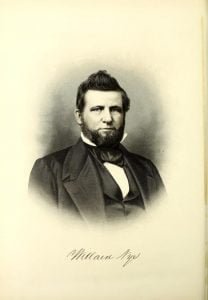
Ancestry of Hon. Willard Nye of New Bedford, Massachusetts

william nye

The Hon. Willard Nye, a significant figure in New Bedford, Massachusetts, was born into the prominent Nye family, tracing lineage back to Benjamin Nye, an early settler from England. Benjamin and his descendants played vital roles in their community, engaging in public service and building mills in Sandwich, Massachusetts. Willard Nye, a successful merchant and mayor, was known for his integrity and civic involvement during the tumultuous times leading up to the Civil War. He died in 1865, leaving a legacy of public service and dedication to his community.

Ancestors of Charles Jarvis Holmes of Marshfield and Rochester MA

Charles Jarvis Holmes

The Holmes family has a storied lineage in both New England and England, dating back to 1066 when John Holmes, a captain in William the Conqueror’s army, was granted land in Yorkshire. The family emigrated to New England, with notable descendants including Charles Jarvis Holmes of Marshfield and Rochester, a distinguished lawyer and public servant. His lineage includes several generations of influential figures, contributing to the legal, financial, and public life of the region, fostering a legacy of honor and service.

Allen Genealogy of New Bedford Massachusetts

In March 1635, George Allen and his family sailed from England to New England with Rev. Joseph Hull, settling initially in Weymouth before moving to Sandwich, Massachusetts. As a yeoman farmer, he became involved in local governance, serving as constable and deputy to the General Court. George’s descendants include prominent figures in Old Dartmouth, with familial branches spreading throughout Massachusetts and beyond. The Allen family navigated challenges of religious intolerance while establishing their legacy, and their story reflects the broader historical tapestry of early New England settlements.

Rounseville Family of Fall River, MA

The Rounseville family, believed to have French roots, settled in Freetown, Massachusetts, due to religious persecution. The lineage traces back to Philip Rounseville, who arrived from England in the early 18th century. Among the notable descendants is Capt. Cyrus Cole Rounseville, a master mariner and successful businessman in Fall River, where he became treasurer of the Shove Mills. His son, also named Cyrus Cole Rounseville, further contributed to the community through various leadership roles in business and local government.

Rounseville Family of Fall River, MA

The Rounseville family, believed to originate from France due to religious persecution, established themselves in Freetown and later in Fall River, MA. Their lineage traces back to Philip Rounseville, who arrived in New England in the early 1700s. Capt. Cyrus Cole Rounseville, a prominent whaling master, and his son, Cyrus Cole Rounseville Jr., became influential figures in Fall River’s manufacturing sector, holding significant positions in local banks and the Shove Mills, contributing greatly to the community’s development throughout the years.

Descendants of William Swift of New Bedford, MA

The Swift family of Acushnet and New Bedford has played a significant role in the region for over a century, known for their wealth, influence, and industriousness. Their lineage traces back to William Swift, a settler from England in 1634. This branch of the Swift family engaged in various trades, notably live oak timber and shipbuilding, contributing to both local and national enterprises. Many descendants, including notable figures like Reuben Eldred and Rodolphus Nye Swift, maintained active roles in business and the community, highlighting their enduring legacy in Massachusetts.

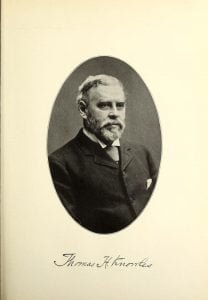
Knowles Family of New Bedford, MA

thomas knowles

The Knowles family, established in New Bedford for nearly a century, descends from the ancient lineage in Eastham, Massachusetts. Key figures include Thomas and James H. Knowles, whose firm was pivotal in the whaling industry. The family name was upheld by later generations engaged in diverse business and civic roles, greatly impacting local commerce and community welfare. Noteworthy individuals include Capt. John P. Knowles, a prominent whaling captain, and Joseph Knowles, influential in cotton manufacturing. The family’s legacy intertwines with New Bedford’s rich maritime history.