New Hampshire Men of Progress

1892 Map of New Hampshire

New Hampshire Men of Progress contains 289 biographical sketches and portraits of leaders in business and professional life in and of the state of New Hampshire. It was edited by the staff of the Manchester Union under the supervision of Richard Herndon.

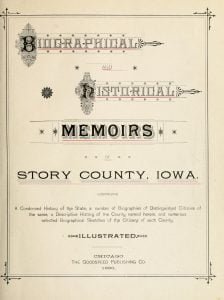
Biographical and Historical Memoirs of Story County, Iowa

Title Page for Biographical and Historical Memoirs of Story County, Iowa

This manuscript offers a broad survey of Iowa’s development and the individuals who shaped it. It opens with a concise history of the state, followed by a series of biographical sketches highlighting notable Iowans whose careers influenced law, politics, commerce, and community life. A substantial section is devoted to Story County, providing a descriptive account of its formation, settlement patterns, and early growth. This county history is supplemented by an extensive collection of personal profiles documenting the lives of its leading residents.

History of Carbondale, Illinois, 1852-1905

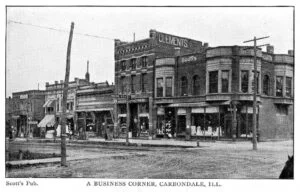
A Business Corner, Carbondale

Carbondale, Illinois, spans about 6,000 acres, primarily in the southwest quarter of Carbondale Township, established following congressional guidelines. Early settlers settled near Little Crab Orchard and Piles Fork creeks. The city’s growth is intertwined with the contributions of its founders, highlighted through 330 biographical sketches in the book, which offer details into their lives during challenging times. Carbondale’s history reflects the influence of individual leadership on municipal progress, celebrated here in the context of the nation’s bicentennial.

History of Ontario County, New York, part 1

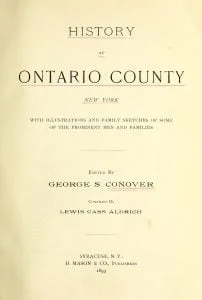
History of Ontario County, New York

“History of Ontario County, New York: With Illustrations and Family Sketches of Some of the Prominent Men and Families” is a comprehensive historical compilation, organized by Lewis Cass Aldrich and meticulously edited by George Stillwell Conover. Published in 1893 by D. Mason & Co., Syracuse, N.Y., this monumental work illuminates the rich tapestry of Ontario County’s past. Recognizing the voluminous nature of the original single volume, it has been thoughtfully divided into two parts for convenience and accessibility. Part 1 encompasses the historical and biographical narrative of Ontario County, laying the foundation for the genealogical treasures contained in Part 2.

Stephenson County Illinois World War 1 Veterans

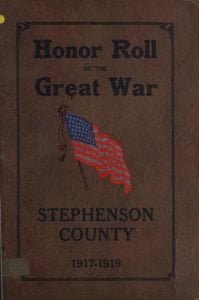
Honor roll of the Great War, Stephenson County, 1917-1919

This small booklet contains all the known men and women who participated in World War 1 and claimed their home of record as Stephenson County, Illinois. By participation, this record does not limit this to soldiers, but also contains the records of those men and women who served the Red Cross, Y.M.C.A., and other non-fighting positions. This book is free to read or download.

Genealogy of the Lewis family in America

Genealogy of the Lewis family in America

Free: Genealogy of the Lewis family in America, from the middle of the seventeenth century down to the present time. Download the full manuscript. About the middle of the seventeenth century four brothers of the Lewis family left Wales, viz.: Samuel, went to Portugal; nothing more is known of him; William, married a Miss McClelland, and died in Ireland, leaving only one son, Andrew; General Robert, died in Gloucester county, Va. ; and John, died in Hanover county, Va. It is Andrews descendants who are featured in the manuscript.

Threads of ancestors, Telford – Ritchie – Mize

Threads of ancestors, Telford - Ritchie - Mize: a link among the days which binds the generations each with each

“Threads of Ancestors: Telford – Ritchie – Mize: A Link Among the Days Which Binds the Generations Each with Each,” authored by Leila Ritchie Mize and Jessie Julia Mize, explores the intricate tapestry of family lineage and migration across continents and centuries. Tracing roots back to Alexander Telford Sr., who settled near Rockbridge, Virginia around 1760, this book delves into the journeys and settlements of his descendants across the United States. Highlighting the Scotch-Irish origins of these families, the authors meticulously draw upon an extensive array of sources, including family Bibles, historical records, and personal diaries, to provide a detailed account of the Telford, Ritchie, and Mize families. Their narrative not only charts the genealogical paths of these families but also illuminates their substantial roles in the historical and cultural development of the regions they inhabited. This work stands as a testament to the enduring bonds and shared heritage that link successive generations, forming a foundational piece for both family members and historians interested in the Scotch-Irish contribution to American history.

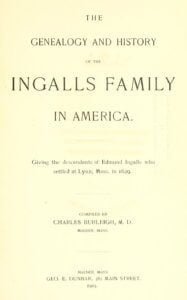
The genealogy and history of the Ingalls family in America

The genealogy and history of the Ingalls family in America

Edmund Ingalls, son of Robert, was born about 1598 in Skirbeck, Lincolnshire, England. He immigrated in 1628 to Salem, Massachusetts and with his brother, Francis, founded Lynn, Massachusetts in 1629. He married Ann, fathered nine children, and died in 1648.

Disbursements to Cherokees under the Treaty of May 6, 1828

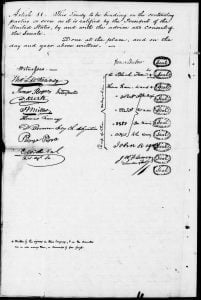
Treaty of May 6, 1828, page 9

An abstract of disbursements made by Cherokee agent George Vashon records payments to 390 Cherokee families, totaling 1,835 individuals, under the fifth article of the 1828 treaty. Between September 1830 and December 1833, Vashon distributed $47,251.75 of the $50,000 congressional grant by War Department drafts, with a slight discrepancy from the actual recorded amount.

1930 Ponca Census Extraction

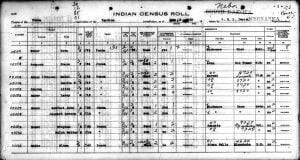
Ponca Census Image

An extraction of the 1930 Indian Census for the Ponca tribe of the Ponca Reservation in South Dakota. In 1930 there were 398 members that fell under the jurisdiction of the Yankton Agency. Most of them still resided within the Ponca Reservation, but some had moved elsewhere and are so indicated within the actual census images. This extraction provides their given names, surnames, sometimes the maiden name, age, and sex of each tribal member.

Treaty of October 24, 1816

Treaty with the Choctaw of October 24, 1816

The Treaty of October 24, 1816, known as the Treaty with the Choctaw at the Choctaw Trading House, formalized a land cession between the United States and the Choctaw nation. The Choctaw ceded lands east of a specified boundary in exchange for annual payments of $6,000 for twenty years and an immediate merchandise payment of $10,000. The treaty was signed in open council, with representatives from both sides, and was ratified by President Madison on December 30, 1816.

Slave Narrative of Jesse Williams

Jesse Williams, an 83-year-old former slave from Chester, S.C., reflects on his life with interviewer W.W. Dixon. Born to Henry and Maria, he worked in cotton fields under Marse Adam C. Walker and his wife, Mistress Eliza. He recalls his first payday, leisure activities with the master’s children, and life post-emancipation. Williams shares memories of his late wife, Catherine, and their ten children. He also touches upon local history and spiritual experiences, demonstrating a deep connection to his past and community.

Ponca Tribe

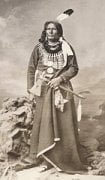
Chief Standing Bear

The Ponca Tribe is part of the Dhegiha group of the Siouan family, closely related to the Omaha. Their history parallels that of the Omaha until the final separation near the Niobrara River. Historically, they lived in earth lodges, cultivated land, and hunted. By the early 19th century, their numbers had declined significantly due to disease and conflict with the Sioux, leading to their forced relocation to Indian Territory in 1877. The tribe’s current population is divided between Nebraska and Indian Territory with distinct gentes and surnames reflecting their interactions with Europeans.

Improvements to Annexed Cherokee Lands

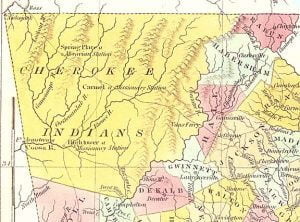
1830 Map of Cherokee Territory in Georgia

The Treaty of May 6, 1828, granted the Cherokee Nation 7 million acres as a permanent home, recognizing their sovereignty while mandating the cession of remaining lands to the United States. As a result, some Cherokee settlers were displaced from previously believed tribal lands. The treaty stipulated that land ceded would be appraised, and cash payments would be made for improvements made by proprietors. Numerous accounts detail the assessed value of various improvements, reflecting the complexities of land and ownership during this period.