History of Glastonbury Connecticut, 1653-1853

Indian Map of Glastonbury

The history of Glastonbury, Connecticut, from 1653 to 1853 chronicles an account of its schools, commerce, mills, and ecclesiastical societies. The author, Alonzo Bowen Chapin, balances the general history with personal narratives, making the reading engaging for individuals tracing their ancestry. The work provides valuable insights into the town’s development, the contributions of its early ministers, and the influences of religion and learning that shaped the community. Unfortunately, the work is limited in the depths of the genealogy presented.

Ashfield Massachusetts Vital Records

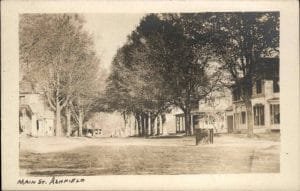
Main Street, Ashfield, Massachusetts

Alphabetical indexes to the vital records of Ashfield, Massachusetts, up to the year 1850, supplemented by information from bible records, church registers, cemetery inscriptions and other sources. PDF file is free to read and download.

Marriages of Orange County, Virginia, 1747-1810

Marriages of Orange County, Virginia, 1747-1810

Catherine Lindsay Knorr’s Marriages of Orange County, Virginia, 1747-1810 stands as a pivotal work for genealogists and historians delving into the rich tapestry of Virginia’s past. Published in 1959, this meticulously compiled volume sheds light on the matrimonial alliances formed within Orange County, Virginia, during a period that was crucial to the shaping of both local and national histories. The absence of a contemporary marriage register presented a formidable challenge, yet through exhaustive examination of marriage bonds, ministers’ returns, and ancillary records, Knorr has reconstructed a reliable record of these marriages.

The Hazard family of Rhode Island 1635-1894

The Hazard family of Rhode Island 1635-1894

The Hazard family of Rhode Island 1635-1894 – Being a genealogy and history of the descendants of Thomas Hazard, with sketches of the worthies of this family, and anecdotes illustrative of their traits and also of the times in which they lived.

The genealogy and history of the Ingalls family in America

The genealogy and history of the Ingalls family in America

Edmund Ingalls, son of Robert, was born about 1598 in Skirbeck, Lincolnshire, England. He immigrated in 1628 to Salem, Massachusetts and with his brother, Francis, founded Lynn, Massachusetts in 1629. He married Ann, fathered nine children, and died in 1648.

Weymouth ways and Weymouth people

Weymouth ways and Weymouth people

Edward Hunt’s “Weymouth ways and Weymouth people: Reminiscences” takes the reader back in Weymouth Massachusetts past to the 1830s through the 1880s as he provides glimpses into the people of the community. These reminiscences were mostly printed in the Weymouth Gazette and provide a fair example of early New England village life as it occurred in the mid 1800s. Of specific interest to the genealogist will be the Hunt material scattered throughout, but most specifically 286-295, and of course, those lucky enough to have had somebody “remembered” by Edward.

Genealogy of Elizabeth Caroline Seymour Brown

Genealogy of Elizabeth Caroline Seymour Brown

Over a period of many years Mrs. Elizabeth Caroline Seymour Brown, early member of Linares Chapter, D.A.R., collected genealogy of her forebears. It was her wish that her work be sent to the library of the National Society, Daughters of the American Revolution. This collection was painstakingly copied, with some additions and corrections, maintaining the same general form as used in the original notes. Elizabeth’s family originated in England moving to New England in the 1600’s. Her family lines involve many of the early lines in Connecticut, Massachusets, and New Hampshire. The families are arranged mostly in alphabetical order, and contain information from a simple direct line descendancy, to more elaborate genealogy.

Major families researched include: Alverson, Arms, Arnold, Ballou, Barden, Barker, Barnard, Bassett, Belden, Benedict, Betts, Blakeslee, Blanchard, Bradstreet, Brigham, Bronson, Buckmaster, Bull, Butterfield, Carpenter, Clark, Clerke, Cooke, Coombs, Cornwall, Corbin, Curitss, Dickerman, Dickson, Doolittle, Downey, Dudley, Eastman, Easton, Errington, Evarts, Fairbank, Foote, Gilbert, Goodrich, Graves, Gregory, Groves, Hale, Hand, Hall, Hawkes, Hawkins, Hills, Holmes, Hopkins, Hoyt, Huitt, Hurd, Keayne, Keene, Lockwood, Lupton, Lord, Manning, Marvin, Mayo, Merriman, Miller, Morris, Morton, Mosse, Moulton, Munger, Needham, Parker, Parkhurst, Potter, Peck, Pettiplace, Purefoy, Priest, Rusco, St John, Scofield, Seymour, Sherman, Smith, Strong, Swinnerton, Symonds, Threlkell, Thorne, Ventriss, Wade, Watson, Weed, White, and Yorke.

The Rodman Genealogy of New Bedford, MA

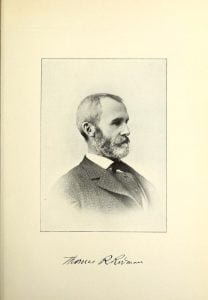
Thomas Rotch Rodman

Thomas Rotch Rodman, who passed away in New Bedford on December 18, 1905, was exemplified by courage, loyalty, and a deep commitment to community service. His lineage traces back to John Rodman, an early Quaker settler in Massachusetts. Thomas, notable for his involvement in education and local history, also served as a captain in the Civil War. His legacy is carried on by his children, including Julia and Effie Rodman, and reflects the values of integrity and patriotism that defined his life.

Seneca County New York Biographies

Seneca County History Newsletter Drawing

In the 1980’s a series of newsletters were published four times a year by Seneca County NY featuring historical information concerning Seneca county and her past residents. The current historian for Seneca County placed these online using PDF files. One of the main features of each edition were biographical sketches of early settlers of Seneca County. This is a list of those biographical sketches linked to the pdf copy of the newsletter.

Treaty of 1832 against the Chickasaws

The Chickasaw territory, now part of northern Mississippi, was renowned for its natural beauty and rich resources. The landscape, characterized by open forests and vibrant flora, supported abundant wildlife, creating a serene environment. Following their forced removal in the 1830s, the area remained undisturbed for years, echoing the life that once thrived there. The Treaty of 1832, signed on October 20, effectively displaced the Chickasaws, led by U.S. representatives John Eaton and John Coffee, marking a significant loss for this Indigenous nation.

Biographical Sketch of Frank P. Easton

Frank P. Easton, born in Concord, New Hampshire, in 1844, moved to Cass County, Michigan, and enlisted in the 4th Michigan Cavalry during the Civil War. After being discharged due to injury, he co-founded Eaton Bros. Co. and later worked for a Chicago business. He settled in Dunlap, Iowa, where he farmed and held various local government positions, including deputy sheriff. Easton married Florence Thomas in 1868 and was involved in the I.O.O.F. lodge and a detective association.

Biography of Oliver Easton

Oliver Easton, originally from Wilmington, Vt., settled on Long Hill in 1809 and occupied a farm until his death in 1839. He and his wife, Delight, had eleven children who pursued various paths, including farming, ministry, and trade. Easton primarily engaged in farming and lumbering. His descendants remained in the region, with some eventually moving to different states. Delight passed away in 1860, and their family formed a significant part of the local history in Afton and its surroundings.

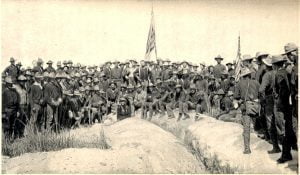
Rough Riders

Rough Riders

The compiled military service records of 1,235 Rough Riders, including Theodore Roosevelt, have been digitized. Each record features individual jackets detailing the soldier’s name, organization, rank, and medical records. The records also contain personal information and documentation descriptions. Discharges occurred for various reasons, such as age, ability, discipline issues, or hardship. This initiative provides significant insights into the personnel of the 1st U.S. Volunteer Cavalry during the Spanish-American War.