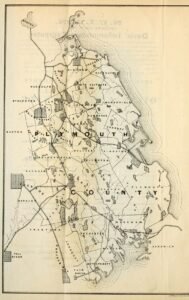
Ridgelawn Memorial Cemetery – Oxford Michigan

This cemetery record from Oxford, west of Burdick Street, lists hundreds of burials collected in September 2001 by Christopher Schnur. The transcription includes names, birth and death dates, military service, family relationships, and epitaphs, offering a detailed historical snapshot of local families, veterans, children, and spouses buried in the cemetery.
Baldwin County Georgia Marriages 1806-1850

This index compiles 1,352 Baldwin County, Georgia marriage records from court documents covering 1806 to 1850. It lists groom, bride, and marriage date entries in chronological order, offering a valuable genealogical resource for tracing family history, local relationships, and early county residents across more than four decades.

Biographical Sketch of Samuel Cobb

Samuel Cobb, a Kentucky native, married Magdalene Feverley and settled in Montgomery County, Missouri, in 1823. They had six children, with only their son, Samuel, Jr., surviving into old age. Samuel, Jr. had two marriages, producing a total of thirteen children. The family included his brother Adam, a War of 1812 veteran, who was known for his oratory skills and a notable speech about George Washington. Adam and his wife Delilah Bodkin also settled in Montgomery County and had ten children together.

Louisiana Land Patents – Choctaw Tribe

A detailed listing of Louisiana land patents for the Choctaw Tribe, organized by patentee name, date, document number, and accession number. The record includes many Native and non-Native grantees and spans patents issued from the 1840s through the early 1900s, offering a valuable reference for historical land and genealogy research.

Biographical Sketch of Dr. Isabel Cobb

Martha Blythe, born January 31, 1812, married Alexander Clingan in 1828. Their daughter, Evaline, wed Joseph Benson Cobb, with whom she had several children, including Isabel Cobb, born October 25, 1858. Isabel pursued higher education at Glendale Female College and the Woman’s Medical College of Pennsylvania, graduating in 1892. She became a practicing physician in Wagoner. The family continued its commitment to education and service, with Martha’s children also excelling in various academic and professional fields.

Biographical Sketch of Phil. H. Cobb

Alexander Adam Clingan, born in 1801, married Martha Jane Blythe in 1828. Their daughter, Evaline, wed Joseph Benson Cobb in 1857. Evaline and Joseph had a son, Samuel Sylvester Cobb, who married Carrie Kennedy Hunter, becoming the parents of Phil Hunter Cobb, born in 1895. Phil, raised in Wagoner, married Hazel Ruth Best in 1918 and had a daughter, Dorothy Louise, in 1920. Phil is engaged in farming near Wagoner, contributing to the family’s agricultural legacy.

Biographical Sketch of George W. Cobb

George W. Cobb was born on September 9, 1844, in Starksboro, Vermont. After enlisting in the Ninth Vermont Volunteers during the Civil War, he endured health issues and was imprisoned before being discharged. Following the war, he married Jennie H. Sampson, had two children, and later remarried Mary A. Sampson. Cobb moved to Weybridge in 1869, initially peddling goods before establishing a successful business in medicine, notably with Champaignes champion cough remedy and Adirondack pain relief, holding exclusive sales rights in Vermont.

Biographical Sketch of Gilbert Benson Cobb

Gilbert Benson Cobb, born September 15, 1864, in Illinois, married Lucy Van Zile in 1887, who died in 1893. He later wed Lillie May Pharr in 1898. Their son, also named Gilbert Benson, was born in 1889 and married Annette Sullivan in 1910, having several children. Other children of Gilbert included Mary Isabel, who married Loyal Frederick, and William Alexander, who married Marie G. The family experienced growth through multiple generations, with a focus on education and familial connections.

Biography of David G. Cobb

David G. Cobb is a prominent figure in Fort Scott, Kansas, where he leads the Fort Scott Wholesale Grocer Company, a significant local enterprise founded in 1886. Born into a pioneering family in Bourbon County, his father, David Ransom Cobb, was an influential early settler and public servant. After graduating from the Kansas Normal School, David G. Cobb built his career through various positions, ultimately becoming president of the grocery company. He is active in his community and family, married to Mary Emma Quick, with whom he has two children.

Biographical Sketch of C. E. Cobb

C.E. Cobb, originally from New York, relocated to Iowa in 1856, where he initially pursued farming near Little Sioux in Harrison County. In 1874, he transitioned to his current profession as a dealer in hardware and lumber.

Biography of Charles G. Cobb

Charles G. Cobb, born June 24, 1885, in St. Louis, is the son of prominent jeweler Frank Cobb. Educated at St. Alphonsus and Jones-Henderson Business College, he began his career in 1903 and has held several positions in banking, culminating as assistant farm loan officer at the Mississippi Valley Trust Company since 1917. Noted for his analytical skills and understanding of human nature, he also teaches at St. Louis University and is involved in music, football, and golf.

Slave Narrative of Susan Castle

In an April interview, Susan Castle, born in 1860, shared memories of her life as a house servant in Athens, Georgia. Raised in a family of seven, she recounted her experiences under Marse Thomas R.R. Cobb, whose kindness made slavery bearable. She described the good food provided and their daily lives, highlighting Christmas celebrations and the roles of family and church in their community. After emancipation, she remained with her mother, worked various jobs, and expressed gratitude for her newfound freedom and faith.

Alabama Court Records

1910 Alabama Census Map

This page offers a comprehensive collection of Alabama court records, transcribed and accessible online. It includes probate records from 1809 to 1985, comprising wills, estate inventories, and guardianship documents from various counties. Detailed listings are provided for counties such as Autauga, Baldwin, Bibb, and many others, showcasing estate records and other legal documents. This resource serves as a vital tool for researchers and genealogists interested in the historical legal proceedings and familial documentation within Alabama.

Biography of Joseph B. Cobb

Joseph B. Cobb, born on February 21, 1863, in Tennessee, moved to Indian Territory at age seven, where he grew up and received his education. After serving two terms in the Cherokee council and engaging in farming, he moved to Wagoner in 1914 for his children’s education. A retired farmer and a former county commissioner, Cobb supports the Republican Party and is active in community affairs. Married to Lilly Johnson, they have five children. The family practices Baptist faith and Cobb is affiliated with the Masons and Modern Woodmen of America.

Cobb, John Logan. – Obituary

John Logan Cobb, 71, a beloved music educator and choir conductor at Eastern Oregon University for 30 years, passed away on July 4 due to pneumonia. Born on September 25, 1934, in Rochester, N.Y., he earned degrees from Illinois Wesleyan, Indiana University, and the University of Oregon. After retiring in 1991, he remained active in music, conducting, and church choirs. Survived by his wife, children, and grandchildren, a celebration of his life will take place on August 19 in Portland. Contributions can be made in his memory.

Biographies of the Cherokee Indians

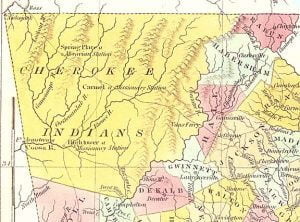
1830 Map of Cherokee Territory in Georgia

The Cherokee Indians, primarily from the Southeastern U.S., have a rich history marked by their early adoption of a written language and a government structure similar to that of the United States. Despite their forced relocation to Oklahoma in the 1830s, they maintained significant genealogical ties, often intermarrying with Whites. Emmet Starr’s “History of the Cherokee Indians and Their Legends and Folklore” emphasizes personal biographies and genealogies, providing insights into the lives and connections of many Cherokee families across generations, thereby enriching their cultural narrative.