Medway Massachusetts vital records

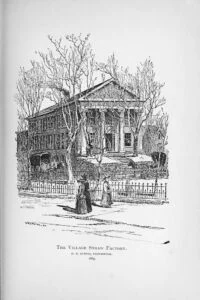
Medway Village Straw Factory

Alphabetical indexes to the vital records of Medway, Massachusetts, up to the year 1850, supplemented by information from church registers, cemetery inscriptions and other private sources to include Rev. Dr. Jacob Ide’s account of Marriages and Deaths, 1814-1849.
The Old Dutch Burying Ground in North Tarrytown New York

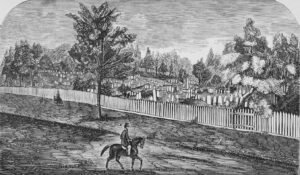
Old Dutch Church Graveyard

This book documents the early gravestones and inscriptions of the Old Dutch Burying Ground in North Tarrytown, New York, focusing on preservation efforts led by William Graves Perry. Commissioned for the church’s 250th anniversary, it records the deteriorating brownstone and marble markers, some dating back to the 18th century. The text highlights the artistry of gravestones and the community’s historical significance. Despite losses, surviving inscriptions are important for understanding the genealogy of early settlers in the area.

Genealogies of Cornish New Hampshire

History of Cornish New Hampshire

Volume II of History of the Town of Cornish, New Hampshire, with Genealogical Record, 1763–1910, compiled by William Henry Child and published in 1911, presents a detailed genealogical account of the families who settled in Cornish from its founding through the early 20th century.

Wintergreen Cemetery, Port Gibson, Mississippi

Wintergreen Cemetery, Port Gibson, Mississippi

This survey of Wintergreen Cemetery, Port Gibson, Mississippi, was completed in 1956 by Mr. Gordon M. Wells and published by Joyce Bridges the same year. It contains the cemetery readings Mr. Wells was able to obtain at that date. It is highly likely that not all of the gravestones had survived up to that point, and it is even more likely that a large portion of interred individuals never had a gravestone.

The Amidon Family of Rehoboth, MA

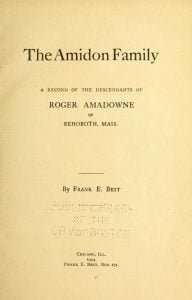
The Amidon Family

The Amidon Family genealogy book details the lineage of Roger Amadowne, a French Huguenot who fled to England and later to America after the revocation of the Edict of Nantes. Documented in Salem, Massachusetts in 1637, variations of his surname include Amadon, Amidown, and Ammidon. The work, organized with biographical sketches and two helpful indexes, presents the family’s history and is richly illustrated. Originally published in 1904, it serves as a valuable resource for descendants and historians alike.

Abbe-Abbey Genealogy

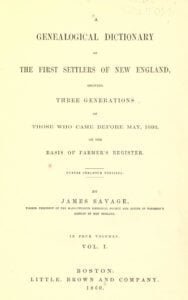
A genealogical dictionary of the first settlers of New England vol 1

The “Abbe-Abbey Genealogy” serves as a comprehensive and meticulously compiled homage to the heritage of the Abbe and Abbey families, tracing its roots back to John Abbe and his descendants. Initiated by the life-long passion of Professor Cleveland Abbe, this genealogical exploration began in his youth and expanded throughout his illustrious career, despite numerous challenges. It encapsulates the collaborative efforts of numerous family members and researchers, including significant contributions from individuals such as Charles E. Abbe, Norah D. Abbe, and many others, each bringing invaluable insights and data to enrich the family’s narrative.

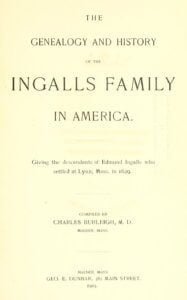
The genealogy and history of the Ingalls family in America

The genealogy and history of the Ingalls family in America

Edmund Ingalls, son of Robert, was born about 1598 in Skirbeck, Lincolnshire, England. He immigrated in 1628 to Salem, Massachusetts and with his brother, Francis, founded Lynn, Massachusetts in 1629. He married Ann, fathered nine children, and died in 1648.

Corthell Genealogy of Hingham to South Abington, Massachusetts

Elmer Lawrence Corthell

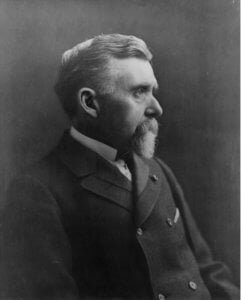
William P. Corthell, a prominent figure from South Abington (now Whitman), Massachusetts, came from a lineage distinguished by their contributions to society. The Corthell family, established in Hingham in the early 18th century, produced numerous influential individuals. William himself was a dedicated public servant, engaging in various roles, including county commissioner and trustee of the Abington Savings Bank. He was recognized for his integrity and commitment to community service and church, leaving behind a legacy of honorable public life and a devoted family.

The Rodman Genealogy of New Bedford, MA

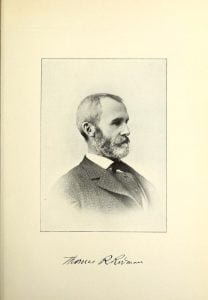
Thomas Rotch Rodman

Thomas Rotch Rodman, who passed away in New Bedford on December 18, 1905, was exemplified by courage, loyalty, and a deep commitment to community service. His lineage traces back to John Rodman, an early Quaker settler in Massachusetts. Thomas, notable for his involvement in education and local history, also served as a captain in the Civil War. His legacy is carried on by his children, including Julia and Effie Rodman, and reflects the values of integrity and patriotism that defined his life.

History of the Seneca County New York Press

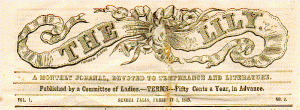
Masthead of the Lily in Seneca Falls

The history of the press in Seneca County reflects the broader narrative of American journalism’s evolution, characterized by local newspapers that documented societal changes and opinions. The first publication, the Seneca Patriot, emerged in 1815, followed by various newspapers that reflected political trends from Federalism to Democratic ideals. Notable figures, such as Amelia Bloomer, contributed to the media landscape with publications advocating reform. Though many papers faced struggles with sustainability, they played pivotal roles in shaping public discourse and preserving local history, ultimately illustrating the press’s enduring influence in the county.

Early Residents of Great Falls, Montana

The early residents of Great Falls, Montana, included Paris Gibson, a sheep rancher and land investor; Hon. H. P. Rolfe, a lawyer and former school superintendent; and George W. Taylor, the first lawyer in the city. E. G. Maclay, the first merchant, and Ira Myers, a lumber mill operator, also contributed to the community’s development. Other notable figures include H. W. Child, involved in mining and smelting, and J. H. Fairfield, a practicing surgeon and mayor. Each played a vital role in shaping Great Falls.

Montana Land Patents – Crow Tribe

A detailed list of Montana land patents for members of the Crow Tribe, showing patentee names, dates, document numbers, and accession numbers. The record includes both Native and non-Native patentees, with many entries repeated across dates, and serves as a historical reference for land ownership and federal patent records in early 20th-century Montana.

Biographical Sketch of Richard Child

Richard Child was born in 1624 and lived in Barnstable, where he married Mary Linnett on October 15, 1649. He is believed to be related to Samuel Child, who came to the Plymouth colony in its early years.

Biographical Sketch of Richard Child

Richard Child, born in Barnstable in March 1653, was a prominent deacon of the Congregational church and passed away on January 15, 1716. He married Elizabeth Crocker around 1678, with whom he had several children including Samuel, Thomas, Timothy, Ebenezer, and others. His lineage reflects notable contributions to the community and family continuity.