History of Forman North Dakota 1884-1959

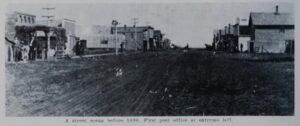
A Street Scene in Foreman before 1890

This Diamond Jubilee pamphlet was published in 1959 as part of the celebration of Forman’s 75 years of community life. It provides a brief history of the town, civic organizations, churches, businesses, and people.

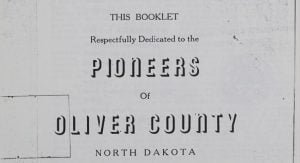
Pioneers of Oliver County North Dakota

Pioneers of Oliver County, North Dakota title page

“Pioneers of Oliver County, North Dakota” serves as a significant compilation, marking the 50th anniversary of the pioneering efforts and community spirit that shaped the county from 1906 to 1956. Crafted by the Old Settlers’ 50th Anniversary Historical Committee, this publication stands as a tribute to the resilience, growth, and development of Oliver County, North Dakota. Published by Young’s in Mandan, North Dakota, in 1956, the booklet encapsulates the pioneering history, cultural evolution, and communal bonds that define Oliver County.

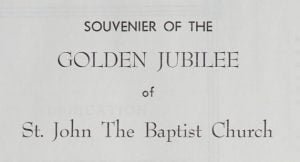
St. John The Baptist Church Jubilee

Souvenir of the golden jubilee of St John The Baptist Church

The “Souvenir of the Golden Jubilee of St. John The Baptist Church: Beach, North Dakota, 1909-1959” is a commemorative publication marking the 50th anniversary of the St. John the Baptist Catholic Church in Beach, North Dakota. Published in 1959, this work is not just a tribute to the church’s history but also an acknowledgment of the community and individuals who have been pivotal in its development and growth. The book delves into various aspects of the church’s journey from its inception, including its early records, significant milestones like the burning of the mortgage, vocations, sketches of pastors, and the numerous organizations associated with it.

A History of Ashley North Dakota, 1888-1963

Ashley ND Diamond Jubilee title page

The manuscript titled “Ashley Diamond Jubilee” is a comprehensive historical account focusing on Ashley, North Dakota, and its surrounding communities. The document, spanning 279 pages, begins by discussing the Ashley Diamond Jubilee, a celebration of 75 years of progress in North Dakota. It includes various historical and administrative details about Ashley and McIntosh County, including the establishment of towns, early settlers, and the development of the area. Free to read, search, or download!

Revolutionary War Pension and Bounty Land Warrants

Civil War Cannon

This article helps you access the Revolutionary War Pension and Bounty Land Warrants for free. Following two simple steps, one to search, and the other to browse the actual microfilms, you can quickly find your ancestors Revolutionary War pension record, or Bounty-Land record and download the images. During 1800-1900 the United States issued more than 80,000 pensions and bounty-land-warrants to soldiers of the Revolutionary War, their spouse, or their children. Was your ancestor one of them?

United States Bureau of Land Management Tract Books, 1800-c. 1955

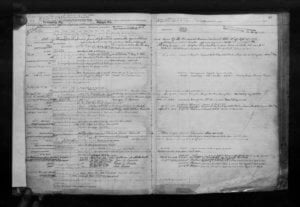
record-image_3QS7-89W3-39QL-W

3,907 land management tract books containing official records of the land status and transactions involving surveyed public lands arranged by state and then by township and range. These books indicate who obtained the land, and include a physical description of the tract and where the land is located. The type of transaction is also recorded such as cash entry, credit entry, homesteads, patents (deeds) granted by the Federal Government, and other conveyances of title such as Indian allotments, internal improvement grants (to states), military bounty land warrants, private land claims, railroad grants, school grants, and swamp grants. Additional items of information included in the tract books are as follows: number of acres, date of sale, purchase price, land office, entry number, final Certificate of Purchase number, and notes on relinquishments and conversions.

Chronicling America Historical Newspapers

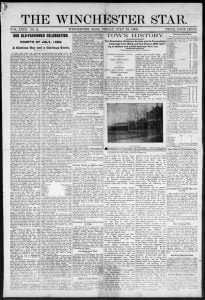
Winchester Star

Chronicling America is a Website providing access to information about historic newspapers and select digitized newspaper pages, and is produced by the National Digital Newspaper Program (NDNP). NDNP, a partnership between the National Endowment for the Humanities (NEH) and the Library of Congress (LC), is a long-term effort to develop an Internet-based, searchable database of U.S. newspapers with descriptive information and select digitization of historic pages. Supported by NEH, this rich digital resource will be developed and permanently maintained at the Library of Congress. An NEH award program will fund the contribution of content from, eventually, all U.S. states and territories.

North Dakota World War 2 Casualties – Army, Air Force

World War 2 Casualties - Army, Airforce

This database contains War Department casualties (Army and Army Air Force personnel) from World War II for North Dakota. Information provided includes serial number, rank and type of casualty. The birthplace or residence of the deceased is not indicated. An introduction explaining how the list was compiled, a statistical tabulation, and the descriptions of the types of casualties incurred are also included.

Small Town Newspapers

Winchester Star

Small Town Papers gives you access to the people, places and events recorded in real time over the decades or even centuries! Browse and search the scanned newspaper archive from 1846 up to the current edition! Their archives contain millions of names of ancestors not found anywhere else. Enhance your Ancestry research with their high resolution scanned newspaper archive. Find distant relatives and discover your ethnic heritage by reading the articles about family and friends written back in the day.

North Dakota Historical Newspapers Online

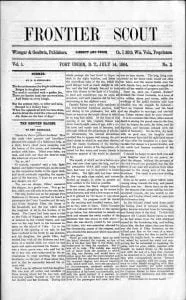
Frontier Scout

The Frontier Scout, first published on July 7, 1864, at Fort Union, marked the start of newspaper publishing in the Dakota Territory. By 1874, the territory boasted 160 newspapers, which are valuable resources for genealogists and historians. These publications provide crucial information such as birth, marriage, and death notices, local events, and biographies of ancestors, particularly where civil records are sparse. The North Dakota Newspaper Law of 1905 facilitated the preservation of these newspapers, now partially available online through the North Dakota Historical Society.

Catholic Sioux Herald Newspaper 1896-1912

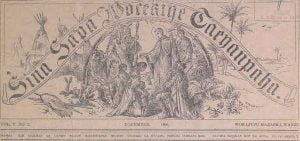
Legend of the S'ina-sapa-wocekiye-taeyanpaha

The Yankton Sioux ceded most of their South Dakota lands through the Treaty of Washington in 1858, retaining only a reservation by the Missouri River. From 1896 to 1912, Rev. Jerome Hunt and the St. Pauls Catholic Indian Mission published the Sina sapa wocekiye taeyanpaha, or Catholic Sioux Herald, catering to the Yankton Sioux on the Fort Trotten reservation. This bilingual newspaper provided valuable resources and information for the community, with various issues preserved for historical record.

Mission’s Among the Southern Indians

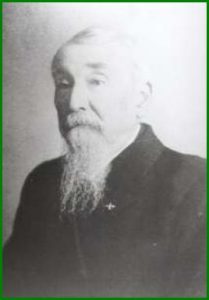
Reverend Hugh Wilson

In 1819, the Synod of South Carolina initiated a mission among Southern Indians, focusing on the Chickasaws. Rev. David Humphries and Rev. T. C. Stewart initially sought permission to establish a mission, which was granted by the Chickasaw king in 1820. Stewart, the sole missionary, founded Monroe Station in 1821, accompanied by two families. This mission became a pivotal center for education and Christianity, significantly influencing the Chickasaw community, fostering future leaders and laying the groundwork for their ongoing civilization.

Explanation of Plot of Cheyenne Village Site on Sheyenne River – Tributary of Red River

Dr. O. G. Libby and Dr. A. B. Stout conducted an examination of the Cheyenne village site on the Sheyenne River, providing valuable insights into its structure and layout. Their findings, now published with maps and notes, reveal the village’s north-facing slope, burial grounds, and the layout of hut rings and refuse sites. Although no large refuse piles were noted, paths leading to smaller refuse areas were identified. The research, archived at the North Dakota Historical Society, contributes significantly to the study of Plains tribes.

Early Cheyenne Villages

Cheyenne Sun Dance

Early accounts of the Cheyenne suggest they transitioned from agricultural societies living in earth lodges, where they cultivated crops, to nomadic lifestyles centered around buffalo hunting on the plains. Ethnologists document their historical presence in regions such as Minnesota and North Dakota. Archaeological evidence supports their habitation in village sites along rivers, including the Sheyenne and Missouri rivers. Sioux traditions hint at Cheyenne origins and migrations, emphasizing their agricultural practices and interactions with neighboring tribes, particularly the Assiniboine and Sioux.

History of Arapaho and Cheyenne Treaties

Land Cession 477, 426-3

These treaties were instrumental in establishing and defining the relationship between the United States and the Arapaho and Cheyenne Confederation. They also impacted the history of the tribe after it signed the initial treaty of 1825. Each succeeding treaty will show the historian a shrinking land mass controlled by the Arapaho and Cheyenne. Includes land cession maps detailing the land ceded by the Arapaho and Cheyenne.

Biography of Bloody Knife

Bloody Knife

Bloody Knife, an Arikara chief and renowned warrior, was born on the Hunkpapa Reservation in North Dakota. As a young man, he returned to his mother’s Arikara people. He gained prominence by safely delivering mail through dangerous territories inhabited by hostile Sioux. Bloody Knife later served as a chief scout at Fort Abraham Lincoln, participated in General Stanley’s 1873 Yellowstone Expedition, and joined Custer’s 1874 Black Hills expedition. He valiantly fought and was killed during the Battle of the Little Bighorn in 1876 while aiding Reno’s command.

Massacres of the Mountains

General Custer’s claim about the vast decline in the Indian population illustrates a widespread misconception. Estimates suggest that at Columbus’ arrival, the population may have been around 500,000, not millions. Dunn’s “Massacres of the Mountains” critically assesses the historical factors contributing to conflicts with Native Americans, such as broken treaties and government policies. He argues for an honest and fair approach to Indian relations, emphasizing that proper treatment and education can lead to greater integration and preservation of Indigenous cultures, rather than forced removals and neglect.

North Dakota Genealogy at Ancestry

Ancestry stands as the largest online provider of genealogy data, offering billions of records that enhance genealogical research, including invaluable resources for North Dakota. Their databases feature a mix of free and subscription-based materials, such as state and county censuses, military records, and local historical accounts. A 14-day free trial allows users to explore North Dakota’s genealogy, ensuring access to a range of significant databases that cater to diverse research needs, from county archives to newspaper archives.