Genealogy of the Lewis family in America

Genealogy of the Lewis family in America

Free: Genealogy of the Lewis family in America, from the middle of the seventeenth century down to the present time. Download the full manuscript. About the middle of the seventeenth century four brothers of the Lewis family left Wales, viz.: Samuel, went to Portugal; nothing more is known of him; William, married a Miss McClelland, and died in Ireland, leaving only one son, Andrew; General Robert, died in Gloucester county, Va. ; and John, died in Hanover county, Va. It is Andrews descendants who are featured in the manuscript.
Descendants of Jonathan White, Brockton, MA

Hon. Jonathan White, born in 1819 in East Randolph (now Holbrook), Massachusetts, was a distinguished lawyer and significant public figure in Brockton. His lineage traces back to Thomas White, an early settler in Weymouth. Educated at Phillips Andover and Yale, White practiced law in North Bridgewater and served as the first city solicitor of Brockton. A notable advocate for public education, he played a pivotal role in establishing the town’s high school and was involved in numerous civic projects, leaving a lasting legacy in the community.

Descendants of Joseph Borden of Fall River MA

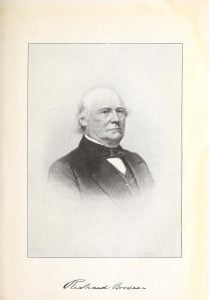
Richard Borden

The Borden family, descended from Joseph Borden of Fall River, MA, boasts a rich lineage extending back to Richard Borden, an English soldier settled in Portsmouth, R.I., in the 17th century. The Bordens became prominent landowners and industrialists, particularly during the rise of Fall River as a textile manufacturing hub. Nathaniel Briggs Borden, a notable descendant, served in various public offices, advocating for abolitionist causes and contributing significantly to local development. His legacy continues through his descendants, who maintained the family’s influence in Fall River’s civic and business arenas.

The Discovery Of This Continent: It’s Results To The Natives

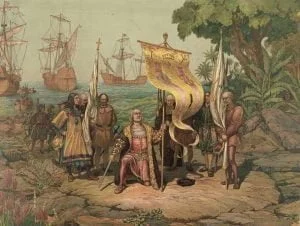
Columbus Landing on Hispaniola

In 1470, Christopher Columbus married Dona Felipa, daughter of a renowned navigator, and settled in Porto Santo, where they shared dreams of discovering lands to the West. Their ambitions fueled Columbus’s determination, leading to his 1492 voyage that resulted in the European discovery of the Americas. However, this event marked the beginning of devastation for native peoples, introducing warfare, disease, and colonization that would decimate their populations and cultures, ultimately transforming their rich, diverse societies into shadows of their former selves.

The Meeting in 1811 of Tecumseh and Apushamatahah

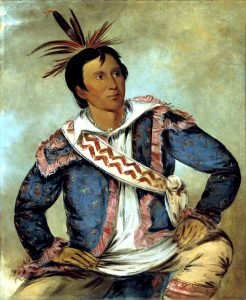
Peter Perkins Pitchlynn was the Choctaw Principal Chief from 1864-1866

In 1811, Tecumseh, the Shawnee leader, met with Apushamatahah, a prominent Choctaw chief, to rally southern tribes against American encroachment amidst looming war between the U.S. and England. Tecumseh passionately urged unity against their common foe, warning of the dire consequences of inaction. Apushamatahah countered with a call for prudence, advocating for peaceful measures. Ultimately, the council resulted in favoring American alliance, thwarting Tecumseh’s ambitions. This pivotal meeting highlighted the contrasting strategies of the two influential leaders, shaping tribal responses during a critical historical period.

Biography of Thomas Fuller

In 1638, Thomas Fuller arrived in America with intentions to briefly survey the land but was profoundly influenced by Rev. Thomas Shepard’s sermons. This spiritual awakening led him to abandon his plans to return to England, ultimately choosing to settle in Massachusetts. Fuller left behind metrical verses reflecting his conversion experience and commitment to his faith. He became a prominent figure in New Salem and Woburn, and upon his death in 1698, he bequeathed his lands to his descendants, continuing his legacy in the region.

The 23 Service Battalion Royal Fusiliers

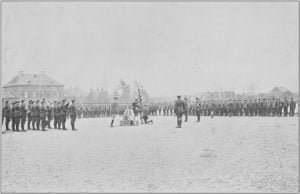
23rd service battalion

The 23 Service Battalion Royal Fusiliers introduced a diverse group of men into the British Army, uniting individuals from various social classes in a cooperative effort. This battalion included members from all walks of life, exemplified by a hut in Hornchurch housing individuals ranging from a peer’s brother to a poultry farmer. The battalion participated in numerous significant battles during World War I, including the Somme, Vimy Ridge, and the Hindenburg line, eventually serving in Germany until its disbandment in 1920.

The Fifth Leicestershire

The Fifth Leicestershire was a pre-war Territorial Force battalion that deployed to France in February 1915 as part of the 46th Division. The unit faced significant losses, with 25 officers and 415 other ranks. Throughout its service during the First World War, numerous commendations were awarded, including a Victoria Cross and various military honors. The battalion’s officers, comprising key figures such as Lieut. Colonel C.H. Jones and Major R.E. Martin, played pivotal roles in its operations and leadership.

The Fifth Battalion Highland Light Infantry

In May 1915, the Fifth Battalion Highland Light Infantry, commanded by Colonel F.L. Morrison, V.D., embarked overseas during World War I. The battalion included several key officers, such as Major T.L. Jowitt and Major J.R. Simson. It comprised four companies (A-D) with various ranks, including Captains and Lieutenants, overseeing numerous platoons. The battalion honors included multiple awards, such as the Victoria Cross and the Distinguished Service Order, commemorating the bravery and sacrifice of its men during the conflict.

English Baker Genealogies

This post outlines the genealogies of several English Baker families, detailing prominent individuals such as Henry John Baker of Elemore Hall and James Baker of Buckland House. It traces the lineage of the Bakers from Borley in Worcestershire, highlighting important figures like John Baker of Waresley House and Rev. Robert Lowbridge Baker of Ramsden House. Additionally, it includes the line of Lloyd-Baker of Hardwicke Court and the family of William Baker of Fenton, Staffordshire, revealing connections through marriage and succession.

Genealogy of Nicholas Baker of Scituate Massachusetts

Nicholas Baker, born in England in 1610, settled in Scituate, Massachusetts, where he served as a Puritan minister until his death in 1678. After possibly marrying in England, he wed a second wife in 1663. His descendants include notable figures such as Samuel, who established the Brunswick Church, and military captains like Charles, who fought in the War of 1812. The family lineage expanded across New England and into Michigan, with various members contributing to local governance and society.

Genealogy of Daniel Baker

B. Daniel Baker (1780-1849) married Elmina Hanford and lived in various locations in New York before settling in Illinois. Their descendants include Leander Hanford, who served as a Brigade Surgeon in the Civil War, and Preserved Daniels, who was born in 1816. Noteworthy family branches include those led by Abijah Richardson, a notable writer and Congregational leader, and various members of the Richardson family who pursued careers in theology and medicine. Other relatives served in military and civil capacities, reflecting a legacy of service and education.

Genealogy of Thomas Baker of East Hampton Connecticut

Thomas Baker emigrated from England to Milford in 1639 and became a Free Planter. He settled in East Hampton, Connecticut, where he acquired land in 1650. His surname appeared as “Backer” in early records. Thomas married Alice Dayton in 1643, and their descendants include prominent figures whose involvement spans the Revolutionary War and various professions. Key family members include Samuel, Jonathan, and numerous others who contributed to the lineage, which is rich in historical significance and societal roles throughout the years in Connecticut and beyond.

Genealogy of Daniel Baker

Daniel Baker, born in England, married Sarah Chase in 1740. His lineage includes notable figures such as Col. Jacob, who served on General Washington’s staff, and two physicians, Samuel and Isaac, the latter contributing to the establishment of Bloomington, Illinois. The family continued to thrive, with descendants like Sidney Dodge, a 19th-century resident of Kansas, and various professionals across the country, including optometrists and realtors. Baker’s progeny demonstrate a legacy of community service and accomplishment.

Genealogy of Richard Baker

Richard Baker, the first American ancestor of the Dorchester family, arrived from England in 1635 and married Faith Withington by 1639. He became a Freeman in 1649 and was active in Dorchester’s town administration until his death in 1689. His descendants included prominent figures such as John Baker, who served during the Siege of Boston, and Walter Baker, who established a successful chocolate manufacturing business that would bear his name. The Baker lineage continued through various notable individuals well into the 19th century.

Genealogy of James Baker

The genealogy of James Baker traces the lineage of the Baker family from Preserved Baker (1711-1777) and his descendants. Key figures include James Baker (1742-1803), who was the last to reside in the family’s historic dwelling, and Samuel Baker (1744-1819), a notable figure with a lineage that included Eleazer and George Washington Baker. Other branches of the family include Abijah Baker (1690-1761) and his descendants, who engaged in various occupations, including farming and paper making, establishing a diverse legacy.

Genealogy of Francis Baker of St. Albans England

Francis Baker, who married Isabel Twining in 1641, hailed from St. Albans, England. His lineage includes notable descendants such as Nathaniel, Samuel, and Judah, whose branches produced many offspring through various marriages. The family tree spans generations, revealing numerous members named Timothy, Eleazer, and Jacob, among others. Additionally, the Baker lineage intermarried with families like the Berrys and the Chase, contributing to a rich tapestry of connections throughout the 18th and 19th centuries.

Genealogy of Timothy Baker

Timothy Baker’s genealogy reveals a diverse family lineage. Born in 1824, he married Elizabeth Raymond and lived in Brooklyn, NY. Notable descendants include his son Herbert, a Yale graduate and vice-president at Libbey Owens Glass Co., and his daughter Marjorie, who married Aaron Cutting. The family also connects to earlier generations, with roots tracing back to Noah Baker, a Separatist preacher, and his descendants who played significant roles during the Revolutionary War and various trades in Massachusetts and beyond.