
Antique Rock Citadel of Kienuka

The Kienuka citadel, known as Gau-strau-yea, exemplifies the strategic fortifications built by the Iroquois, particularly the Seneca and the Squawkihaws. Located on an escarpment near Niagara, it served as a peacekeeping stronghold, housing a queen tasked with mediating conflicts. Within its walls, strict laws prevented bloodshed, ensuring safety for fugitives. However, a breach of this law led to betrayal and massacre, revealing the tension among the tribes. The fort’s legacy illustrates the complex interplay of warfare and diplomacy in indigenous North American history.
Hiawatha Speaks to the Tribes

Hiawatha, after regaining his composure, proposed a one-day postponement of the council to reflect on discussions regarding unity among the tribes against northern foes. He emphasized the necessity of cooperation for mutual safety, urging the five major nations to unite for strength. Hiawatha bestowed numerous blessings on the tribes, including agricultural knowledge, and established an enduring league for protection. Concluding his mission, he warned against admitting outsiders to their councils and departed, ascending in a canoe to the heavens amid celestial music.

Taounyawatha – Deity of the Forest

Taounyawatha, the Iroquois deity of the forests, descended from the clouds to assist humanity by clearing streams and teaching agriculture. He became Hiawatha, an esteemed figure among the Onondaga, known for his wisdom and counsel. In response to a devastating enemy invasion, Hiawatha called a grand council to unite the tribes. During the assembly, a giant bird tragically killed his daughter, leading to widespread mourning and the adoption of heron plumes as a warrior symbol. Hiawatha’s profound sorrow marked a pivotal moment for his people.

Red Jacket and the French Nobleman

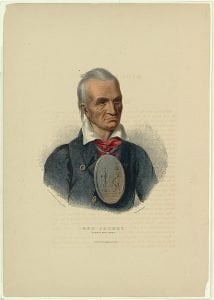
Red Jacket, the Seneca chief known for his eloquence and resistance to encroachment, encountered a French nobleman in 1820 who sought an audience. Initially dismissive of the Count’s request to meet in Buffalo, Red Jacket eventually received him at his wigwam. Throughout his life, he opposed the influence of missionaries, believing their efforts would erode tribal distinctness. As he faced his own mortality in 1830, he expressed deep concern for his people’s future, ultimately passing away with his wishes for a traditional burial unfulfilled, highlighting the ongoing tensions between Native Americans and white settlers.

Red Jacket, Seneca War Chief

Red Jacket Sa-go-ye-wat-ha, or Keeper awake 1756 - 1830

Red Jacket, or Sa-go-you-rvat-ha, born circa 1756, was a prominent Seneca chief known for his eloquence and fierce advocacy for his tribe’s rights during a tumultuous period in Native American history. A distinguished orator, he emerged as a leader amidst the decline of Seneca power, opposing encroachments by white settlers and resisting cultural change. Renowned for his defiance of missionaries, Red Jacket championed traditional customs, asserting the importance of his people’s heritage. His legacy illustrates the resilience of indigenous identity in the face of relentless external pressures.

Kiontwogky or Corn Plant

Kiontwogky, or Corn Plant, was a prominent Seneca chief and key figure in the Iroquois confederacy. Unlike Red Jacket, who advocated hostility towards whites, Corn Plant promoted conciliation, navigating the complexities of colonial relations. His heritage was mixed, with a white father, yet he embraced his Native identity. A skillful negotiator, he played a crucial role in treaties post-American Revolution. Despite his efforts to foster peace and education among his people, he faced challenges, including internal dissent and the pitfalls of alcohol. Corn Plant died around 1836, leaving a complex legacy.