
Tecumseh and Indian Confederation

In the years following the Treaty of Greenville, Tecumseh emerged as a key figure in uniting various Indian tribes to resist white encroachment. His brother, Elskawata, also known as the Prophet, advocated for a spiritual revival and communal living among tribes. As tensions escalated, particularly with British support, the Prophet’s town became a hub for Indian resistance. The culmination of these efforts was the Battle of Tippecanoe in 1811, which Tecumseh viewed as a setback. Despite this, he later allied with the British during the War of 1812, leading to significant engagements, including the Battle of the Thames, where he was ultimately killed.

Personal characteristics

Red Jacket exhibited a strong self-esteem and unwavering confidence in his abilities, which allowed him to engage equally with prominent figures without feeling intimidated. He maintained his dignity in all interactions, even humorously challenging those who approached him with disregard. Known for his keen memory and adaptability, he often defended the interests of his people while displaying a disdain for superficiality. Red Jacket cherished nature’s grandeur, especially Niagara Falls, and he navigated social interactions with an innate refinement, embodying the qualities of a true gentleman.

Change in Red Jacket’s Views

Over time, Red Jacket shifted from initially supporting the adoption of white customs to vigorously opposing them. He witnessed the detrimental effects of white-settler interactions on his people, including loss of land and culture, increasing vices, and ineffectiveness of education provided by whites. Red Jacket’s experiences led him to distrust the motivations behind attempts to civilize his people, viewing them as harmful rather than beneficial. He firmly rejected the introduction of Christianity, advocating for the preservation of traditional Iroquois practices and beliefs.

Red Jacket or SA-GO-YE-WAT-HA

Red Jacket, or SA-GO-YE-WAT-HA, is a prominent figure in Native American history, recognized for his remarkable oratory skills despite his humble origins. His life symbolizes the decline of the Seneca nation, as he witnessed his people’s loss of territory and identity to white settlers. Celebrated for his natural intellect and eloquence, he became a distinguished leader and voice for his people. Unlike many orators, Red Jacket’s abilities were cultivated through persistent effort and the cultural practices of the Iroquois, which cherished eloquence and public discourse.

United States Claims to Indian Land

After the Revolutionary War, territory ceded by Britain included lands occupied by Native Americans, who retained a sense of ownership despite U.S. claims. Various states contested land titles due to overlapping charters, leading to complex negotiations and eventual cessions of Native land to the government. Companies like the New York and Genesee Land Company sought to acquire these lands through questionable leases. Ultimately, New York’s governor took decisive action to protect Native rights during treaties, yet many tribes faced manipulation and external pressures throughout this tumultuous period.

How Red Jacket Got His Name

The name Red Jacket originated during the American Revolution when he was gifted a scarlet jacket by a British officer due to his swift execution of tasks and charisma. Proudly wearing this distinctive garment, he became widely recognized by the name. Born Oti-ti-ani and later known as Sa-go-ye-wat-ha, Red Jacket was an eloquent speaker who opposed involvement in the war, advocating for peace, which brought him criticism from some peers who labeled him a coward despite his moral courage.

Pre-emptive right to the Indian reservations, sold to the Ogden Company

In 1819, the Ogden Company sought to acquire the remaining Indian reservations in New York, possessing a preemptive right bought from the Holland Land Company. Red Jacket, a prominent Seneca chief, fiercely opposed these efforts during a council near Buffalo, articulating the Indians’ historical treaties and rights. Despite his eloquent defense, the Ogden Company persisted, reflecting the broader struggles of Native Americans against encroachment on their lands. Ultimately, Red Jacket’s resistance could not halt the gradual loss of their ancestral lands.

Biography of Red Jacket or Sa-Go-Ye-Wat-Ha

Red Jacket, or Sa-go-ye-wat-ha, was a prominent Seneca orator and leader from 1756 to 1830. Colonel William L. Stone’s biography has long been influential, yet it has faced criticism for not fully capturing the nuances of Red Jacket’s life and character. Many contemporaries felt it lacked a complete portrayal of his complex persona, shaped by various conflicts and jealousy during his lifetime. This biography aims to acknowledge previous works and expand on Red Jacket’s significant contributions to the history of the Six Nations.

Indian Appropriation

During a visit to Philadelphia, Iroquois chiefs received an annual appropriation of $1,500 from Congress for their welfare and were engaged in a diplomatic mission to assure western tribes of U.S. intentions. The chiefs, including Red Jacket, were honored and appreciative of the support offered by President Washington to improve their lives. However, tensions persisted as some tribes, instigated by British agents, demanded the Ohio River as their boundary. Despite various councils and negotiations, hostilities continued until General Wayne’s decisive victory, which shifted the balance towards peace.

Interview between Farmer’s Brother and Thomas Morris

The aftermath of the Big Tree council saw the Indians express satisfaction over its dissolution, with hostility directed at Mr. Morris. Despite the initial setback, Morris, through conciliatory gestures and gifts, secured the interest of the chief women and warriors, leading to a renewal of negotiations. Ultimately, the Seneca agreed to sell their lands for $100,000, under the condition of establishing reservations. The treaty’s signing faced opposition from Young King but concluded with the signatures of prominent chiefs, including Red Jacket, despite his earlier resistance.

Early History of the Six Nations

The Iroquois Confederacy, originally composed of five nations and later six with the addition of the Tuscarora, emerged from diverse tribes in North America, notably the Seneca. Known for their strength and unity, they occupied a vast territory in what is now New York, referred to as their “Long House.” Their governance allowed for organized military response against external threats, establishing them as a formidable power. The origins of their unions are rooted in tradition, highlighting their unique cultural identity and storied past.

Early Struggles of Red Jacket

Red Jacket’s journey to prominence as a Native American orator began amidst struggles and aspirations. Initially, he practiced his eloquence in the forests, yearning for an opportunity to display his talents. The end of the Revolutionary War presented such a chance at the Fort Stanwix council in 1784, where he vehemently opposed land cessions to the United States. His impassioned speech rallied the Iroquois, highlighting their past glories and injustices. Despite the ultimate acceptance of the treaty, Red Jacket emerged as a pivotal figure among his people, leaving a lasting impact through his rhetoric.

Taking of Fort Erie

Fort Erie, located opposite Buffalo at the head of the Niagara River, was a key military site during the War of 1812, garrisoned by around 170 British troops. Following the surprise capture of Fort Niagara by American forces in December 1813, the British were compelled to fortify their positions. The American plan for the 1814 campaign involved a coordinated attack on Fort Erie and Chippewa. General Brown initiated an assault on Fort Erie on July 3, leading to its swift surrender. Following this, American forces engaged the British at Chippewa, marking a significant moment in the campaign.

Expedition under General Harmar

Following the conclusion of the Revolutionary War, Indian hostilities surged as American settlements expanded westward. Between 1783 and October 1790, conflicts led to significant casualties and losses. In response, the U.S. government launched offensive actions under General Harmar, but early engagements resulted in American defeat. Subsequent diplomatic efforts by Colonel Proctor to negotiate peace with the Iroquois were complicated by British influence and internal dissent. Eventually, an Iroquois council produced some progress toward peace, fostering better relations with the U.S. government.

Council at Canawangus

In autumn 1798, a council of the Iroquois took place at Ca-na-wau-gus, where Red Jacket delivered a powerful speech that captivated his audience. Initially reserved, he later evoked their glorious past and recounted their decline due to white encroachment, drawing vivid parallels to natural disasters. His oration culminated in a poignant lament for the loss of their lands and a scathing critique of white settlers. Following this, the council moved on to address land issues with the New York Legislature, highlighting the aspirations of the Seneca Nation.

Cornplanter in Disrepute

Following the controversial sale of their lands to Robert Morris, the Seneca people, led by Cornplanter, experienced profound regret and discontent. Cornplanter, facing the ire of his community for his role in the transaction, sought redemption through supernatural claims alongside his brother. However, his attempts to undermine rival Red Jacket ultimately failed, leading to his decline in influence. Despite these challenges, Cornplanter later embraced agriculture and Christianity, eventually becoming a respected figure. He died in 1836, remembered for his complex legacy amidst changing times.

Canandaigua at an Early Day

bar22

Canandaigua, once a prime destination for settlers heading to the Genesee country, transitioned from a solitary wilderness to a bustling community following a 1788 treaty with Native Americans. Early pioneers faced abundant wildlife, including bears and wolves, while cultivating the land. By 1794, the town became a center for commerce and cultural exchanges, hosting significant Indian councils amidst growing tensions and negotiations, including the establishment of peace and land agreements with the Iroquois tribes, which reinforced their allegiance to the United States.

Views at the Close of Life

Red Jacket faced a harsh reality at the end of his life, witnessing the encroachment of white settlers on his people’s land and the decline of their traditions. Despite his lifelong resistance to white civilization and Christianity, he began to express regret and sought reconciliation, particularly influenced by his wife’s faith. He was ultimately dismissed from his leadership role by his people, but after a fervent defense at a council, he regained their respect. Red Jacket passed away on January 20, 1830, desiring a simple funeral in line with his family’s customs.

The Iroquois or Six Nations

The Six Nations, or Iroquois, were a formidable confederacy of five original tribes—the Mohawks, Oneidas, Cayugas, Onondagas, and Senecas—later incorporating the Tuscaroras. Known for their military prowess, they dominated the northeastern landscape, instilling fear in neighboring tribes and European settlers alike. Their democratic structure, with council meetings respecting minority voices, distinguished them from other tribes. Renowned for skilled orators like Logan and Red Jacket, the Iroquois played pivotal roles in early American conflicts, navigating complex alliances during the Revolutionary War while preserving their cultural identity.

The Captivity of Mary Jemison

Mary Jemison

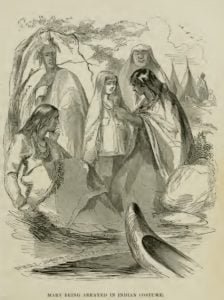
Mary Jemison, born at sea to English emigrants, faced a tragic fate when her family was captured by Native Americans in 1758. Adopted by the Seneca, she learned their ways, eventually marrying and adapting to her new life. Despite early longings for her past, her ties to her Indian family deepened, particularly after the death of her first husband. Over time, she became a respected member of the Seneca community. At ninety, she recalled her mother’s teachings, ultimately embracing faith before her death, preferring her Indian kin over her past.