The Discovery Of This Continent: It’s Results To The Natives
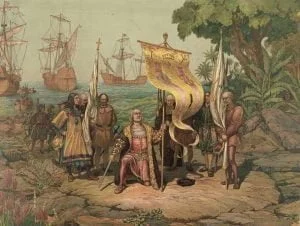
Columbus Landing on Hispaniola

In 1470, Christopher Columbus married Dona Felipa, daughter of a renowned navigator, and settled in Porto Santo, where they shared dreams of discovering lands to the West. Their ambitions fueled Columbus’s determination, leading to his 1492 voyage that resulted in the European discovery of the Americas. However, this event marked the beginning of devastation for native peoples, introducing warfare, disease, and colonization that would decimate their populations and cultures, ultimately transforming their rich, diverse societies into shadows of their former selves.
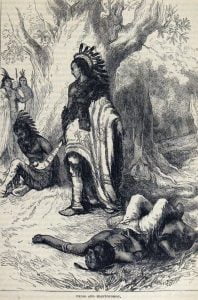
Quarrel between the Narragansetts and Mohegan

Uncas and Miantonomoh

The Pequots made a final attempt to reclaim their homeland, but were decisively defeated and scattered. Uncas of the Mohegans emerged powerful through alliances and warfare, ultimately executing Miantonimo, the Narragansett chief, after a surprise attack. Despite his military prowess, Uncas faced continuous skirmishes with rival tribes and the escalating mistrust of the English against the Narragansetts. The Mohegans, aligned with the colonists, navigated a contentious path that led to the decline of their tribes, marked by loss of land, identity, and dignity amidst colonization.

King Philip’s War

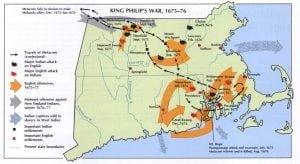
Map of King Philips War

King Philip’s War marked a pivotal conflict for the New England colonies in 1675, driven by the Wampanoag leader, Metacomet, also known as Philip. With European weaponry bolstering Native American forces, tensions escalated following Philip’s complaints about colonial encroachments on his people’s land. The war erupted with a surprise attack on the village of Swansey, leading to widespread destruction and fierce battles. The colonists, though initially caught off guard, were organized, especially under leaders like Captain Benjamin Church. Ultimately, Philip was killed in 1676, resulting in significant colonial expansion but at tremendous cost.

The Narragansetts and Pequot Indians

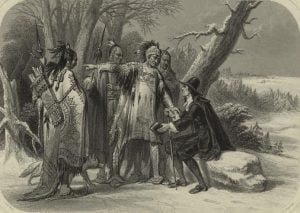
Roger Williams and Narragansetts

At the time of early European settlement, the Narragansetts, led by Chief Canonicus and his nephew Miantonimo, occupied the western shores of Narragansett Bay. Roger Williams, a proponent of tolerance and justice, maintained a crucial rapport with Canonicus, which helped stabilize relations with the tribe. Meanwhile, the Pequots, initially a unified tribe with warlike tendencies, experienced tensions with the English following the murders of traders Stone and Oldham, prompting retaliatory expeditions that exacerbated hostilities and set the stage for the Pequot War.

Western Niantic Tribe

The Western Niantic Indians, an Algonquian tribe, originally inhabited the Connecticut coast from Niantic Bay to the Connecticut River. Historically linked to the Rhode Island Niantic, they were fragmented by the Pequot invasion. Their chief village was located near present-day Niantic. The tribe faced near annihilation during the Pequot War in 1637 and subsequently fell under Mohegan rule. By 1761, their numbers had dwindled significantly, and they eventually assimilated into other tribes, with traces of their lineage persisting among mixed descendants.

Eastern Niantic Tribe

The Niantic Indians, an Algonquian tribe, inhabited the Rhode Island coast from Narragansett Bay to the Connecticut border, with their main village at Wekapaug. They were closely allied with the Narraganset tribe. By abstaining from King Philip’s War in 1675, they maintained their territory and tribal identity. After the war, they integrated with the Narraganset under the leadership of Ninigret, collectively adopting the Narraganset name thereafter.

Narraganset Indian Chiefs and Leaders

Uncas and Miantonomoh

Canonicus, a prominent Narraganset chief who died in 1647, initially sought English friendship despite early conflicts, including a war against the Wampanoag. His nephew, Miantonomo, was a significant leader, suspected of disloyalty yet supportive of English efforts against the Pequot. Miantonomo’s execution in 1643 by Uncas, despite his respected status, highlighted fraught relations. Canonicus’ son, Mriksah, succeeded him, while Nanuntenoo, Miantonomo’s son, led the Narraganset in the war against the English until his capture and execution in 1676.

Narraganset Tribe

The Narraganset Indians, an Algonquian tribe once prominent in New England, occupied territory west of Narragansett Bay, extending to parts of Coweset and Nipmuc regions. They absorbed the Niantic tribe after King Philip’s War and initially numbered in the thousands before suffering significant losses due to disease and conflict. The tribe faced destruction during King Philip’s War, losing many members and ultimately dispersing. By the early 19th century, their numbers dwindled to a few individuals, with their governance led by a head chief and several subordinate chiefs.