Essex County Massachusetts Probate Records 1665-1674
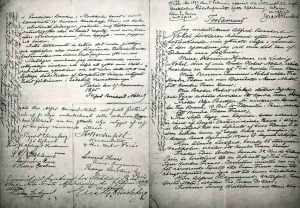
Sample Last Will and Testament

The “Governor and Company of Massachusetts Bay” established a judicial system in 1628, with a General Court in Boston and quarterly courts in major towns like Salem and Ipswich by 1635. These courts managed probate matters, and after Essex County’s formation in 1643, individual probate courts were later established in 1692. These are the probate records from 1665 to 1674, sourced from various original documents, including detailed wills and estate settlements.

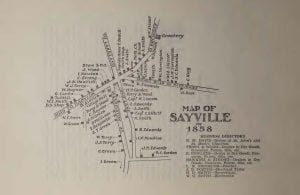
A History of Sayville, New York

Map of Sayville, New York, in 1858

In the heart of Suffolk County, New York, lies a village with a history as rich as the soil upon which it stands. “A History of Sayville, New York,” penned by Clarissa Edwards in 1935, is an invaluable chronicle that sheds light on the early days of this often-overlooked locale. Published by the Suffolk County News Press, this work is a testament to the enduring spirit of Sayville, a village that has woven itself into the fabric of American history, yet remains scarcely mentioned in conventional historical texts.

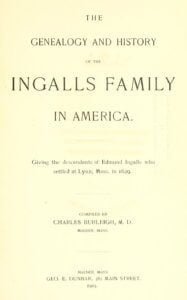
The genealogy and history of the Ingalls family in America

The genealogy and history of the Ingalls family in America

Edmund Ingalls, son of Robert, was born about 1598 in Skirbeck, Lincolnshire, England. He immigrated in 1628 to Salem, Massachusetts and with his brother, Francis, founded Lynn, Massachusetts in 1629. He married Ann, fathered nine children, and died in 1648.

French Genealogy of Fall River Massachusetts

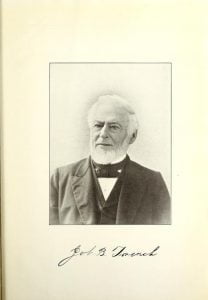
Job B. French

The French family has significantly influenced Fall River’s history since its founding, tracing their roots to Rollo, Duke of Normandy. Notable figures include Hon. Enoch French and his descendants, who were involved in various trades, notably tanning and shoemaking. Enoch established the first boot and shoe store in Fall River and contributed to local governance and community organizations. His sons, including Job B. French, also played vital roles in business and civic life. The family’s legacy continues through their active involvement in the First Baptist Church and local affairs.

Taber family of Dartmouth and New Bedford, Massachusetts

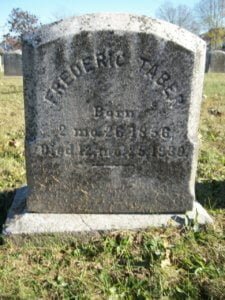
Frederic Taber 1856-1930

The Taber family of Dartmouth and New Bedford, one of the oldest families in southeastern Massachusetts, is descended from Philip Taber, who according to Savage, was born in 1605, and died in 1672. He was at Watertown in 1634, and he contributed toward building the galley for the security of the harbor. He was made a freeman at Plymouth in 1639. In 1639-40 he was a deputy from Yarmouth, and was afterward at Martha’s Vineyard, and from 1647 to 1655 was at Edgartown, going from there to New London in 1651, but probably returning soon. He was an inhabitant of Portsmouth in February, 1655, and was a representative in Providence in 1661, the commissioners being Roger Williams, William Field, Thomas Olney, Joseph Torrey, Philip Taber and John Anthony. Later he settled in Tiverton, where his death occurred. He married Lydia Masters, of Watertown, Mass., daughter of John and Jane Masters, and his second wife, Jane, born in 1605, died in 1669.

Ancestors of Frederick Macy of New Bedford Massachusetts

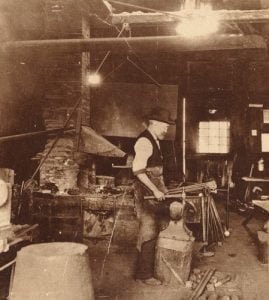
Edwin B. Macy at his Blacksmith Shop

The Macy family, rooted in Nantucket, traces its American origins to Thomas Macy, a freeman in 1639, who settled in Newbury, Massachusetts. Prominent in New Bedford’s business landscape, his descendants, including Frederick Macy, established a successful blacksmithing enterprise. Frederick, born in 1835, contributed significantly to the local fire department, leading it for many years. He married twice and had several children, continuing the family legacy of community involvement in New Bedford. The Macy lineage reflects a rich history of entrepreneurship and civic service.

Ancestry of Herbert Isam Mitchell of Brockton, MA

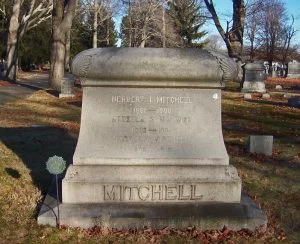
Herbert I Mitchell

The Mitchell family, tracing back to Experience Mitchell who arrived in Plymouth in 1623, is deeply rooted in Massachusetts history. Experience settled in Duxbury and was noted for his contributions as a juryman and original proprietor of Bridgewater. His legacy continued through his descendants, including Isam Mitchell, a successful lumber dealer in Brockton. Herbert Isam Mitchell, Isam’s son, was a prominent businessman and Mason, who contributed significantly to the local Masonic community until his untimely death at age thirty-nine.

Descendants of Philip Taber of New Bedford, MA

Philip Taber, born in 1605 and passed in 1672, was an early settler of New Bedford, MA, with a distinguished public service record, including roles as a deputy and representative. He had two wives, Lydia Masters and Jane, and fathered several children, including Thomas Taber, who continued the family legacy through civic duties in Dartmouth. The Taber lineage expanded with Joseph and Benjamin Taber, leading to notable descendants like Edward Smith Taber, who achieved success in various industries, including the Morse Twist Drill Company.

Richard Dexter Genealogy, 1642-1904

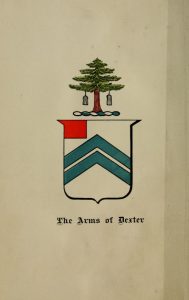
Arms of Dexter

Being a history of the descendants of Richard Dexter of Malden, Massachusetts, from the notes of John Haven Dexter and original researches. Richard Dexter, who was admitted an inhabitant of Boston (New England), Feb. 28, 1642, came from within ten miles of the town of Slane, Co. Meath, Ireland, and belonged to a branch of that family of Dexter who were descendants of Richard de Excester, the Lord Justice of Ireland. He, with his wife Bridget, and three or more children, fled to England from the great Irish Massacre of the Protestants which commenced Oct. 27, 1641. When Richard Dexter and family left England and by what vessel, we are unable to state, but he could not have remained there long, as we know he was living at Boston prior to Feb. 28, 1642.

Slave Narrative of Pauline Worth

In a September 1937 interview, 79-year-old Pauline Worth reflects on her childhood during slavery in Marion, South Carolina. She recalls her experiences with her white family, particularly her old Missus, who provided care and clothing. Worth describes her limited memories of the era, including attending church as a child and the lack of formal education. She notes the changes in social gatherings and dances compared to the past, expressing concerns about the pace of modern life and the upbringing of children today.