Samuel Lane’s Journal, 1739-1803

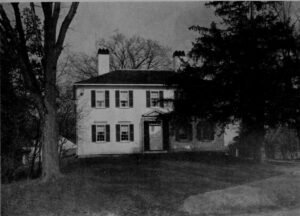
Jabez Lane House

Samuel Lane’s journal, covering 1739 to 1803, chronicles the life of a New Hampshire resident who experienced the colonial, Revolutionary, and early national periods. Lane transitioned from farming to various professions, including tanner and shoemaker, while actively participating in community roles. His meticulously kept journal captures local and national events, personal reflections, and societal changes. Edited by Charles Lane Hansen in 1937, it serves as a crucial primary source, offering insights into the daily life, hardships, and resilience of 18th-century New England.
Lower Chinook, Kathlamet, Tillamook, and Clatsop Indians, Alive in 1906

In 1906, Charles E. McChesney compiled a list of the Lower Chinook, Kathlamet, Tillamook, and Clatsop Indians, along with their heirs, who had treaty agreements with the U.S. government since 1851. The document includes numerous names and corresponding addresses across various locations, such as Oregon, Washington, and California. This registration underscores the ongoing recognition of these tribes and serves as an important historical record of their existence and relocations during that period.

Sevier County 1830 Tennessee Census

1830 Sevier County Census transcription

Published in Knoxville, Tennessee in 1956 and distributed by the Genealogical Publishing Company of Baltimore, Maryland, Sevier County, Tennessee: Population Schedule of the United States Census of 1830 (Fifth Census) provides a transcription of the often difficult to read, 1830 Sevier County Tennessee census. Authored by Blanche C. McMahon and Pollyanna Creekmore, this meticulous reproduction of the original census record sheds light on the people of Sevier County in 1830.

Abstractions from Huron County Ohio, Will Book A

Volume A, Huron County Wills to 1852

This volume is “Abstractions from Huron County Ohio, Will Book A.” These will abstractions cover the years from 1828 to 1852. They have been taken out of order as they appeared in the original volume and sorted by name. This abstraction was done by Henry Timman of Norwalk, Ohio, in 1960.

Genealogy of the Lewis family in America

Genealogy of the Lewis family in America

Free: Genealogy of the Lewis family in America, from the middle of the seventeenth century down to the present time. Download the full manuscript. About the middle of the seventeenth century four brothers of the Lewis family left Wales, viz.: Samuel, went to Portugal; nothing more is known of him; William, married a Miss McClelland, and died in Ireland, leaving only one son, Andrew; General Robert, died in Gloucester county, Va. ; and John, died in Hanover county, Va. It is Andrews descendants who are featured in the manuscript.

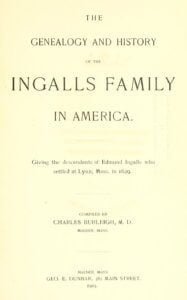
The genealogy and history of the Ingalls family in America

The genealogy and history of the Ingalls family in America

Edmund Ingalls, son of Robert, was born about 1598 in Skirbeck, Lincolnshire, England. He immigrated in 1628 to Salem, Massachusetts and with his brother, Francis, founded Lynn, Massachusetts in 1629. He married Ann, fathered nine children, and died in 1648.

Biographies of Western Nebraska

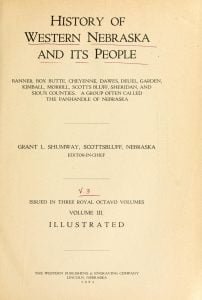
History of Western Nebraska and its People

A historical overview of western Nebraska and its pioneer settlers, this volume highlights the men who helped build counties across the Nebraska Panhandle, including Cheyenne, Box Butte, Deuel, Garden, Sioux, Kimball, Morrill, Sheridan, Scotts Bluff, Banner, and Dawes. It also points readers to biographies, history volumes, and a gallery of 143 photographs.

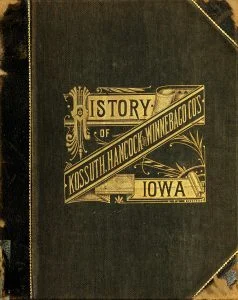
History of Kossuth, Hancock, and Winnebago Counties, Iowa

History of Kossuth, Hancock, and Winnebago counties, Iowa

History of Kossuth, Hancock, and Winnebago Counties, Iowa together with sketches of their cities, villages and townships, educational, civil, military and political history; portraits of prominent persons, and 638 biographies of representative citizens. Also included is a history of Iowa embracing accounts of the pre-historic races, and a brief review of its civil and military history.

Nansemond Tribe

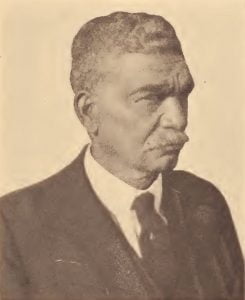
Augustus A. Bass, Nansamond

The Nansemond Tribe, descendants of the Powhatan tribes, primarily reside near Portsmouth and Suffolk, Virginia. Although their numbers have declined over the past century, around 200 individuals are recognized as descendants. In 1923, they formed the Nansemond Indian Association to unite with other indigenous groups. Key family names include Bass and Weaver. Their culture retains elements of bear-hunting and wolf-trapping traditions, as well as agricultural practices and the use of dugout canoes, reflecting their historical connection to the land.

Treaty of October 11, 1842

Treaty of October 11, 1842

The Treaty of October 11, 1842, involved the Confederated tribes of the Sac and Fox Indians ceding their lands west of the Mississippi River to the United States, while reserving a right to occupy these lands for three years. The treaty stipulated annual payments to the tribes and provisions for their relocation, including assistance during their move and the establishment of blacksmith and gunsmith shops. An agreement for necessary funds for the tribes’ welfare and charitable purposes was also included. The treaty required Senate ratification and consent from the tribes for any amendments.

Biography of John D. Rowland

John D. Rowland, born March 8, 1863, in Racine, was a prominent figure in real estate and insurance, co-founding Carpenter Rowland. His father, David Rowland, emigrated from Wales and later settled in Racine. John served in the Civil War and worked for the J. I. Case Threshing Machine Company before pursuing law, graduating from the University of Wisconsin in 1886. He married Mary Lizzie Hand and had three children. A Republican and active in his community, Rowland was involved in various fraternal organizations and the Presbyterian Church.

Treaty of August 11, 1827

On August 11, 1827, a treaty was established at Butte des Morts between U.S. Commissioners Lewis Cass and Thomas L. McKenney and the Chippewa, Menomonie, and Winebago tribes. This treaty aimed to define the southern boundaries of the Chippewa territory, resolve disputes involving New York tribes, and delineate jurisdiction over contested lands. It included provisions for education funding and addressed recent conflicts. Ratified by the President and Senate, the treaty emphasized that it would not affect the rights of the New York Indian tribes to their lands.

Biography of B. F. Rowland, M. D.

Dr. B. F. Rowland, born on June 7, 1866, in Moniteau County, Missouri, is a prominent figure in Ochelata as a successful druggist and Vice President of the Ochelata State Bank. After studying medicine in Arkansas, he practiced in Oklahoma before transitioning to pharmacy in 1896. He also manages a 240-acre farm. Married to Addie B. Thomas, they have five children. A dedicated Mason, Rowland is known for his contributions to local progress and his leading role in business and community affairs.

Biography of L. L. Rowland, M.D.

L.L. Rowland, M.D., born September 17, 1831, in Nashville, Tennessee, journeyed to Oregon in 1844. After gaining funds through gold mining and cattle investment, he pursued education in the East, becoming a prominent educator and the first state superintendent of public instruction in Oregon. A versatile figure, he was ordained as a minister but devoted himself primarily to medicine. Rowland was instrumental in founding the Oregon State Medical Society and held numerous esteemed positions in academia and medicine, continuing to practice in Salem, Oregon.