Biographical and Historical Memoirs of Story County, Iowa

Title Page for Biographical and Historical Memoirs of Story County, Iowa
This manuscript offers a broad survey of Iowa’s development and the individuals who shaped it. It opens with a concise history of the state, followed by a series of biographical sketches highlighting notable Iowans whose careers influenced law, politics, commerce, and community life. A substantial section is devoted to Story County, providing a descriptive account of its formation, settlement patterns, and early growth. This county history is supplemented by an extensive collection of personal profiles documenting the lives of its leading residents.

History of Derby Connecticut, 1642-1880

Edmund Leavenworth of Derby, Connecticut

The book titled “History of the Old Town of Derby, Connecticut, 1642-1880” presents a comprehensive account of Derby’s development, including the town’s Indian history, early settlers, and significant events like the Revolutionary War. It emphasizes education, commerce, and church influences, while offering an extensive collection of biographies and genealogies.

Ashfield Massachusetts Vital Records

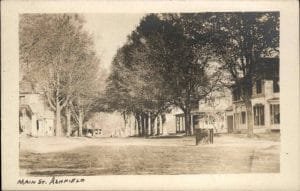
Main Street, Ashfield, Massachusetts

Alphabetical indexes to the vital records of Ashfield, Massachusetts, up to the year 1850, supplemented by information from bible records, church registers, cemetery inscriptions and other sources. PDF file is free to read and download.

Spokane Story

Spokane Story

“Spokane Story: A Colorful Early History of the Capital City of the Inland Empire” by Lucile Foster Fargo offers readers an evocative journey through the formative years of Spokane, Washington. Published in 1957 by Northwestern Press in Minneapolis, this work seeks to straddle the realms of history and storytelling, presenting a narrative that is neither entirely factual history nor pure fiction. Fargo accepts the challenging task of depicting Spokane’s cultural and developmental evolution from its fur trade beginnings to its emergence as a municipal entity in the early twentieth century.

History of Kentland Indiana, 1860-1960

Kentland-Newton County Centennial banner

The book “History of Kentland Indiana, 1860-1960,” published to commemorate the Kentland-Newton County centennial, offers a comprehensive look into the rich tapestry of life in Kentland, Indiana, over a hundred years. Compiled by the Centennial History Committee, this volume spans a wide array of topics, from the early trails and history of Kentland to its participation in various wars. It is free to read and download.

History of Adair County Iowa and its People – vol 2

History of Adair County, Iowa, and its people vol 2 title page

Back in 1915, Lucian Moody Kilburn, was engaged to write a history of Adair County Iowa by the Pioneer Publishing Company of Chicago Illinois, he then being at that time a resident of the county for 50 years. The manuscript was divided into two volumes. This volume, numbered 2, provides biographical sketches of 348 leading men and women of the County of Adair including many of its founding families. You can read or download the free eBook from this website.

History of Bentleysville, Pennsylvania

Bentleysville title page

This book is a collection of stories, letters, and historical records detailing the brief history of Bentleysville, a rural community in southwestern Pennsylvania. Established around a mill operated by Sheshbazzar Bentley Sr. and Jr. on Pigeon Creek in 1816, the town grew to a population of 300 by 1868. The author traces the origins of Bentleysville back to the 1770s to document the earliest settlers, while also providing context through significant national events like the Whiskey Rebellion and the Civil War. Although Bentleysville’s history as a village ended before 1900, this work preserves its legacy for future generations.

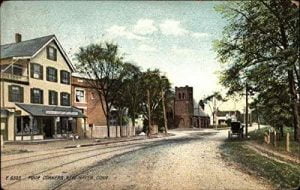
Families of Ancient New Haven

Four Corners New Haven Connecticut

The Families of Ancient New Haven compilation includes the families of the ancient town of New Haven, covering the present towns of New Haven, East Haven, North Haven, Hamden, Bethany, Woodbridge and West Haven. These families are brought down to the heads of families in the First Census (1790), and include the generation born about 1790 to 1800. Descendants in the male line who removed from this region are also given, if obtainable, to about 1800, unless they have been adequately set forth in published genealogies.

Progressive Men of Western Colorado

Early Life in Colorado

This manuscript, in its essence, is a collection of 948 biographies of prominent men and women, all leading citizens of Western Colorado. In this context, Western Colorado encompasses the counties of Archuleta, Chaffee, Delta, Eagle, Garfield, Gunnison, Hinsdale, La Plata, Lake, Mesa, Mineral, Moffat, Montezuma, Montrose, Ouray, Pitkin, Rio Blanco, Routt, San Juan, and San Miguel.

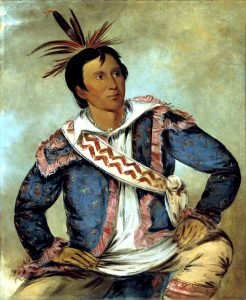
The Meeting of Folsom and Nittakachih

The council convened to distribute the annuity ended in chaos, revealing deep-seated animosities between two chiefs, Nittakachih and Amosholihubih, foreshadowing potential civil war. As tensions escalated, both factions prepared for conflict, yet a moment of profound silence arose as Nittakachih approached, signaling a desire for peace. Through dialogue, misunderstandings were cleared, leading to a restoration of friendship and trust, thus averting a civil war. This episode highlights the leadership of Colonel David Folsom and the complex dynamics of the Choctaw Nation during a pivotal moment in their history.

The Meeting in 1811 of Tecumseh and Apushamatahah

Peter Perkins Pitchlynn was the Choctaw Principal Chief from 1864-1866

In 1811, Tecumseh, the Shawnee leader, met with Apushamatahah, a prominent Choctaw chief, to rally southern tribes against American encroachment amidst looming war between the U.S. and England. Tecumseh passionately urged unity against their common foe, warning of the dire consequences of inaction. Apushamatahah countered with a call for prudence, advocating for peaceful measures. Ultimately, the council resulted in favoring American alliance, thwarting Tecumseh’s ambitions. This pivotal meeting highlighted the contrasting strategies of the two influential leaders, shaping tribal responses during a critical historical period.

Treaty of August 20, 1851

On August 20, 1851, a treaty was signed at Camp Lu-pi-yu-ma, California, between U.S. Indian Agent Redick McKee and leaders of various tribes, including Ca-la-na-po and Ha-bi-na-po. The treaty established a relationship of peace, recognizing United States authority while prohibiting acts of hostility. The tribes ceded their land rights in exchange for designated reservations and promises of agricultural aid, supplies, and education efforts by the U.S. for five years, underscoring the government’s attempt to integrate these tribes into a more “civilized” lifestyle.

Treaty of October 24, 1816

Treaty with the Choctaw of October 24, 1816

The Treaty of October 24, 1816, known as the Treaty with the Choctaw at the Choctaw Trading House, formalized a land cession between the United States and the Choctaw nation. The Choctaw ceded lands east of a specified boundary in exchange for annual payments of $6,000 for twenty years and an immediate merchandise payment of $10,000. The treaty was signed in open council, with representatives from both sides, and was ratified by President Madison on December 30, 1816.

Slave Narrative of Jenny McKee

Jenny McKee, an 85-year-old former slave, recounts her life in a narrative captured by interviewer Perry Larkey in London, Kentucky. Born in Texas, she shares memories of her mother’s sale in Louisiana and her adoption by Martha Tillet after her mother’s death. Aunt Jenny recalls childhood experiences of slavery, including her scar from an incident with another slave child. She married David McKee, a soldier, and continues to receive a pension from his military service. Her narrative encompasses personal history intertwined with the broader context of slavery and war.

Biography of Thomas H. McKee

Thomas H. McKee, born on May 16, 1854, in Dover Township, is a dedicated farmer and community leader. The son of James and Rebecca McKee, he grew up in a challenging environment, assuming responsibility after his father’s death. Through hard work, he acquired a productive 160-acre farm, focusing on general farming and dairying, particularly sugar beets. Married to Emma Raymond, they have fourteen children. An active member of the Republican Party and the Methodist Episcopal Church, McKee has served as town assessor and is esteemed by his peers for his integrity and commitment.

Biography of Leonard V. McKee

Leonard V. McKee, a prominent figure in Marshall County’s development, was born on August 18, 1845, in Ohio and passed away in Frankfort, Kansas, on December 22, 1916. He founded the Frankfort State Bank, transitioning from farming to banking, and significantly contributed to local institutions, including Baker University and Bethany Hospital. A veteran of the Civil War, McKee was also active in local politics and philanthropy. He married twice, fathering six children, and was regarded as a caring community leader and devoted family man.

Biography of Ralph M. McKee

Ralph M. McKee, born on December 1, 1893, in Xenia, Ohio, is the superintendent of consolidated city schools in Neal, Greenwood County, Kansas. A young and respected figure in education, he has made significant contributions since graduating high school in Moline, Kansas, in 1913. After teaching in rural schools and then in Eureka, he assumed his current role in 1915. McKee is actively involved in the Kansas State and Greenwood County Teachers Associations and is a member of the Masonic Lodge, identifying as a Democrat.

Biographical Sketch of H. A. McKee

H. A. McKee, originally from Friendship, New York, enlisted at seventeen in the Twenty-third New York Volunteer Infantry. After two years of military service, he pursued livestock and retail ventures in Kansas. He married Jennie Paxton in 1869, who had a notable teaching career across several states. Relocating to Texas in 1874, he focused on sheep ranching for fifteen years before moving to California in 1888, where he now runs a grocery store in Santa Ana and plans to enjoy his later years.