Vital Records of Bellingham, Massachusetts

Vital Records of Bellingham Massachusetts to the year 1850

Alphabetical indexes to the vital records of Bellingham, Massachusetts, up to the year 1850, supplemented by information from bible records, church registers, cemetery inscriptions and other private sources to include the diary kept by Samuel Wight and his daughters.

Essex County Massachusetts Probate Records 1675-1681

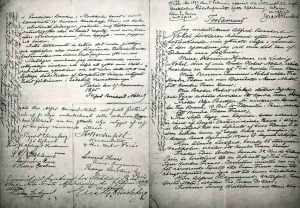
Sample Last Will and Testament

The “Governor and Company of Massachusetts Bay” established a judicial system in 1628, with a General Court in Boston and quarterly courts in major towns like Salem and Ipswich by 1635. These courts managed probate matters, and after Essex County’s formation in 1643, individual probate courts were later established in 1692. These are the probate records from 1675 to 1681, sourced from various original documents, including detailed wills and estate settlements.

Over the Misty Blue Hills: The Story of Cocke County, Tennessee

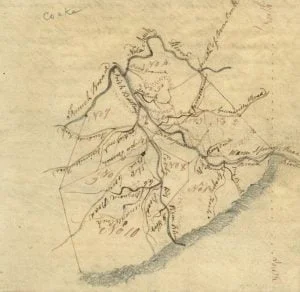
1836 Map of Cocke County, Tennessee

“Over the Misty Blue Hills: The Story of Cocke County, Tennessee,” written by Ruth Webb O’Dell and published in 1951, provides a historical account of Cocke County. The book covers various aspects of Cocke County’s history, including its political, social, religious, and industrial developments. The contents are divided into several detailed sections: the political history of Cocke County, the significance of local names, the natural resources and setting, early settlers, religious history, industrial development, and notable figures from the county. Additionally, it delves into specific family histories, offering insights into the lives of many influential families such as the Allens, Burnetts, Huff, McMahan, and many others.

Marriages of Orange County, Virginia, 1747-1810

Marriages of Orange County, Virginia, 1747-1810

Catherine Lindsay Knorr’s Marriages of Orange County, Virginia, 1747-1810 stands as a pivotal work for genealogists and historians delving into the rich tapestry of Virginia’s past. Published in 1959, this meticulously compiled volume sheds light on the matrimonial alliances formed within Orange County, Virginia, during a period that was crucial to the shaping of both local and national histories. The absence of a contemporary marriage register presented a formidable challenge, yet through exhaustive examination of marriage bonds, ministers’ returns, and ancillary records, Knorr has reconstructed a reliable record of these marriages.

Saint Paul’s Parish Virginia Register

The register of Saint Paul's Parish, 1715-1798

The “Register of Saint Paul’s Parish, 1715-1798” is a vital resource for those researching early Virginia history and genealogy. This meticulously restored document chronicles marriages, births, and deaths across Stafford and King George counties, offering a glimpse into the lives of early settlers and their families. Despite challenges in maintaining accuracy due to illiteracy and changing clerks, the register remains invaluable for tracing lineages and understanding naming conventions of the era. It also highlights the efforts of those who dedicated themselves to preserving this important historical record for future generations.

History of Littleton New Hampshire

1895 Map of Littleton New Hampshire

The History of Littleton New Hampshire is comprised of three volumes, two volumes of history, and a final volume of genealogies. Considered one of the best examples of local history written in the early 20th century, is your ancestors resided in Littleton then you need these books. Read and download for free!

Biographical and Portrait Cyclopedia of Chester County, PA

Title Page for Biographical and Portrait Cyclopedia of Chester County Pennsylvania

An introductory page for the Biographical and Portrait Cyclopedia of Chester County, Pennsylvania, this volume includes a historical sketch of the county by Samuel T. Wiley and more than 500 biographical sketches of prominent local men and leading citizens. It also outlines Chester County’s colonial origins, early boundaries, and its role in the formation of neighboring counties.

Andrew Ayers Martin’s DNA Results

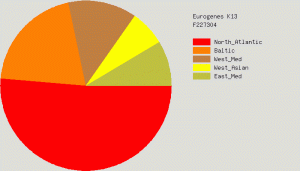
GedMatch Ethnicity Martha Payne Albertson

Andrew Ayers Martin provides an analysis of his DNA results, revealing stable proportions of Middle Eastern and Mediterranean ancestry and a small percentage of Amerindian DNA in his uncle. He shares his family’s long history in Northeast Georgia, including notable ancestors who contributed to local health and military efforts. While he anticipated some Native American heritage, the results predominantly indicate European ancestry, with significant Scandinavian and Southern European components. Martin reflects on his family’s story and the implications of their diverse heritage in the region.

Biographical Sketch of Thomas Massey, Sr.

Thomas Massey, Sr. married Nancy Hill and moved to Montgomery County, Kentucky in 1809. By 1813, he had established himself at Loutre Lick after obtaining permission from landowner Nathan Boone. His legacy included eleven children: Israel, Thomas Jr. (a ranger in Boone’s company), Harris, Ann, Agnes, Sally, Nancy, Matilda, Elizabeth, and Docia.

Louisiana Land Patents – Choctaw Tribe

A detailed listing of Louisiana land patents for the Choctaw Tribe, organized by patentee name, date, document number, and accession number. The record includes many Native and non-Native grantees and spans patents issued from the 1840s through the early 1900s, offering a valuable reference for historical land and genealogy research.

Biography of Hervy A. Massey

Hervy A. Massey, born in Greene County, Missouri, in 1846, was a prominent farmer and stockraiser in Stone County. The son of Nathaniel and Nancy Massey, he grew up on a farm and married Elizabeth R. Jarrett in 1868. They had twelve children and, after moving to Stone County in 1871, developed a significant farm of 373 acres. A community-minded individual, he served as county surveyor from 1878 to 1882 and was active in the Christian Church.

Biography of J. M. Massey

J. M. Massey, born on May 25, 1843, in Pennsylvania, became a prominent figure in Chanute, Kansas, where he established a successful clothing business and served as vice president of the First National Bank. He moved to Kansas with his family in 1857 and engaged in various occupations, including military service during the Civil War. A devoted community member and Republican, he has been active in local civic duties and fraternal organizations. Massey married Alice Fuller in 1878 and has two children, contributing significantly to Chanute’s business landscape.

Floyd D. Massey

Private 1st Class Floyd D. Massey, of Company K, 150th Infantry from Wilson County, was the son of S. D. and Mrs. Mattie Massey. He entered military service on August 8, 1918, in Wilson, North Carolina, and was subsequently stationed at Camp Jackson, South Carolina. After serving overseas, he returned to the United States on April 4, 1919, arriving at Hoboken, New Jersey. Massey was mustered out of service at Camp Lee, Virginia, on May 16, 1919.

Paul V. Massey

Private Q. M. C. Co. 332, Paul V. Massey, hailing from Wilson County, was the son of S. D. and Mrs. Mattie Massey. He entered military service on May 22, 1918, in Wilson, North Carolina, and was initially stationed at the A. D. Detachment in Raleigh. After a transfer to Camp Joseph E. Johnson in Florida, he sailed to Cherbourg, France, on November 8, 1918. Massey returned to the United States on July 5, 1919, and was mustered out at Camp Lee, Virginia, on July 30, 1919.

Dr. Luther M. Massey

1st Lt. Luther M. Massey served in the Dental Corps at Evacuation Hospital No. 44. A resident of Wake County, he was the son of D.D. and Eldora F. Massey. He entered military service on December 17, 1917, in Richmond, Virginia, and was initially assigned to Medical College, Virginia. He was transferred to Fort Oglethorpe, Georgia, where he was promoted to 1st Lieutenant on October 28, 1918, and mustered out on December 21, 1918, joining the Dental Reserve Corps for five years.

Biography of Job W. Massey

Job W. Massey was born on June 28, 1822, in Cheshire, England, and immigrated to the United States with his family in 1828. After settling in New Jersey and later in Wappingers Falls, New York, he pursued various trades including model-making. In 1857, he established his farming and stock business in Illinois, where he has resided ever since. A family man, he faced numerous tragedies, including the loss of several children. He contributed to his community through civic roles, owning 120 acres of improved land.

Anti-Slavery Act Victims – Fugitive Slave Law

In the years leading up to 1855, numerous incidents of kidnapping and the enforcement of the Fugitive Slave Law occurred across the United States. Notable cases include George’s legal surrender to a Kentucky slave owner, Joshua Glover’s violent arrest in Wisconsin, and Anthony Burns’ attempted rescue amid a highly publicized trial in Boston. Reports reveal the brutal tactics employed by kidnappers and the complicity of law enforcement, highlighting the extreme measures taken to reclaim escaped slaves, often at the cost of their freedoms and lives.