Seneca County New York Biographies

Seneca County History Newsletter Drawing

In the 1980’s a series of newsletters were published four times a year by Seneca County NY featuring historical information concerning Seneca county and her past residents. The current historian for Seneca County placed these online using PDF files. One of the main features of each edition were biographical sketches of early settlers of Seneca County. This is a list of those biographical sketches linked to the pdf copy of the newsletter.
Natchez Trace

Natchez Under the Hill

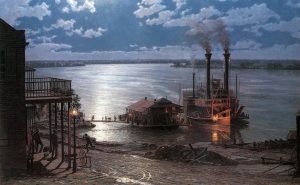
In 1792, a treaty with the Chickasaw at Chickasaw Bluffs established the Natchez Trace, a significant route connecting Nashville to Natchez. Initially a thoroughfare for emigrants, it soon became infamous for outlaws like Mason and Murrell, who preyed on travelers. Despite efforts to capture these bandits, they eluded authorities until betrayal led to Mason’s demise. The Trace witnessed both lawlessness and camaraderie among its diverse users, ultimately fading from memory as it transformed into farmland, overshadowed by the bustling growth of nearby settlements.

History of the Methodist Church at Norwich Vermont

Rev. Emanuel C. Charlton

Methodism in Vermont began to establish itself around 1796, with its first society formed in Vershire. The movement saw rapid growth, particularly in the early 19th century. In Norwich, Methodist meetings were initiated by circuit preachers by the early 1810s, leading to the construction of the first church around 1815. The current brick church at Union Village was built in 1836. Over the years, the community has faced population declines, yet the Methodist Episcopal Society of Norwich and Thetford continues to thrive, with about 150 families currently participating.

War With The Modoc – Indian Wars

Captain Jack

In April 1873, tensions escalated between the U.S. military and the Modoc people. Following a series of intense skirmishes, the Modoc, led by Captain Jack, engaged in guerrilla warfare and ultimately suffered significant losses. Key battles resulted in the deaths of several soldiers and Modoc warriors, and their stronghold was threatened as troops cut off their water supply. The situation culminated in a tragic ambush, where General Canby and Reverend Dr. Thomas were killed during peace negotiations, solidifying the conflict’s brutality and complexity.

Autauga County Alabama Genealogy

Autauga County, Alabama

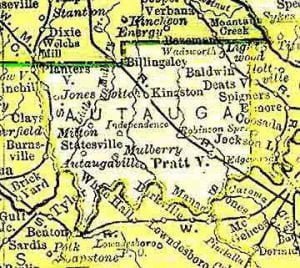
An extensive collection of material relating to Autauga County Alabama genealogy, includes vital records, cemeteries, census, history, and other records.

Ridgelawn Memorial Cemetery – Oxford Michigan

This cemetery record from Oxford, west of Burdick Street, lists hundreds of burials collected in September 2001 by Christopher Schnur. The transcription includes names, birth and death dates, military service, family relationships, and epitaphs, offering a detailed historical snapshot of local families, veterans, children, and spouses buried in the cemetery.

Biography of Luther L. Mason

Luther L. Mason, born July 28, 1850, in Hill, N.H., is a notable farmer and dairyman from a long-established local family. His roots trace back to his great-grandfather Josiah, who settled the land in the early wilderness days. Luther managed the family farm, specializing in dairying, and was an active community member, serving on the School Board and Board of Selectmen. He married Martha S. Mason, has three children, and is involved in the local Christian Church, with shifting political views toward Prohibition.

Philadelphia To Steubenville

On October 4, 1819, Dr. Hall and the author departed Philadelphia, traveling through fine weather and well-cultivated lands. They stopped in West Chester, where they noted the plight of a man imprisoned for debt. The journey continued to Strasburg and Lancaster, with observations on the industrious German residents and the notable Susquehanna bridge. As they passed through various towns, they encountered trials such as rough terrain, bad hospitality, and even a violent election incident. The travelers reached Pittsburgh, a smoky industrial town, on October 12, and left for Steubenville, where they took a restful day amidst the bustling village.

Through Ohio And Kentucky

From October 18 to November 3, the traveler and a companion journeyed through Ohio and Kentucky, encountering muddy roads, hilly terrain, and varying degrees of settlement. They observed a decline in land quality and hospitality as they moved westward, noting indifferent buildings and unwelcoming locals. Key stops included Siers, Freeport, Zanesville, Chillicothe, and Louisville, where they experienced both hospitality and disappointment. The journey concluded with reflections on the changing landscapes and the people met along the way, contrasting Ohio’s and Kentucky’s societal characteristics.

A Brotherhood Of Cutthroats

In early November 1819, a traveler recounts a grueling journey through Indiana and Illinois, highlighting the stark contrasts of the landscape and the inhabitants. He describes miserable living conditions, barren terrains, and encounters with welcoming yet impoverished families. Notably, he discovers a list of notorious criminals operating in the region, whom locals refer to as cutthroats. Despite the promise of fertile land, the traveler observes a dangerous atmosphere overshadowed by threats of robbery and murder, underscoring the treacherous character of the region.

Escape From The Robber Band

On November 8, 1819, the author and companions faced a night of dread while staying with strangers who displayed suspicious behavior. Armed and apprehensive, they prepared for a possible attack, realizing the danger posed by their hosts. After surviving the night, they departed the premises, eventually joining other travelers on the road to safety. Their journey continued through Illinois, revealing a landscape of both fertile land and dangerous inhabitants, leading the author to reflect on the challenges and characters of this new frontier.

In Possession Of The “Promised Land”

On November 22, 1819, the author bids farewell to new friends in Kaskaskia and embarks on a journey to the bounty lands, noting the fertile prairies and wildlife encountered. His travels take him through various settlements, including Edwardsville, which shows promise despite high labor costs. Disappointments arise as he parts from Dr. Hill, yet he finds camaraderie in traveling companions. Encounters with hospitable locals highlight both the beauty and challenges of settling in the region, echoing the allure of this land as a “Promised Land.

Baldwin County Georgia Marriages 1806-1850

This index compiles 1,352 Baldwin County, Georgia marriage records from court documents covering 1806 to 1850. It lists groom, bride, and marriage date entries in chronological order, offering a valuable genealogical resource for tracing family history, local relationships, and early county residents across more than four decades.

Washington Land Patents – Omaha Tribe

A record of Washington Land Patents for the Omaha Tribe, listing patentees, dates, document numbers, and accession numbers. The page includes many family and individual names, such as Adams, Balch, Belmont, Jones, Price, and Williams, along with several Native names, providing a detailed historical land patent index.

Treaty of August 24, 1835

The Treaty of August 24, 1835, established peace and friendship between the United States and the Comanche and Witchetaw nations, alongside other tribal nations like the Cherokee and Osage. Key provisions included mutual forgiveness for past grievances, free passage for U.S. citizens through tribal lands, and permission for tribes to hunt in designated areas. The treaty aimed to foster cooperation, ensuring that any disputes would be resolved amicably. Signatories were promised gifts, reinforcing the commitment to maintaining peaceful relations for future generations.

Slave Narrative of Aunt Harriet Mason

Aunt Harriet Mason, born on April 14, 1847, in Garrard County, Kentucky, shares her experiences as an ex-slave. Owned by B.M. Jones, she recounts her family background and life on a plantation in Texas, where she worked as a nursemaid and housemaid without pay, receiving food similar to that of the family. Harriet describes the kind treatment from her masters, General Gano and Miss Nat, including educational opportunities. After the end of slavery, she returned to Kentucky and eventually settled in Lancaster, where she raised nine children and remained active in her church.

Slave Narrative of George Henderson

George Henderson, born on May 10, 1860, in Woodford County, Kentucky, recalls his life as a slave on a 400-acre plantation. He describes the living conditions in log cabins, daily chores, and the family dynamics among the 21 children born to his father, Bradford Henderson. Work included feeding animals and maintaining vegetable gardens. While he never earned money, he recalls special occasions like Christmas and the community dances. After emancipation, he continued to stay with his former master for a time and later married, having a total of eight grandchildren.

Slave Narrative of Harriet Mason

In her interview, 100-year-old Harriet Mason recounts memories from her childhood as a slave in Kentucky, including her longing to reunite with her mother and a near encounter with danger from a snake. She recalls social events like dances, the sternness of her mistress, and experiences involving her peers, including playful but painful incidents. Despite lessons in obedience and the harsh realities of her life, she expresses gratitude for her longevity and the desire to remain with her daughter, Lilly.

Slave Narrative of James V. Deane

James V. Deane, born May 20, 1850, in Charles County, Maryland, provides a detailed account of his life as a slave. He describes living in a log cabin on a plantation managed by Thomas Mason, where he worked in fields and engaged in various tasks. Deane recounts the simplicity of slave life, including homemade clothing, communal gatherings, and work routines. He describes the absence of brutal punishment, the occasional slave weddings, and the interplay of cultural practices. His narrative highlights the challenges and community bonds among slaves, as well as their limited freedom.

Slave Narrative of Liza Smith

Liza Smith, a 91-year-old former slave from Muskogee, Oklahoma, recounts her family’s history, tracing her roots to her parents, Jane Mason and Frank Smith, who were brought from Africa to Virginia. She recalls life under her master, Frank Mason, who treated his slaves well, providing food, care, and a relatively comfortable existence. Smith describes the hardships during the Civil War, the eventual announcement of their freedom, and the struggles to adapt afterward. Despite the challenges, she expresses hope of reconnecting with her family’s origins.