Genealogies of Pembroke New Hampshire

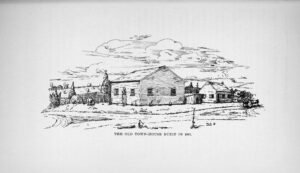
Old Pembroke NH Town House, built 1811

The “Genealogies of Pembroke, New Hampshire” is derived from the town’s second historical volume, and documents the connections of early settler families through the nineteenth century. It emphasizes families of the first settlers and families who resided in Pembroke over a long period of time. Organized alphabetically by surname, the genealogies use a consistent numbering system for easy reference. Carter draws from diverse sources, including town records and personal accounts of Pembroke’s citizens, while acknowledging possible inaccuracies in both their memory and the collection of information. However, by preserving these family lineages, Carter enhances the town’s historical narrative, complementing the first volume’s historical content. Supplementing this volume of genealogies is a compilation of marriage records which occurred in Pembroke, New Hampshire, from 1739 through 1895.
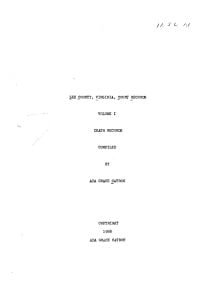
Tombstone records of eighteen cemeteries in Poundridge, New York

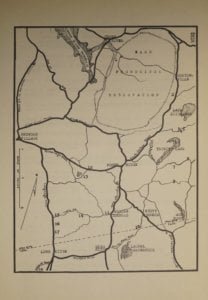
Map of cemeteries in Poundridge New York

In 1940 and 1941 Mrs. Sterling B. Jordan and Mrs. Frank W. Seth walked the 18 cemeteries in Poundridge, New York compiling the names and dates for all gravestones. Added to some of those gravestone listings were familial relationships if known. In addition, they referenced an even earlier listing of a few of the cemeteries by William Eardley taken in 1901.

Descendants of Peter Crapo

William W. Crapo

The Crapo family has long been associated with exemplary citizenship, especially in New Bedford and Michigan. Peter Crapaud, a French shipwreck survivor from the 1680s, founded the lineage, which includes notable figures like Henry Howland Crapo, who rose from humble beginnings to become Governor of Michigan. His son, William Wallace Crapo, also made significant contributions as a lawyer, politician, and community leader. Their dedication to public service and agriculture has left a lasting legacy reflecting the family’s New England roots and commitment to civic duty.

1923 Historical and Pictorial Directory of Angola Indiana

1923 Angola Indiana Directory Book Cover

Luedders’ historical and pictorial city directory of Angola, Indiana for the year 1923, containing an historical compilation of items of local interest, a complete canvass of names in the city, which includes every member of the family, college students, families on rural lines, directory of officers of county, city, lodges, churches, societies, a directory of streets, and a classified business directory.

A History of Waterloo New York Newspapers

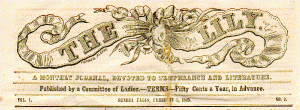
Masthead of the Lily in Seneca Falls

George Lewis, the first printer in Seneca County, initiated the Seneca Patriot in 1815, later renaming it The Ovid Gazette. After relocating the county seat to Waterloo in 1817, he produced The Waterloo Gazette, the village’s first newspaper. Throughout the years, various publications emerged, including The Waterloo Enunciator, The Seneca Farmer, and The Waterloo Observer, reflecting local political sentiments and events. Many of these papers are preserved in collections, offering vital insights for genealogists and historians researching the area’s history.

History of the Seneca County New York Press

Masthead of the Lily in Seneca Falls

The history of the press in Seneca County reflects the broader narrative of American journalism’s evolution, characterized by local newspapers that documented societal changes and opinions. The first publication, the Seneca Patriot, emerged in 1815, followed by various newspapers that reflected political trends from Federalism to Democratic ideals. Notable figures, such as Amelia Bloomer, contributed to the media landscape with publications advocating reform. Though many papers faced struggles with sustainability, they played pivotal roles in shaping public discourse and preserving local history, ultimately illustrating the press’s enduring influence in the county.

A History of Ovid New York Newspapers

Ovid Bee Newspaper

The history of newspapers in Ovid, New York, dates back to 1815 with George Lewis’s Seneca Patriot, later renamed The Ovid Gazette. Over the years, various publications emerged, including The Ovid Bee and The Ovid Independent. These newspapers served as crucial resources for genealogists, housing valuable records on local marriages and deaths. Numerous repositories, such as the Edith B. Ford Memorial Library and Cornell University, house microfilm and original issues, allowing researchers to access this rich historical material.

List 6, Choctaw Freedmen

List of Choctaw Freedmen whose names were omitted from final rolls because no application was made or by. reason of mistake or oversight. Shows the names of 281 persons, all minors except 4. The approved roll of minor Choctaw freedmen contains 473 names. The large percentage of omissions in this class is explained elsewhere. It is quite probable that there are others of this class whose claims have not yet been presented or disclosed.