Descendants of Jonathan P. Lund of New Bedford, MA

The Lund family has been integral to Massachusetts and New Hampshire history for over two centuries, with roots tracing back to Thomas Lund, an early Dunstable settler. Jonathan P. Lund, a notable descendant, moved to Acushnet, New Bedford, in 1831, where he established a successful hardware business. His son, Parkman Macy Lund, furthered the family legacy, contributing to the community and local enterprises. The Lunds have a rich lineage marked by service in various conflicts, reinforcing their significance in the region’s history.
Descendants of John Washburn of Duxbury, MA

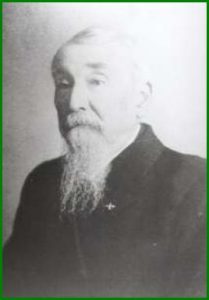
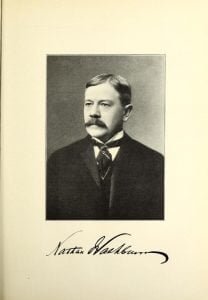
nathan washburn

The Washburn family of Middleboro, Massachusetts, traces its lineage to John Washburn, who emigrated from Evesham, England, in 1632. His descendants played significant roles in early American history, including Capt. Amos Washburn, a Revolutionary War officer, and his son Gen. Abiel Washburn, a prominent leader in Middleboro. The lineage continued through notable figures, including Judge Nathan Washburn, who practiced law and served as a special justice in the Plymouth district. This family has left a lasting impact on the Old Colony and its governance.

Miller Family of Middleboro MA

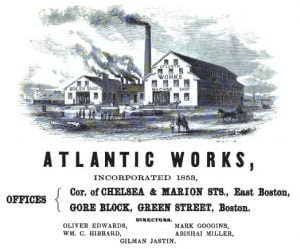
Atlantic Works

Abishai Miller, born June 22, 1809, in Middleboro, MA, was a prominent figure in New England’s iron industry, known for his exceptional craftsmanship. He co-founded the Atlantic Works in 1853 and played a vital role in its success, contributing significantly during the Civil War by overseeing the construction of naval vessels. A respected businessman and community member, Miller was deeply devoted to his family and church. He passed away on January 30, 1883, and is interred at Green cemetery, alongside many of his ancestors.

Progressive Men of Western Colorado

Early Life in Colorado

This manuscript, in its essence, is a collection of 948 biographies of prominent men and women, all leading citizens of Western Colorado. In this context, Western Colorado encompasses the counties of Archuleta, Chaffee, Delta, Eagle, Garfield, Gunnison, Hinsdale, La Plata, Lake, Mesa, Mineral, Moffat, Montezuma, Montrose, Ouray, Pitkin, Rio Blanco, Routt, San Juan, and San Miguel.

Captain Stewart, G. M. D. No. 655, Lagrange District

The document lists numerous individuals associated with Captain Stewart, G. M. D. No. 655 in the Lagrange District, highlighting a roster of names that includes Absalom Adams, James M. Adams, and various members of the Boman and Brooks families, among others. This extensive enumeration features diverse surnames and reflects a significant community involvement, likely in a historical context related to military or civil service in the district.

1860 Census West of Arkansas – Creek Nation

1860 Free Inhabitants Creek Nation Page 1

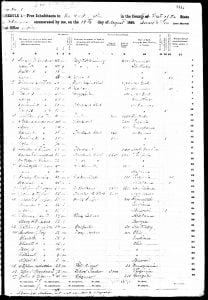
The 1860 census for the Creek Nation, located west of Arkansas, reveals a diverse array of free inhabitants, including Native Americans from Creek and Seminole tribes. This listing indicates that many individuals either renounced their tribal affiliations or were never granted citizenship. Several entries mark those who married Native individuals but were still denied citizenship, suggesting a complex social structure within the community. The presence of individuals identified by racial categories reflects the intricate interplay of identities during this period.

Muster Roll of Captain Samuel Burrell’s Company

Title page to the Aroostook War

Muster Roll of Captain Samuel Burrell’s Company of Infantry in Detachment of drafted Militia of Maine, called into actual service the State, for the protection of its Northeastern Frontier, from twenty-fifth day of February, 1839, the time of its rendezvous Augusta, Maine, to the nineteenth day of April, 1839, when discharged or mustered.

Muster Roll of Captain Henry Bailey’s Company

Title page to the Aroostook War

Muster Roll of Captain Henry Bailey’s Company of Infantry in the Detachment of drafted Militia of Maine, called into actual service by the State, for the protection of its Northeastern Frontier from the fifth day of March, 1839, the time of its rendezvous at Calais Maine, to the sixth day of April, 1839, when discharged or mustered.

Business Men of Northern Maine

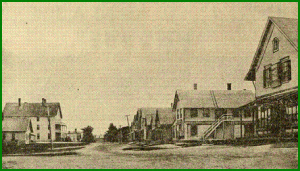
Winn Maine - Main Street looking East

A historical business directory and local history of Northern Maine from 1891, featuring sketches of nine towns including Houlton, Presque Isle, Caribou, and Fort Fairfield. The manuscript profiles businesses, owners, and civic institutions, and includes a gallery of period photographs, town views, and advertisements drawn from the era.

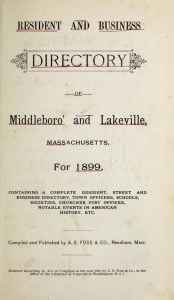
1899 Directory for Middleboro and Lakeville Massachusetts

1899 Middleboro and Lakeville Massachusetts Directory Cover

The 1899 Directory for Middleboro and Lakeville, Massachusetts, compiled by A. E. Foss & Co., provides a comprehensive list of residents and businesses, alongside town officers, schools, churches, and societies. It includes notable historical events and offers a detailed account of the local community, featuring numerous surnames from both towns. This directory serves as an essential resource for understanding the demographics and social structure of Middleboro and Lakeville during that period.

Seneca County New York Biographies

Seneca County History Newsletter Drawing

In the 1980’s a series of newsletters were published four times a year by Seneca County NY featuring historical information concerning Seneca county and her past residents. The current historian for Seneca County placed these online using PDF files. One of the main features of each edition were biographical sketches of early settlers of Seneca County. This is a list of those biographical sketches linked to the pdf copy of the newsletter.

Mission’s Among the Southern Indians

Reverend Hugh Wilson

In 1819, the Synod of South Carolina initiated a mission among Southern Indians, focusing on the Chickasaws. Rev. David Humphries and Rev. T. C. Stewart initially sought permission to establish a mission, which was granted by the Chickasaw king in 1820. Stewart, the sole missionary, founded Monroe Station in 1821, accompanied by two families. This mission became a pivotal center for education and Christianity, significantly influencing the Chickasaw community, fostering future leaders and laying the groundwork for their ongoing civilization.

Life and travels of Colonel James Smith – Indian Captivities

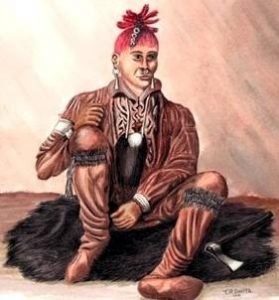
An Artists rendition of James Smith

James Smith, pioneer, was born in Franklin county, Pennsylvania, in 1737. When he was eighteen years of age he was captured by the Indians, was adopted into one of their tribes, and lived with them as one of themselves until his escape in 1759. He became a lieutenant under General Bouquet during the expedition against the Ohio Indians in 1764, and was captain of a company of rangers in Lord Dunmore’s War. In 1775 he was promoted to major of militia. He served in the Pennsylvania convention in 1776, and in the assembly in 1776-77. In the latter year he was commissioned colonel in command on the frontiers, and performed distinguished services. Smith moved to Kentucky in 1788. He was a member of the Danville convention, and represented Bourbon county for many years in the legislature. He died in Washington county, Kentucky, in 1812. The following narrative of his experience as member of an Indian tribe is from his own book entitled “Remarkable Adventures in the Life and Travels of Colonel James Smith,” printed at Lexington, Kentucky, in 1799. It affords a striking contrast to the terrible experiences of the other captives whose stories are republished in this book; for he was well treated, and stayed so long with his red captors that he acquired expert knowledge of their arts and customs, and deep insight into their character.

The Original Grantees of Norwich Vermont

On July 5, 1761, a number of men received land grants for what would become Norwich, Vermont. Most were from Mansfield, Connecticut, though many never visited the town. The list includes individuals such as Eleazer Wales, Abner Barker, and Ebenezer Heath, among others. Notably, some opted not to accept their grants. The document serves as a historical record of the original grantees, highlighting their connections to Connecticut and their role in the early settlement of Norwich.

Narrative of the Captivity of Frances Noble – Indian Captivities

Narrative of the captivity of Frances Noble, who was, among others, taken by the Indians from Swan Island, in Maine, about the year 1755; compiled by John Kelly, Esq. of Concord, New Hampshire, from the minutes and memoranda of Phinehas Merrill. Esq. of Stratham, in the same state; and by the Former Gen. Tleman communicated for publication to the editors of the Historical Collections of New Hampshire.