Genealogies of Pembroke New Hampshire

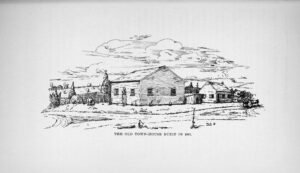
Old Pembroke NH Town House, built 1811

The “Genealogies of Pembroke, New Hampshire” is derived from the town’s second historical volume, and documents the connections of early settler families through the nineteenth century. It emphasizes families of the first settlers and families who resided in Pembroke over a long period of time. Organized alphabetically by surname, the genealogies use a consistent numbering system for easy reference. Carter draws from diverse sources, including town records and personal accounts of Pembroke’s citizens, while acknowledging possible inaccuracies in both their memory and the collection of information. However, by preserving these family lineages, Carter enhances the town’s historical narrative, complementing the first volume’s historical content. Supplementing this volume of genealogies is a compilation of marriage records which occurred in Pembroke, New Hampshire, from 1739 through 1895.

New Hampshire Men of Progress

1892 Map of New Hampshire

New Hampshire Men of Progress contains 289 biographical sketches and portraits of leaders in business and professional life in and of the state of New Hampshire. It was edited by the staff of the Manchester Union under the supervision of Richard Herndon.

Abington Massachusetts Marriage and Death Records

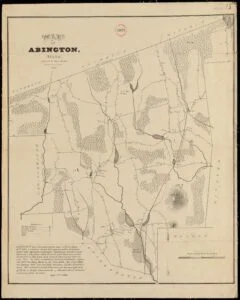
1830 Map of Abington, Massachusetts

Volume 2 of the Abington, Massachusetts vital records compiles marriage and death records up to 1850, complementing Volume 1, which contains birth records. Established in 1712, Abington’s boundaries have shifted, affecting historical jurisdiction. Extensive research from town records, cemeteries, and family Bibles ensured comprehensive documentation, including the identification of Black families recorded by given names. The volume is organized alphabetically by marriages and deaths.

Abington Massachusetts Birth Records

1830 Map of Abington, Massachusetts

Volume 1 of the Abington, Massachusetts vital records details births recorded in the town up to 1850, featuring comprehensive research from town records, cemeteries, and church documents. Established in 1712, Abington’s jurisdictional changes may affect genealogical searches. The records also include separate listings for Black families, primarily by given names. Additionally, various surnames are cataloged, emphasizing the need to consider alternate spellings. For marriages and deaths, researchers should consult Volume 2.

History of Windham New Hampshire

Residence of William H Anderson of Windham, New Hampshire

Leonard A. Morrison’s *The History of Windham, New Hampshire*, published in 1883, chronicles the town’s evolution from early settlements in the 18th century to the late 19th century. It highlights Windham’s roots in the Scotch-Irish Londonderry community and examines various aspects of local life, including land grants, education, and political developments. The work also documents significant historical events and includes extensive genealogies of the area’s early settlers and their descendants, drawing from comprehensive local records and archives.

The Iowa Nugen Family

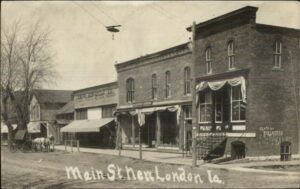
Main Street, New London, Iowa

This genealogy starts at about 1750 with the birth of Richard Nugen who first settled on the Kanawha River in what is now West Virginia, and then settled in Indiana where he raised a son named John Nugen. John married Mary See and raised a large family in Indiana of fourteen children, all who lived to adulthood. This genealogy traces the four sons of John and Mary See who settled in Iowa: David, Charles, Jarrett and Silas. This PDF is free to read and download.

Lower Chinook, Kathlamet, Tillamook, and Clatsop Indians, Alive in 1906

In 1906, Charles E. McChesney compiled a list of the Lower Chinook, Kathlamet, Tillamook, and Clatsop Indians, along with their heirs, who had treaty agreements with the U.S. government since 1851. The document includes numerous names and corresponding addresses across various locations, such as Oregon, Washington, and California. This registration underscores the ongoing recognition of these tribes and serves as an important historical record of their existence and relocations during that period.

Marriages of Charlotte County Virginia, 1784-1815

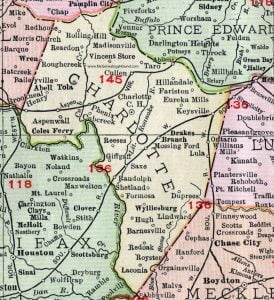
1911 Map of Charlotte County Virginia

This volume, “Marriages of Charlotte County, Virginia, 1784-1815,” compiles the marriage bonds and minister’s returns from Charlotte County during the specified period. The original work was painstakingly copied by Catherine Lindsay Knorr and published in 1951. The book spans 119 pages and includes a wealth of historical data on marriages that took place in this Virginia county. This publication presents several challenges for readers. Some pages are slightly tattered and torn, and the manuscript features irregular pagination. Additionally, there are tight or nonexistent margins, particularly at the bottom of the pages, and one page is typed on different paper than the rest.

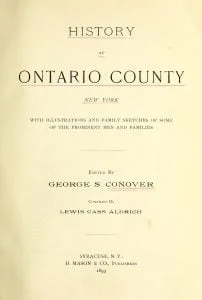
History of Ontario County, New York, part 2

History of Ontario County, New York

The History of Ontario County, New York genealogical section provides an extensive array of surnames, indicating the comprehensive nature of the section in Part 2. These genealogies not only serves as a reference for individuals researching family histories but also reflects the diverse settler and immigrant populations that have contributed to the fabric of Ontario County. Each surname represents a family’s journey, struggles, and contributions to the county’s development over centuries.

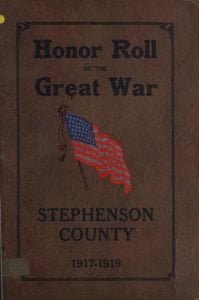
Stephenson County Illinois World War 1 Veterans

Honor roll of the Great War, Stephenson County, 1917-1919

This small booklet contains all the known men and women who participated in World War 1 and claimed their home of record as Stephenson County, Illinois. By participation, this record does not limit this to soldiers, but also contains the records of those men and women who served the Red Cross, Y.M.C.A., and other non-fighting positions. This book is free to read or download.

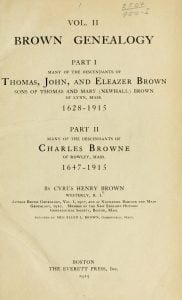
Brown Genealogy

Brown Genealogy

In 1895, Cyrus Henry Brown began collecting family records of the Brown family, initially with the intention of only going back to his great-grandfathers. As others became interested in the project, they decided to trace the family lineage back to Thomas Brown and his wife Mary Newhall, both born in the early 1600s in Lynn, Massachusetts. Thomas, John, and Eleazer, three of their sons, later moved to Stonington, Connecticut around 1688. When North Stonington was established in 1807, the three brothers were living in the southern part of the town. Wheeler’s “History of Stonington” contains 400 records of early descendants of the Brown family, taken from the town records of Stonington. However, many others remain unidentified, as they are not recorded in the Stonington town records. For around a century, the descendants of the three brothers lived in Stonington before eventually migrating to other towns in Connecticut and New York State, which was then mostly undeveloped. He would eventually write this second volume of his Brown Genealogy adding to and correcting the previous edition. This book is free to search, read, and/or download.

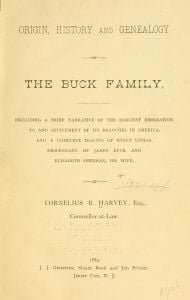
Origin, history, and genealogy of the Buck family

Origin, history, and genealogy of the Buck family

Origin, history and genealogy of the Buck family : including a brief narrative of the earliest emigration to and settlement of its branches in America and a complete tracking of every lineal descendant of James Buck and Elizabeth Sherman, his wife

Families of Ancient New Haven

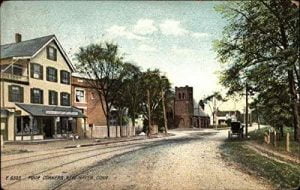
Four Corners New Haven Connecticut

The Families of Ancient New Haven compilation includes the families of the ancient town of New Haven, covering the present towns of New Haven, East Haven, North Haven, Hamden, Bethany, Woodbridge and West Haven. These families are brought down to the heads of families in the First Census (1790), and include the generation born about 1790 to 1800. Descendants in the male line who removed from this region are also given, if obtainable, to about 1800, unless they have been adequately set forth in published genealogies.

The genealogy and history of the Ingalls family in America

The genealogy and history of the Ingalls family in America

Edmund Ingalls, son of Robert, was born about 1598 in Skirbeck, Lincolnshire, England. He immigrated in 1628 to Salem, Massachusetts and with his brother, Francis, founded Lynn, Massachusetts in 1629. He married Ann, fathered nine children, and died in 1648.

Diary of Ezra Green, M.D.

Diary of Ezra Green

Ezra Green (1746-1847) was a surgeon aboard the Continental Ship-of-War “Ranger” when he penned a diary describing the voyage and conflicts met. The diary itself will shed light on other members of the crew, some who lost their lives in battle. Also included in the manuscript are two brief genealogies of early ancestors of Ezra, James Green of Charlestown and John Hayes of Dover.

Howard Genealogy of Bridgewater and New Bedford Mass.

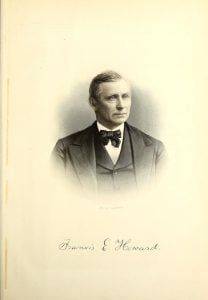
Frances E. Howard

The Howard family, prominent in the history of Bridgewater and New Bedford, Mass., traces its lineage back to John Howard, an early settler. Key figures include Capt. Benjamin Beal Howard, founder of Howard Seminary and known for his philanthropic deeds, and his son, Francis Edward Howard, an influential public servant and community leader. Both men embodied the family’s commitment to education and civic duty, contributing significantly to the community’s development and welfare, leaving a lasting legacy through their charitable efforts and public service.

South Britain Connecticut Sketches and Records

South Britain Sketches and Records

This book contains much valuable genealogical data from local church records and cemeteries, and brief accounts of the following families : — Allen, Averill, Barnes, Bassett, Booth, Bradley, Bray, Canfield, Downs, Edmonds, French, Gilbert, Guthrie, Hann, Hayes, Hendryx, Hill, Mitchell, Pierce, Piatt, Post, Russell, Skeels, Stoddard, Tuttle, Wagner, Wakeley, Ward and Warner.