History of the Town of Cornwall Connecticut

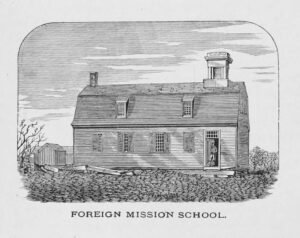
Foreign Mission School, Cornwall, Connecticut

The History of the Town of Cornwall Connecticut is a comprehensive account of the town’s evolution from colonial organization in 1731 to its involvement in national events like the Civil War. They include detailed geographical descriptions, ecclesiastical histories of local churches, and biographical sketches of families such as the Sedgwicks and Golds. The records also reflect social life, farming, early fashion, and the noteworthy Foreign Mission School.

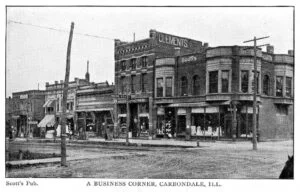
History of Carbondale, Illinois, 1852-1905

A Business Corner, Carbondale

Carbondale, Illinois, spans about 6,000 acres, primarily in the southwest quarter of Carbondale Township, established following congressional guidelines. Early settlers settled near Little Crab Orchard and Piles Fork creeks. The city’s growth is intertwined with the contributions of its founders, highlighted through 330 biographical sketches in the book, which offer details into their lives during challenging times. Carbondale’s history reflects the influence of individual leadership on municipal progress, celebrated here in the context of the nation’s bicentennial.

History of Long Beach, California

Long Beach Community Book

The “Long Beach Community Book,” authored by Walter H. Case and published in 1948 by A.H. Cawston, is an extensive exploration of the history and development of Long Beach, California. The book is divided into two main sections: a historical narrative and biographical sketches. The first part of the book offers a detailed account of Long Beach’s evolution from its early beginnings to a thriving city. It covers various aspects of the city’s growth, including its geographical advantages, municipal governance, public facilities, educational institutions, and notable events such as epochal oil discoveries and the impact of wartime activities. The narrative also addresses challenges faced by the city, such as land subsidence and the major issue of tideland rights. The second part of the book comprises biographical sketches of significant Long Beach citizens, both past and present, highlighting their contributions to the community.

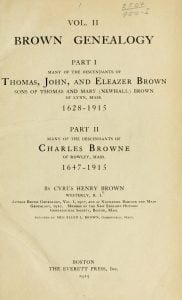
Brown Genealogy

Brown Genealogy

In 1895, Cyrus Henry Brown began collecting family records of the Brown family, initially with the intention of only going back to his great-grandfathers. As others became interested in the project, they decided to trace the family lineage back to Thomas Brown and his wife Mary Newhall, both born in the early 1600s in Lynn, Massachusetts. Thomas, John, and Eleazer, three of their sons, later moved to Stonington, Connecticut around 1688. When North Stonington was established in 1807, the three brothers were living in the southern part of the town. Wheeler’s “History of Stonington” contains 400 records of early descendants of the Brown family, taken from the town records of Stonington. However, many others remain unidentified, as they are not recorded in the Stonington town records. For around a century, the descendants of the three brothers lived in Stonington before eventually migrating to other towns in Connecticut and New York State, which was then mostly undeveloped. He would eventually write this second volume of his Brown Genealogy adding to and correcting the previous edition. This book is free to search, read, and/or download.

Abbe-Abbey Genealogy

A genealogical dictionary of the first settlers of New England vol 1

The “Abbe-Abbey Genealogy” serves as a comprehensive and meticulously compiled homage to the heritage of the Abbe and Abbey families, tracing its roots back to John Abbe and his descendants. Initiated by the life-long passion of Professor Cleveland Abbe, this genealogical exploration began in his youth and expanded throughout his illustrious career, despite numerous challenges. It encapsulates the collaborative efforts of numerous family members and researchers, including significant contributions from individuals such as Charles E. Abbe, Norah D. Abbe, and many others, each bringing invaluable insights and data to enrich the family’s narrative.

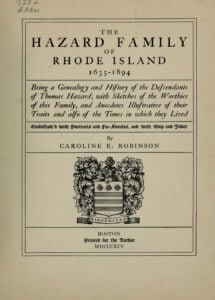
The Hazard family of Rhode Island 1635-1894

The Hazard family of Rhode Island 1635-1894

The Hazard family of Rhode Island 1635-1894 – Being a genealogy and history of the descendants of Thomas Hazard, with sketches of the worthies of this family, and anecdotes illustrative of their traits and also of the times in which they lived.

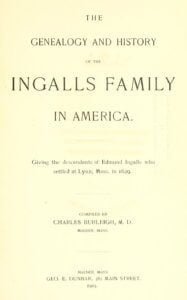
The genealogy and history of the Ingalls family in America

The genealogy and history of the Ingalls family in America

Edmund Ingalls, son of Robert, was born about 1598 in Skirbeck, Lincolnshire, England. He immigrated in 1628 to Salem, Massachusetts and with his brother, Francis, founded Lynn, Massachusetts in 1629. He married Ann, fathered nine children, and died in 1648.

Howland Family of Dartmouth and New Bedford, Massachusetts

Abraham Howland

The Howland family, rooted in New England since the 17th century, significantly influenced Dartmouth and New Bedford’s economic landscape. Notable for their roles in whaling and later the cotton industry, the family’s ventures established New Bedford as a crucial maritime and manufacturing hub. Key figures, including Nathaniel, Capt. John, and Hon. Abraham H. Howland, contributed to local governance and community well-being. Their philanthropy, reflected in substantial library donations and public service, underscores the Howlands’ enduring legacy in the region’s history.

Seabury Family of New Bedford, Massachusetts

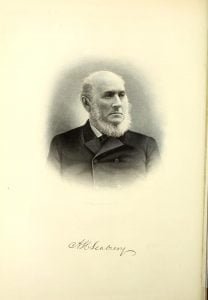
Alexander Seabury

The Seabury family, with variations in spelling, traces its American roots to John Seabury of Boston, who died before 1662. His son, Samuel, a physician, fathered several children and settled in Duxbury before moving to Little Compton, Rhode Island. Notable descendants include Alexander Hamilton Seabury, a key businessman in New Bedford, who contributed to the city’s industrial growth and maritime trade. The family’s connections to early American history are emphasized through their ties to Mayflower descendants and various significant local enterprises.

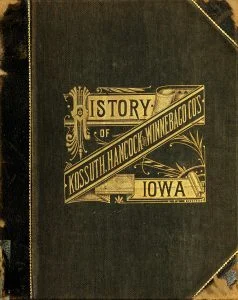
History of Kossuth, Hancock, and Winnebago Counties, Iowa

History of Kossuth, Hancock, and Winnebago counties, Iowa

History of Kossuth, Hancock, and Winnebago Counties, Iowa together with sketches of their cities, villages and townships, educational, civil, military and political history; portraits of prominent persons, and 638 biographies of representative citizens. Also included is a history of Iowa embracing accounts of the pre-historic races, and a brief review of its civil and military history.

Genealogical and Family History of Vermont

Genealogical and Family History of the State of Vermont vol 1

Hiram Charlton took on the publication of the Genealogical and Family History of the State of Vermont for Lewis Publishing. In it, he enlisted the assistance of living residents of the state in providing biographical and genealogical details about their family, and then he published all 1104 family histories in two distinct volumes.

History of the Industries of Norwich VT

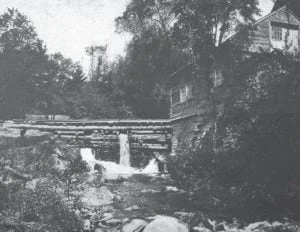
Knapp’s Mill, Norwich, Vermont

The industries of Norwich, VT, while not extensive, have displayed diverse characteristics since the late 18th century. Early establishments included grist and saw mills along Blood Brook, with ownership changing hands over the years. Other ventures featured tanneries, harness and trunk making, and the production of potash and furniture. Notable craftsmen, such as blacksmiths and boot makers, contributed to the local economy. Over time, businesses evolved, leading to the establishment of a creamery in 1888, which later became part of Hood Co.

Norwich Vermont an Independent Township

The political organization of America began with the Township, particularly in New England, where towns emerged as independent entities with self-governing rights in the mid-17th century. Town meetings served as foundational democratic institutions, allowing citizens to elect officials and manage local affairs. Norwich, Vermont, exemplified this tradition, organizing its town government in 1761 before any settlers arrived. Its early record-keeping and governance practices reflect a commitment to law, order, and community engagement, which have shaped its ongoing civic structure.

Biography of Edwin O. Crandall

Edwin O. Crandall, born in Pennsylvania in 1837, was a skilled miller, confectioner, and machinist. After serving as an engineer for the C.R.I. railroad, he enlisted in the Illinois Regiment during the Civil War, where he was wounded. Following the war, he pioneered flour production in Union County, Oregon, before engaging in farming and returning to confectionery business in La Grande. A respected community figure, he married Mary Ann Collins and had two children. Crandall passed away on March 8, 1902, leaving behind a legacy of kindness and entrepreneurship.

Biography of Lucian D. Crandall

Lucian D. Crandall, born in San Bernardino in 1857, became a notable figure in the retail grocery sector as a senior partner at L. D. Crandall & Co., one of the city’s largest grocery houses. Prior to this, he spent nearly eight years in railroad contracting across various states and Canada with his brother. Returning to San Bernardino in 1885, he transitioned to grocery trade, where his business flourished. Crandall was also active in local finance and real estate, and married Miss Chipman in 1887.