
Brearley
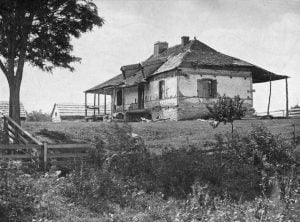
Governor Houston at His Trading Post on the Verdigris

In February 1828, Colonel Brearley led the Creek immigrants to the Verdigris, following governmental commitments from the 1826 treaty. During this time, Samuel Houston, a former U.S. Army officer and politician, was redefining his life among the Cherokee. After abandoning his political career and personal troubles, he became deeply involved with the Cherokee, adopting their customs and language. Houston’s influence grew as he criticized corrupt Indian agents and sought to improve conditions for Native Americans, eventually being adopted into the Cherokee tribe in 1829.
Earliest Known Traders on Arkansas River
Before the Louisiana Purchase, early French traders, notably Joseph Bogy, ventured along the Arkansas River, engaging in commerce with local Indian tribes, such as the Osage. Bogy’s expeditions included confronting Choctaw opposition in 1807, leading to government claims for losses. Prominent figures included Nathaniel Pryor and A. P. Chouteau, who established trading posts at the mouth of the Verdigris. These traders influenced the region’s economy, exchanging goods like furs and providing items such as tobacco and tools to Native Americans, fostering significant cultural exchanges.
Establishment of Fort Gibson in 1824
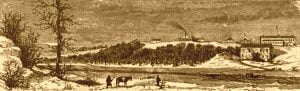
The Arkansas Territory was established by Congress in 1819, encompassing parts of present-day Arkansas and Oklahoma, with governance limited to the eastern section. James Miller became its first governor in 1819, tasked with overseeing relations with Native tribes. Efforts to broker peace between the Osage and Cherokee tribes were largely unsuccessful, leading to military reinforcements at Fort Smith. In 1824, troops were moved to a new post, Cantonment Gibson, established to enhance security and regulate tensions, which would eventually evolve into Fort Gibson, founded in 1824.
Biography of Mrs. Lucinda J. Brearley
The post highlights the significant yet often overlooked role of women, particularly Mrs. Lucinda J. Brearley, in the development of early settlements. Married to pioneer banker John Brearley, she supported him through the challenges of establishing a bank in Lewiston and managing their family. Born in Indiana, she showed resilience after losing her father during their westward journey. Following her husband’s death, Mrs. Brearley skillfully managed their estate and cultivated respect within her community, embodying the spirit and contributions of pioneer women.