Abington Massachusetts Marriage and Death Records

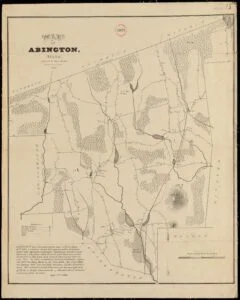
1830 Map of Abington, Massachusetts

Volume 2 of the Abington, Massachusetts vital records compiles marriage and death records up to 1850, complementing Volume 1, which contains birth records. Established in 1712, Abington’s boundaries have shifted, affecting historical jurisdiction. Extensive research from town records, cemeteries, and family Bibles ensured comprehensive documentation, including the identification of Black families recorded by given names. The volume is organized alphabetically by marriages and deaths.

Abington Massachusetts Birth Records

1830 Map of Abington, Massachusetts

Volume 1 of the Abington, Massachusetts vital records details births recorded in the town up to 1850, featuring comprehensive research from town records, cemeteries, and church documents. Established in 1712, Abington’s jurisdictional changes may affect genealogical searches. The records also include separate listings for Black families, primarily by given names. Additionally, various surnames are cataloged, emphasizing the need to consider alternate spellings. For marriages and deaths, researchers should consult Volume 2.

Medway Massachusetts vital records

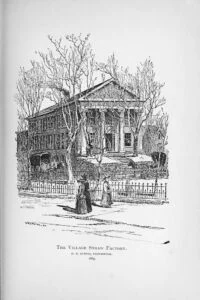
Medway Village Straw Factory

Alphabetical indexes to the vital records of Medway, Massachusetts, up to the year 1850, supplemented by information from church registers, cemetery inscriptions and other private sources to include Rev. Dr. Jacob Ide’s account of Marriages and Deaths, 1814-1849.

Genealogies of Cornish New Hampshire

History of Cornish New Hampshire

Volume II of History of the Town of Cornish, New Hampshire, with Genealogical Record, 1763–1910, compiled by William Henry Child and published in 1911, presents a detailed genealogical account of the families who settled in Cornish from its founding through the early 20th century.

Brown Genealogy

Brown Genealogy

In 1895, Cyrus Henry Brown began collecting family records of the Brown family, initially with the intention of only going back to his great-grandfathers. As others became interested in the project, they decided to trace the family lineage back to Thomas Brown and his wife Mary Newhall, both born in the early 1600s in Lynn, Massachusetts. Thomas, John, and Eleazer, three of their sons, later moved to Stonington, Connecticut around 1688. When North Stonington was established in 1807, the three brothers were living in the southern part of the town. Wheeler’s “History of Stonington” contains 400 records of early descendants of the Brown family, taken from the town records of Stonington. However, many others remain unidentified, as they are not recorded in the Stonington town records. For around a century, the descendants of the three brothers lived in Stonington before eventually migrating to other towns in Connecticut and New York State, which was then mostly undeveloped. He would eventually write this second volume of his Brown Genealogy adding to and correcting the previous edition. This book is free to search, read, and/or download.

Abbe-Abbey Genealogy

A genealogical dictionary of the first settlers of New England vol 1

The “Abbe-Abbey Genealogy” serves as a comprehensive and meticulously compiled homage to the heritage of the Abbe and Abbey families, tracing its roots back to John Abbe and his descendants. Initiated by the life-long passion of Professor Cleveland Abbe, this genealogical exploration began in his youth and expanded throughout his illustrious career, despite numerous challenges. It encapsulates the collaborative efforts of numerous family members and researchers, including significant contributions from individuals such as Charles E. Abbe, Norah D. Abbe, and many others, each bringing invaluable insights and data to enrich the family’s narrative.

History of Minneapolis and Hennepin County, Minnesota

History of Minneapolis and Hennepin County, Minnesota

The aim of this history was to present in a permanent form the key incidents in the history of Minneapolis, from its earliest settlement to its publication in 1895. The primary facts and events recounted were mostly obtained from living witnesses and participants. It was rare for a city with more than two hundred thousand inhabitants to have so many of its first settlers still alive. The city’s growth had been so extraordinary and unprecedented that many of its earliest settlers remained. Some information was also gleaned from the notes left by now-deceased writers who witnessed the events described. Great care was taken to verify the accuracy of all facts and incidents mentioned. While it might have been too much to hope that the work was entirely free from errors, it was confidently believed that any such errors were few and insignificant.

Descendants of William Sturdy of Attleboro MA and Slatersville RI

John F. Sturdy

The Sturdy family, descended from John Jenkins, who became William Sturdy after fleeing the British navy, played a significant role in the jewelry industry of southeastern Massachusetts and Rhode Island. Settling in Attleboro, William transitioned from farming to work in cotton mills during the industrial boom. His sons, notably William A. and John F., contributed to the family’s legacy in jewelry manufacturing, establishing successful businesses that thrived for generations. The family’s collective efforts reflect their industrious spirit and commitment to their community in the Attleboros.

Descendants of Rev. James Keith in Bridgewater, Massachusetts

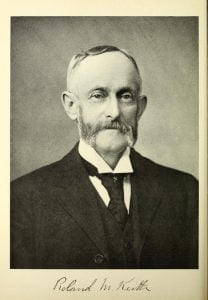
Roland Keith

The Keith family is one of the oldest of southeastern Massachusetts. Its founder in America was Rev. James Keith, born in 1644, who came to America, landing in Boston in 1662. He became minister of the Bridgewater Church, where he administered to the spiritual needs of the people for half a century. He died July 23, 1719. He was twice married. His first wife was Susannah Edson, daughter of Deacon Samuel Edson.

Weymouth ways and Weymouth people

Weymouth ways and Weymouth people

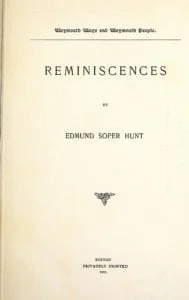
Edward Hunt’s “Weymouth ways and Weymouth people: Reminiscences” takes the reader back in Weymouth Massachusetts past to the 1830s through the 1880s as he provides glimpses into the people of the community. These reminiscences were mostly printed in the Weymouth Gazette and provide a fair example of early New England village life as it occurred in the mid 1800s. Of specific interest to the genealogist will be the Hunt material scattered throughout, but most specifically 286-295, and of course, those lucky enough to have had somebody “remembered” by Edward.

Ancestry of Loyed Ellis Chamberlain of Brockton, Massachusetts

Loyed Ellis Chamberlain, a distinguished lawyer from Brockton, Massachusetts, has forged an impressive career marked by talent, diligence, and a commitment to justice. Descended from notable New England ancestry, including Mayflower Pilgrims, Chamberlain has held various esteemed positions, such as judge and state senator, while actively engaging in community affairs and temperance movements. His professional journey reflects his dedication to law and public service, alongside a balanced approach to family and civic duties, exemplifying the ethos of a prominent figure in southeastern Massachusetts.

Kingman Genealogy of Middleboro Massachusetts

C. S. Kingman

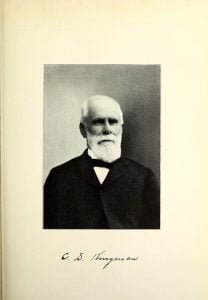
The Kingman family of Middleboro, Massachusetts, descends from an early branch of the Weymouth Kingman lineage, tracing its roots back to Wales. Prominent figures include Maj. Bela Kingman and his son Calvin D. Kingman, who significantly impacted local industry by establishing a shoe manufacturing business that employed hundreds. The family’s legacy extends to civic and educational contributions, with Calvin serving as the first president of the Middleboro National Bank and actively participating in the Congregational Church. The Kingman lineage exemplifies dedication to both community and industry in Middleboro.

Descendants of Benjamin S. Atwood of Whitman, MA

Benjamin S. Atwood

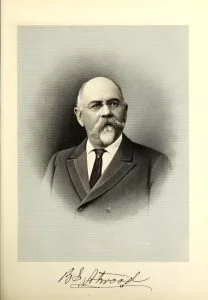
Benjamin S. Atwood, born June 25, 1840, in Carver, MA, was a prominent box manufacturer in Whitman and a respected Civil War veteran. His lineage traces back to John Atwood, an early Plymouth Colony settler. Atwood’s commitment to his community was exemplified by his role in establishing Whitman’s waterworks and his staunch defense of workers’ rights against union pressures. A Republican and active Mason, Atwood’s legacy includes a successful business and a reputation for fairness and integrity, reflecting the values of his forefathers.

Wright Family of Boston, MA

The Wright family, an early Boston lineage, traces its origins to Richard Wright, who settled in Plymouth around 1644. Over generations, the family intermarried with prominent New England clans like the Adams and Wentworths. Notable descendants include Theodore Francis Wright, a significant figure in the New Jerusalem Church, and Augustus Hunt Wright, a Civil War veteran and community leader in Abington. Their legacy reflects the family’s deep roots in American history and its contributions to religion, education, and civic life in Massachusetts.

1860 Census West of Arkansas – Creek Nation

1860 Free Inhabitants Creek Nation Page 1

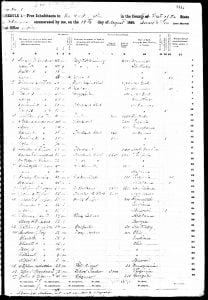
The 1860 census for the Creek Nation, located west of Arkansas, reveals a diverse array of free inhabitants, including Native Americans from Creek and Seminole tribes. This listing indicates that many individuals either renounced their tribal affiliations or were never granted citizenship. Several entries mark those who married Native individuals but were still denied citizenship, suggesting a complex social structure within the community. The presence of individuals identified by racial categories reflects the intricate interplay of identities during this period.

Barrons Family Genealogy of Cornish Maine

Abraham Barrons, born January 17, 1756, likely in Wells, Maine, settled in Cornish post-Revolutionary War around 1778. He married Margaret Stackpole and had nine children, including Lydia, Abigail, and Polly. His son, also named Abraham, married Jane Estes and had twelve children, with descendants now commonly using the surname Barnes. Variations in the family name, including Barons and Barrows, reflect a lineage potentially connected to LeBarron, a French surname. Abraham Barrons passed away on October 24, 1819.

Descendants of Captain Michael Pierce

Charles M. Peirce

The Pierce family, descendants of Captain Michael Pierce, has been integral to New Bedford’s development since the 17th century. This lineage includes prominent figures like Andrew Granville Pierce, who served as treasurer of the Wamsutta Mills for over forty years, and his brother Otis Norton Pierce, noted for his leadership within the Grinnell Manufacturing Corporation. Their contributions extend to civic involvement, with several family members holding significant municipal roles. This rich history underscores the family’s lasting impact on the region’s industrial and social fabric.

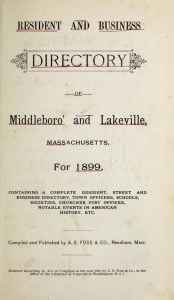
1899 Directory for Middleboro and Lakeville Massachusetts

1899 Middleboro and Lakeville Massachusetts Directory Cover

The 1899 Directory for Middleboro and Lakeville, Massachusetts, compiled by A. E. Foss & Co., provides a comprehensive list of residents and businesses, alongside town officers, schools, churches, and societies. It includes notable historical events and offers a detailed account of the local community, featuring numerous surnames from both towns. This directory serves as an essential resource for understanding the demographics and social structure of Middleboro and Lakeville during that period.

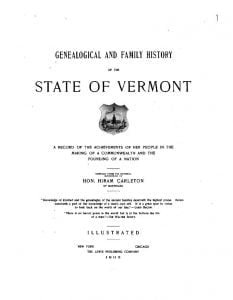
Genealogical and Family History of Vermont

Genealogical and Family History of the State of Vermont vol 1

Hiram Charlton took on the publication of the Genealogical and Family History of the State of Vermont for Lewis Publishing. In it, he enlisted the assistance of living residents of the state in providing biographical and genealogical details about their family, and then he published all 1104 family histories in two distinct volumes.